
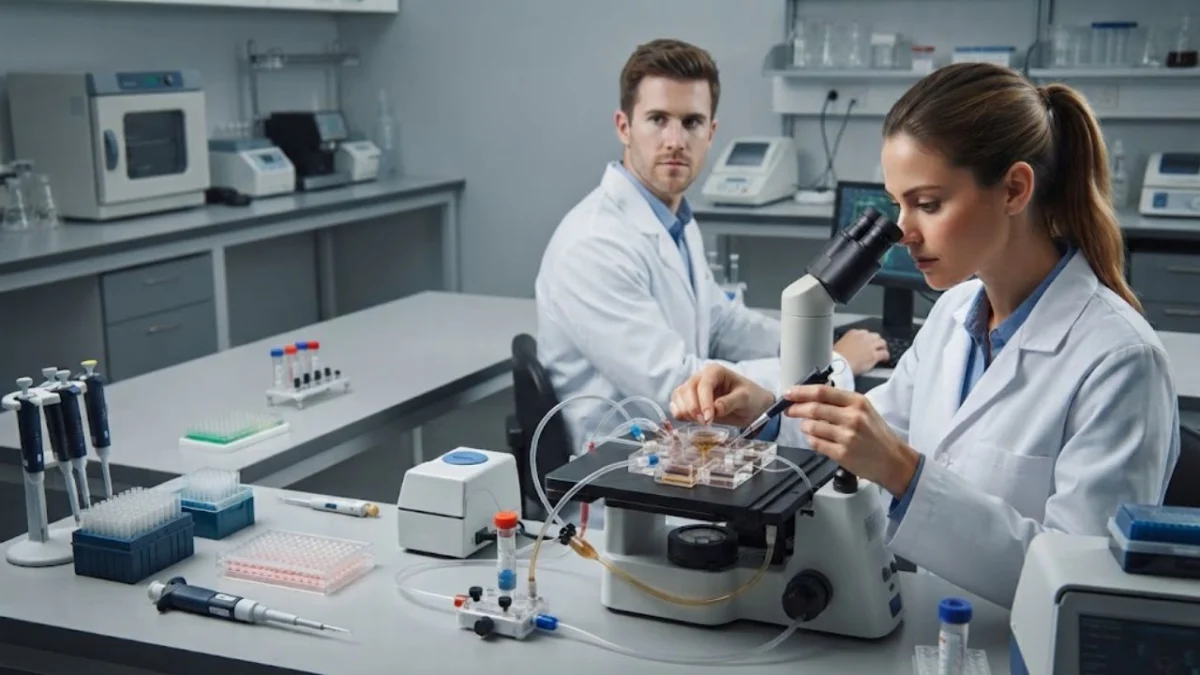
"A groundbreaking laboratory model of the human bladder has revealed why some urinary tract infections stubbornly return, even after antibiotic treatment, by demonstrating that bacteria can hide in protected reservoirs within the bladder lining, rendering them unreachable by conventional drugs."
This pivotal discovery, emerging from a collaborative effort between University College London, the University of Oxford, and the University of Leicester, offers a tangible explanation for a frustrating medical mystery that affects millions worldwide: recurrent urinary tract infections (UTIs). By engineering a sophisticated three-dimensional micro-bladder that accurately replicates the dynamic conditions of the human urinary tract, researchers have provided unprecedented insight into the elusive behavior of uropathogenic bacteria, particularly Escherichia coli. This advanced model challenges traditional laboratory testing methods and opens new avenues for understanding and combating persistent infections, with promising implications for phage therapy as a potential adjunct treatment.
The persistent challenge of recurrent UTIs, characterized by the return of infection weeks after seemingly successful antibiotic treatment, has long baffled both patients and clinicians. Standard diagnostic procedures, which typically involve culturing bacteria in static, nutrient-rich liquid media, often fail to reflect the complex, dynamic environment of the human bladder. Urine is in constant motion, undergoing cycles of filling and emptying, and bacteria are in continuous contact with living bladder tissue. This stark difference between laboratory conditions and the in vivo reality has now been illuminated by a novel laboratory apparatus that faithfully reproduces the flowing urine environment within a miniature human bladder.
When researchers introduced the bacteria responsible for the majority of UTIs into this sophisticated micro-bladder, they observed a crucial phenomenon: the bacteria adhered more effectively to the bladder surface and actively invaded the lining. Within the bladder lining, these microorganisms established what the research team terms "reservoirs" inside bladder cells. These intracellular sanctuaries provide a protective haven, shielding the bacteria from antibiotic exposure and allowing them to persist even after the urinary tract appears to be cleared.
This finding has profound implications for the interpretation of standard antibiotic susceptibility testing. Hospitals routinely use such tests to guide treatment decisions, assessing which antibiotics are most effective at inhibiting bacterial growth in vitro. However, these tests are typically conducted in still liquid environments, which do not mirror the physiological conditions of the bladder. The research team specifically tested nitrofurantoin, a widely prescribed antibiotic for UTIs. While this antibiotic performed effectively in the standard laboratory test, its efficacy was significantly diminished in the micro-bladder model. This discrepancy was not attributed to the antibiotic itself or the specific bacterial strain, but rather to the environmental context of the testing.
Professor Jennifer Rohn of UCL’s Division of Medicine, a senior author on the study, emphasized the significance of this observation, stating, "Building the device allowed the team to see why antibiotics that look powerful in standard lab tests often fall short." She further clarified that this does not invalidate nitrofurantoin’s effectiveness for many patients but rather elucidates a biological mechanism explaining why a subset of individuals experience relapses despite laboratory evidence suggesting treatment success. The ability of bacteria to establish these hidden reservoirs within the bladder wall offers a compelling explanation for the frustrating cycle of recurring infections that can significantly impact a patient’s quality of life.
The concept of bacterial reservoirs is central to understanding recurrent UTIs. Instead of remaining solely within the urine, where antibiotics can readily access them, some uropathogenic E. coli actively invade the bladder lining and establish persistent populations within host cells. Previous research had already hinted at bacteria sheltering within the bladder wall, and this new study provides concrete evidence and a functional model. Professor Rohn explained that recurrent infections are particularly frustrating for patients because the bacteria can evade antibiotic action by retreating into these protected intracellular locations. Given that UTIs are among the most common infections globally, with an estimated 400 million cases annually, and are typically treated with antibiotics, this reservoir explanation reframes the experience of repeated treatments. It shifts the perspective from potential patient non-compliance to a biological evasion strategy employed by the bacteria.
In addition to investigating antibiotic efficacy, the researchers explored the potential of bacteriophages, viruses that specifically infect and destroy bacteria without harming human cells. On their own, a cocktail of bacteriophages showed limited success in clearing bacteria from the flowing bladder model. However, when combined with the antibiotic, the results improved significantly, suggesting that a dual-pronged approach could be more effective than either treatment used in isolation.
The most striking finding regarding phage therapy related to the intracellular reservoirs. Unlike the antibiotic, phage treatment was effective in reducing the number of protected bacterial populations residing within the bladder wall. Since these reservoirs are believed to be the source of future infections, their eradication could be crucial for preventing recurrence, not just treating the immediate episode. Dr. Ramon Garcia Maset, the lead author, highlighted that phage therapy reached "these hidden reservoirs of bacteria, rooting out the cause of the infection." He also reiterated that the dynamic urine flow profoundly altered bacterial behavior and treatment response, underscoring the limitations of conventional static laboratory tests. Furthermore, the study observed that phages appeared to enhance the bladder tissue’s innate immune response, evidenced by increased signaling of cytokines and chemokines, which are crucial components of the body’s defense mechanisms.
Professor Martha Clokie, director of the Becky Mayer Centre for Phage Research at the University of Leicester, emphasized the importance of testing phages under conditions that accurately reflect the human body. She stated that combining a realistic physiological model with an evaluation of both treatments allows researchers to develop strategies for integrating phages with existing medicines. This synergistic approach holds promise for a more comprehensive and effective management of UTIs.
It is crucial to emphasize that this research is currently confined to the laboratory. No human patients were treated, and the findings are derived from experiments involving cells and bacteria within a device. Phage therapy is not yet a standard treatment for UTIs in any part of the world. Extensive further research is required to confirm its efficacy, optimize delivery methods, and identify patient populations that would benefit most. Individuals encountering online advertisements or clinics promising phage therapy for recurrent infections should exercise extreme caution, as the current evidence base does not support it as an established therapeutic option.
For individuals currently experiencing recurrent UTIs, the practical advice remains unchanged. Symptoms such as burning during urination, urgency, increased frequency of urination, and cloudy or strong-smelling urine warrant prompt medical evaluation. Self-treatment with leftover antibiotics is strongly discouraged. More severe symptoms like fever, flank or back pain, nausea, or confusion can indicate that the infection has spread to the kidneys and requires immediate medical attention. Patients experiencing frequent recurrences should discuss referral to a urologist and explore evidence-based preventive strategies with their healthcare provider.
The study was published in Nature Communications and was supported by the Engineering and Physical Sciences Research Council as part of the Beyond Antibiotics Programme Grant. In a significant move towards fostering further research, the research group has made the design of their micro-bladder device and associated image-analysis tools freely available. This open-access approach is expected to accelerate adoption by other laboratories, potentially leading to a rapid expansion of knowledge in this critical area of urological health. The next crucial step involves human studies to validate these promising findings and pave the way for potential clinical applications.
