
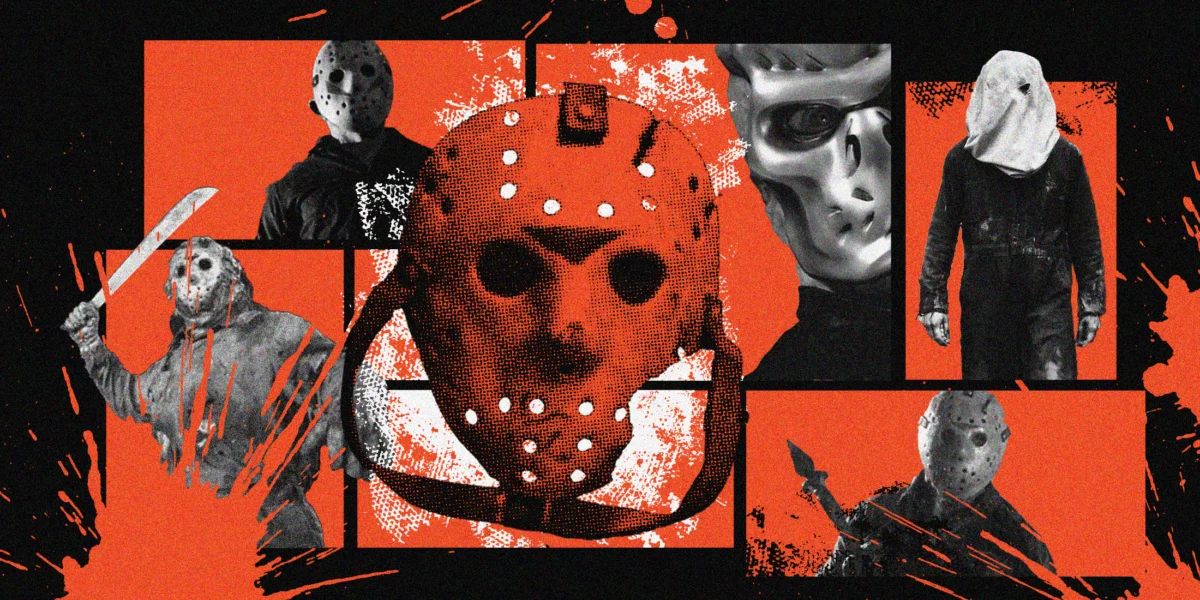
"From its origins as a low-budget exploitation project to its status as a multi-billion-dollar cultural institution, the Friday the 13th franchise has redefined horror by transforming a silent, masked killer into a global icon of the slasher genre."

This comprehensive retrospective explores the evolution of Jason Voorhees, examining how a series initially designed to capitalize on the success of John Carpenter’s Halloween eventually carved out its own unique identity through supernatural pivots, experimental crossovers, and a complex legal history. As the franchise prepares for a new era with the streaming series Crystal Lake, understanding its rhythmic cycle of death and rebirth offers a masterclass in the longevity of cinematic terror.
The Friday the 13th series is one of the most resilient and, at times, bizarre sagas in Hollywood history. What began in 1980 as a "down-and-dirty" independent film shot in New Jersey has expanded into a sprawling mythos encompassing ten primary sequels, a high-profile crossover, a 2009 reboot, and now, a prestige television expansion. For over forty years, the series has navigated identity crises, shifting ownership between major studios, and a decade-long legal battle over the rights to the characters of Jason and Pamela Voorhees. Despite these hurdles, the image of the hockey mask remains a universal shorthand for horror, proving that the legend of Crystal Lake is as immortal as its central antagonist.

The Foundation: Mrs. Voorhees and the 1980 Original
The first Friday the 13th, directed by Sean S. Cunningham, arrived at the dawn of the 1980s slasher boom. While modern audiences associate the title exclusively with Jason Voorhees, the original film belongs to his mother, Pamela. Driven to madness by the 1957 drowning of her son—a tragedy she blamed on negligent camp counselors—Pamela stalks a new group of teenagers attempting to reopen the cursed "Camp Blood."
The film was notable not for its script, but for its visceral practical effects by Tom Savini and its shocking twist ending. The revelation that a middle-aged woman was the killer subverted genre expectations of the time. However, it was the final jump-scare—a decomposed young Jason leaping from the water—that truly launched the franchise. This single moment of "dream-logic" horror necessitated a sequel, setting the stage for Jason’s ascension.

The Evolution of a Killer: The Early Sequels
In Friday the 13th Part II (1981), Jason returns as a grown man, having somehow survived his childhood drowning and lived in the woods as a hermit. Directed by Steve Miner, this entry is more technically proficient than the original but lacks the iconic mask. Here, Jason wears a simple burlap sack with a single eye-hole, a look heavily inspired by the 1976 film The Town That Dreaded Sundown.
It wasn’t until 1982’s Friday the 13th Part III that the franchise found its visual soul. During production, a 3D gimmick required Jason to have a more distinct silhouette. A crew member happened to have a Detroit Red Wings goaltender mask on hand, and once it was placed on actor Richard Brooker, a legend was born. Part III solidified the "template" for the slasher: a hulking, silent brute, a specific weapon (the machete), and a relentless, plodding gait.

The Tommy Jarvis Trilogy and the Rise of the Supernatural
By 1984, Paramount Pictures intended to end the series with Friday the 13th: The Final Chapter. This film is often cited by purists as the series’ peak. It introduced the character of Tommy Jarvis, played by a young Corey Feldman, providing the franchise with a recurring protagonist who served as a psychological foil to Jason. The Final Chapter featured the return of Tom Savini, who provided a definitive "death" for Jason that was meant to be permanent.
However, the film’s massive box office success made a sequel inevitable. Friday the 13th: A New Beginning (1985) attempted to move the series forward without Jason, featuring a copycat killer named Roy Burns. The fan backlash was swift; audiences wanted the real Jason Voorhees.

The studio corrected course in 1986 with Friday the 13th Part VI: Jason Lives. This entry is a pivotal moment in horror history, as it abandoned the idea of Jason as a mortal man. Resurrected by a bolt of lightning in a scene reminiscent of Frankenstein, Jason became an undead zombie with superhuman strength. Director Tom McLoughlin also infused the film with a self-aware, meta-humor that predated Scream by a decade, making it a favorite among critics and fans alike.
The New Blood and the Cruise to Manhattan
As the 1980s wound down, the franchise began to experiment with "versus" concepts. Friday the 13th Part VII: The New Blood (1988) was pitched as "Jason vs. Carrie," featuring a telekinetic teenager named Tina Shepherd who uses her powers to combat the undead killer. This film also marked the debut of Kane Hodder, the stuntman who would become the most celebrated actor to play Jason, known for his aggressive physical performance and heavy-breathing "menace."

The Paramount era concluded with 1989’s Friday the 13th Part VIII: Jason Takes Manhattan. Despite the title, budget constraints forced most of the film to take place on a cruise ship, with only the final act occurring in a Vancouver-filmed version of New York City. While it was a commercial disappointment, it remains a cult classic for its sheer absurdity and Hodder’s imposing presence.
The New Line Cinema Era: Space and Crossovers
In the 1990s, the rights moved to New Line Cinema, the "House that Freddy Built." This led to 1993’s Jason Goes to Hell: The Final Friday, a polarizing entry that introduced a body-hopping parasitic worm and expanded the lore to include mystical daggers and a bloodline-only death requirement. The film is most famous for its final shot: Freddy Krueger’s clawed hand dragging Jason’s mask into the dirt, a tease for the crossover fans had demanded for years.

Before that crossover could happen, legal and developmental delays led to Jason X (2002). Set in the year 2455, the film took Jason to a space station, eventually transforming him into "Uber Jason"—a cybernetically enhanced killing machine. It was a high-concept gamble that showcased the franchise’s willingness to lean into its own campiness.
Finally, in 2003, Freddy vs. Jason arrived. Directed by Ronny Yu, the film was a massive success, blending the dream-logic of A Nightmare on Elm Street with the brute force of Friday the 13th. It remains the highest-grossing entry in the series, serving as a violent, spectacular celebration of 1980s horror icons.

The Reboot and the Long Hiatus
In 2009, Michael Bay’s Platinum Dunes produced a reboot simply titled Friday the 13th. Directed by Marcus Nispel, the film sought to return Jason to his roots as a fast, survivalist hunter rather than a slow-moving zombie. While it performed well at the box office, it was followed by a fifteen-year drought of new content. This hiatus was the result of a grueling legal battle between original screenwriter Victor Miller and director Sean S. Cunningham over the rights to the original script and its characters. The complex ruling eventually split the rights, with Miller winning the domestic rights to the first film’s characters and Cunningham retaining the rights to the adult, masked Jason and the title itself.
Crystal Lake: A New Beginning
The drought finally ends with Crystal Lake, a new series developed for Peacock. Starring Linda Cardellini as Pamela Voorhees, the show serves as an "expanded prequel," diving into the history of the camp and the psychological descent of its most famous mother. The series represents a shift toward the "prestige horror" aesthetic common in modern television, while promising to maintain the gore and tension that defined the original slasher era.

With forty-six years of history, the Friday the 13th franchise has survived every trend in cinema. Whether he is a boy in a lake, a man in a sack, a zombie in the woods, or a cyborg in space, Jason Voorhees remains a testament to the power of simple, effective horror. As audiences return to the shores of Crystal Lake in 2026, they do so with the knowledge that while counselors may die and camps may close, the legend of Friday the 13th is truly eternal.
