
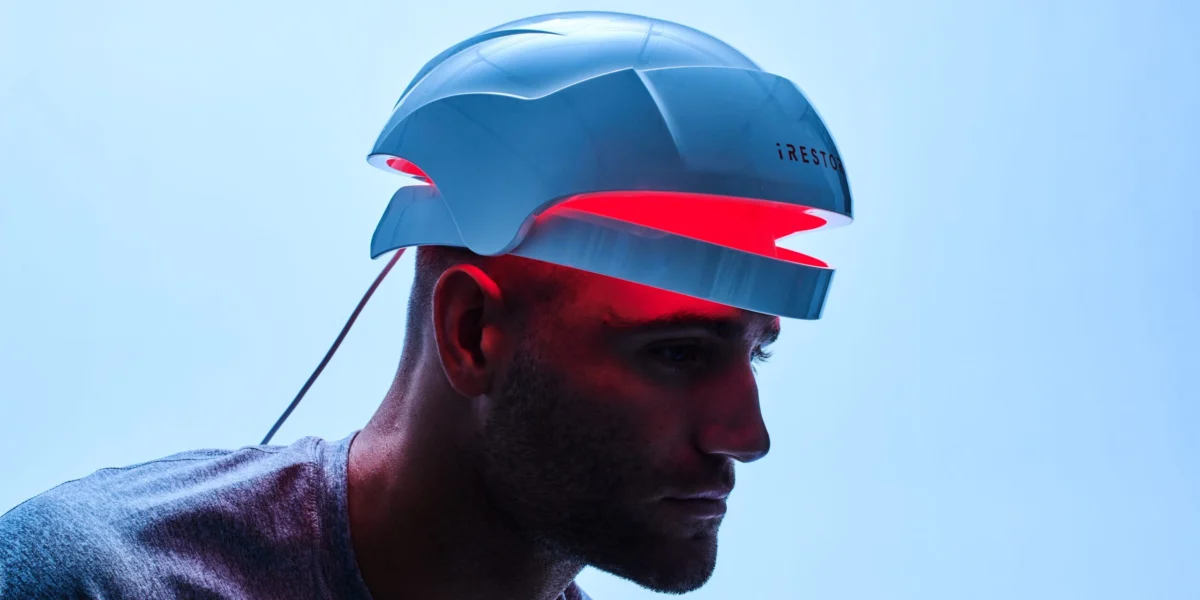
"Advancements in low-level light therapy are transforming hair restoration from invasive clinical procedures into convenient, at-home routines that target the biological roots of thinning follicles."
As androgenetic alopecia remains a primary concern for millions, the shift toward non-invasive, light-based treatments represents a significant evolution in personal grooming and dermatological health. By utilizing specific wavelengths of red light to stimulate cellular activity, these devices offer a drug-free alternative or supplement to traditional chemical treatments, providing a path to increased hair density and scalp health through the power of photobiomodulation.

The landscape of hair loss treatment has undergone a radical transformation over the last decade. For years, the gold standard for combating thinning hair was limited to topical solutions like Minoxidil or oral medications like Finasteride. While effective, these options often come with the burden of lifelong daily application or the risk of systemic side effects. Enter Low-Level Laser Therapy (LLLT)—a technology once confined to high-end hair restoration clinics, now miniaturized into helmets, caps, and combs designed for the living room.
The Mechanism of Photobiomodulation
At the heart of these devices is the principle of photobiomodulation. When the scalp is exposed to red light in the 620 to 670 nanometer (nm) range, the photons are absorbed by the mitochondria within the hair follicles. This absorption triggers an increase in adenosine triphosphate (ATP) production, essentially "recharging" the cells. This boost in energy facilitates several critical biological processes: it reduces micro-inflammation around the follicle, improves local blood microcirculation to deliver more oxygen and nutrients, and can even help inhibit the local effects of dihydrotestosterone (DHT), the hormone primarily responsible for male pattern baldness.
However, not all light is created equal. The industry remains divided between two primary light sources: laser diodes and light-emitting diodes (LEDs). Laser light is coherent and monochromatic, allowing it to penetrate deeper into the skin tissue to reach the base of the follicle. LED light is incoherent and covers a broader area, making it excellent for reducing surface inflammation and improving overall scalp health. The most sophisticated devices on the market today are increasingly looking toward hybrid models to capture the benefits of both.

The Hybrid Leader: iRestore Laser Therapy Hair Growth System
The iRestore Laser Therapy Hair Growth System stands at the forefront of the hybrid movement. By combining medical-grade laser diodes with high-efficiency LEDs, the device aims to provide a comprehensive treatment that addresses both deep-seated follicle stimulation and broader scalp rejuvenation.
Dermatologists, including Dr. Shah, have noted that iRestore’s reputation is bolstered by its FDA clearance, a critical benchmark for safety and efficacy in the medical device space. One of the most significant hurdles for consumers is the financial risk associated with high-tech grooming tools; iRestore mitigates this with a six-month money-back guarantee. This confidence is rooted in the device’s design, which provides full-dome coverage, ensuring that the light reaches the crown, hairline, and temples simultaneously.
Despite its success, some experts, such as Dr. Bauman, point out a potential trade-off. There is a school of thought suggesting that mixing light sources might "dilute" the specific intensity of the lasers. Nevertheless, for the average user, the 25-minute sessions offered by iRestore have become a benchmark for at-home restoration.

The LED Specialist: CurrentBody Skin LED Hair Regrowth Device
For those who prioritize scalp health and a gentler approach, the CurrentBody Skin LED Hair Regrowth Device offers a specialized LED-only experience. This device focuses on a spectrum ranging from 620 to 660 nm. While it lacks the deep-tissue penetration of pure lasers, its flexible intensity makes it an ideal choice for users with sensitive skin or those in the early stages of thinning.
The CurrentBody helmet is designed with a futuristic aesthetic—often compared to a VR headset—but its functionality is grounded in comfort and adjustability. The primary goal of this device is to foster a healthy environment for growth by decreasing DHT levels and maximizing blood flow. With a shorter daily commitment of just 10 minutes, it appeals to busy professionals. Results are typically documented within a 16-week window, though it carries a premium price tag, often retailing for significantly more than its hybrid competitors.
Stealth and Convenience: HigherDose Red Light Therapy Hat
One of the greatest barriers to consistent hair loss treatment is the "compliance gap"—users often stop treatments because they are cumbersome or embarrassing. The HigherDose Red Light Therapy Hat addresses this by disguising a powerful 650 nm LED array inside a standard black baseball cap.

Unlike helmets that require the user to remain stationary or look like a sci-fi character, the HigherDose hat allows for total discretion. This design allows users to undergo their 10-minute daily session while running errands, walking the dog, or sitting in a coffee shop. Testimonials from long-term users suggest that the hat is less invasive than Rogaine, avoiding the redness and irritation often associated with chemical topicals. While the brand suggests a 16-month window for peak results, visible improvements in hair thickness and scalp coverage are often noted by the six-month mark.
Precision and Speed: The Hairmax LaserBand 82
If the HigherDose hat is the most discreet, the Hairmax LaserBand 82 is the most efficient. Eschewing the cap or helmet design, the LaserBand resembles a sleek, curved arc that sits across the head. Its primary advantage is speed; the device is designed for sessions as short as 90 seconds.
Equipped with 82 medical-grade laser diodes (which provide 246 total laser pulses when moved across the scalp), the LaserBand 82 is built for high-intensity delivery. Dr. Bauman suggests that while 90 seconds is the marketed minimum, a two-to-three-minute session ensures better coverage as the user repositions the band from the front to the back of the head. This device is particularly suited for individuals who want the power of pure laser diodes without the time commitment of a 25-minute helmet session.

Accessibility: Hairmax Ultima 12 LaserComb
Recognizing that the thousand-dollar price point of many helmets is a barrier to entry, the Hairmax Ultima 12 LaserComb offers an affordable, FDA-cleared alternative. As a manual tool, the LaserComb requires the user to actively brush the device through their hair for approximately eight minutes.
The comb design serves a functional purpose beyond just being a handle; the teeth of the comb part the hair, allowing the 12 laser diodes to have a clear path to the scalp. This is particularly important for individuals who still have a significant amount of hair but are noticing diffuse thinning. While it requires more manual effort than a wearable device, it remains the most cost-effective way to access medical-grade laser technology at home.
Managing Expectations and Long-Term Success
While the technology behind LLLT is robust, experts emphasize that these devices are not overnight "miracle cures." Hair growth is a slow biological process, and light therapy works by shifting follicles from the Telogen (resting) phase back into the Anagen (growth) phase.

Most clinical studies and manufacturer guidelines suggest a minimum of four to six months of consistent use before significant changes are visible. Furthermore, these devices are most effective for those experiencing early to moderate stages of hair loss. For follicles that have been dormant for many years and have completely scarred over, light therapy may have limited impact.
The future of hair restoration likely lies in "combination therapy." Many dermatologists now recommend using LLLT devices in conjunction with thickening shampoos, scalp serums, and even prescribed medications. By attacking hair loss from multiple angles—biological, hormonal, and mechanical—men and women can maximize their chances of maintaining a full head of hair well into their later years. As the technology continues to shrink in size and grow in power, the boundary between professional clinical care and daily home grooming continues to vanish.
