
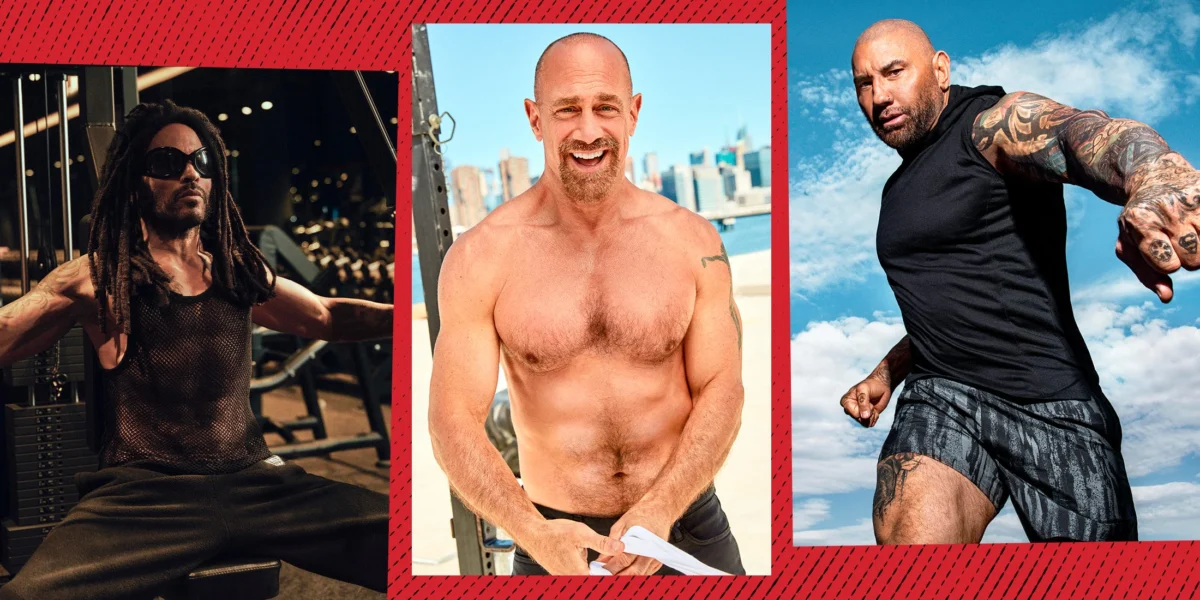
"Aging is not a signal to slow down, but an invitation to refine one’s approach to health, proving that the peak of physical performance is achievable well into one’s fifties and beyond through disciplined adaptation."
The pursuit of fitness in middle age is often framed as a battle against inevitable decline, yet a growing cohort of high-performing individuals is dismantling the myth that vitality has an expiration date. By shifting the focus from purely aesthetic goals to a holistic integration of functional strength, mental resilience, and nutritional precision, men like Frank Grillo, Lenny Kravitz, and Dave Bautista are demonstrating that the fifth decade can represent a new physical prime. This evolution requires a departure from the ego-driven workouts of youth in favor of "smart" training—an approach that prioritizes joint health, cardiovascular efficiency, and a deep-seated mind-body connection to ensure that the body remains as capable as the mind.
The New Paradigm of Mid-Life Fitness
For many, the milestone of a 50th birthday brings a psychological weight that can lead to physical discouragement. As the body’s natural production of testosterone declines and the risk of sarcopenia—the age-related loss of skeletal muscle mass—increases, it is easy to succumb to the belief that one’s best years are in the rearview mirror. However, the training philosophies of modern icons suggest the opposite. The "Train Like" series featured by Men’s Health has revealed a consistent trend: men in their fifties are often outperforming their younger counterparts not through brute force, but through superior consistency and refined technique.
As Frank Grillo, the 59-year-old action star, notes, the fifties should not be viewed as a period of deceleration. Instead, it is a time to lean into the work. "In your fifties, you think you should be slowing down. But I’m probably in the best shape of my life," Grillo asserts. His sentiment is echoed by a generation of men who have realized that while time is a constant, the rate of physical aging is, to a significant degree, a variable within their control.
Tip 1: The Critical Importance of Lower-Body Hypertrophy
In the world of fitness, "leg day" is often the first casualty of a busy schedule or an aging physique. Many men over 50 focus exclusively on the "mirror muscles"—the chest, shoulders, and arms. However, neglecting the lower body is a strategic error. The legs contain the largest muscle groups in the body; training them is essential for metabolic health and hormonal regulation.
Dave Bautista, known for his imposing physique in the Guardians of the Galaxy franchise, admits to a lifelong obsession with leg development. Standing at 6’4", Bautista feared the "skinny leg" aesthetic common among tall men, leading him to prioritize heavy squatting. Similarly, Christopher Meloni, whose physical presence remains a hallmark of his long television career, discovered the benefits of squats later in life. Meloni admits he previously relied on leg presses and sleds, shying away from the squat rack because of the sheer difficulty of the movement.
From a physiological standpoint, the transition to free-weight squats is transformative. Squats engage the core, improve bone density in the hips and spine, and stimulate the neuromuscular system in ways that machines cannot. For the man over 50, this translates to better balance, a more robust metabolism, and the functional strength required for everyday longevity.

Tip 2: The Cognitive and Physical Rewards of Fight Training
Boxing and martial arts are often perceived as young men’s sports, yet they offer unique benefits for the aging athlete. Fight training is a high-intensity interval training (HIIT) modality that demands total-body coordination. It forces the core, shoulders, and back to work in a synchronized "kinetic chain," producing power that originates from the ground up.
Frank Grillo views boxing as more than just a caloric burner; he describes it as "therapy." The repetitive nature of the drills creates a "language" of movement that keeps the brain sharp. "It keeps my brain moving, and where the head goes the body follows," Grillo explains. This highlights a crucial aspect of fitness over 50: neuroplasticity. Learning complex movement patterns, such as those found in Brazilian Jiu-Jitsu or boxing, helps maintain cognitive function and reaction time.
Dave Bautista, a former professional wrestler, ranks fight training as the most grueling form of exercise he has ever encountered. The five-minute rounds of a fight camp require a level of cardiovascular endurance and mental fortitude that traditional weightlifting rarely touches. By incorporating these elements, older athletes can maintain a high level of "work capacity," ensuring their hearts and lungs remain as strong as their muscles.
Tip 3: Reimagining Cardiovascular Health
Cardio is often the most polarizing aspect of fitness. While some find solace in long-distance running, others find it monotonous or taxing on the joints. The key for the 50-plus demographic is variety and low-impact intensity. Grillo utilizes shadowboxing to elevate his heart rate without the orthopedic stress of pavement pounding. Bautista leans on the Assault bike—a fan-driven stationary bike that provides a full-body workout—alongside his martial arts training.
The goal of cardiovascular work at this age is to improve mitochondrial health and heart rate variability (HRV). Whether through steady-state aerobic work or high-intensity bursts, maintaining a strong aerobic base is the foundation upon which all other physical attributes are built.
Tip 4: Environmental Flexibility and "Green Exercise"
A common barrier to fitness is the rigid association of exercise with the gym. Lenny Kravitz, who maintains a shredded physique at 60, has famously debunked this by utilizing his natural surroundings. While living in the Bahamas, Kravitz used a fallen tropical tree trunk as a weight bench.
"I’d rather be outside in nature than being cooped up inside of a gym," Kravitz says. This concept, often called "Green Exercise," has been shown to lower cortisol levels and improve mood more effectively than indoor training. For the busy professional, the lesson is simple: the world is your gym. Whether it is using an ottoman for Bulgarian split squats or a park bench for dips, the ability to adapt one’s environment ensures that a workout is never missed due to lack of equipment.
Tip 5: The Psychological Blueprint of Success
Lou Ferrigno, the legendary bodybuilder and original Incredible Hulk, argues that the true value of fitness lies in the mindset it cultivates. "If you can control your body and change your body, there’s no reason you can’t do anything beyond this," Ferrigno says. This philosophy suggests that physical discipline is a microcosm of life success.

For men over 50, the "rules" of aging are often self-imposed. Grillo notes that as one gets older, the capacity for work can actually increase if the recovery and mindset are aligned. Bautista views his current health as a way to "stay young and rejuvenated," seeing his fitness as a priceless investment in his ongoing career and self-worth.
Tip 6: Holistic Creativity and Consistency
Fitness is not merely a physical endeavor; it is a catalyst for mental clarity. Kravitz trains five to six days a week because he finds that exercise keeps his "mind, body, and spirit" in a state conducive to creativity. Bautista echoes this, stating that he often trains twice a day not for the sake of his appearance, but "to keep my mind right."
In your fifties, the volume of training may need to be adjusted, but the frequency should remain high. Grillo’s four-hour-a-day regimen may be extreme for the average person, but it underscores a fundamental truth: consistency is the only path to mastery.
Tip 7: The Nutritional Shift Toward Longevity
As the metabolism slows, dietary precision becomes non-negotiable. Many elite men over 50 have shifted toward plant-forward or Mediterranean-style diets to reduce systemic inflammation and improve digestion.
Lenny Kravitz adheres to a primarily raw vegan diet, stocking his fridge with organic vegetables. Dave Bautista, who once consumed vast amounts of animal protein, has largely eliminated red meat and pork, moving toward a plant-based diet supplemented by fish and eggs. This shift often results in better energy levels, clearer skin, and improved recovery times—factors that are vital when training intensely at an advanced age.
Tip 8: Core Integrity and the Reality of Dedication
The final pillar of mid-life fitness is core strength. A strong core protects the spine, improves posture, and is the center of all athletic movement. While many chase "six-pack abs" for aesthetic reasons, the functional necessity of a strong midsection cannot be overstated.
Ultimately, achieving a high level of fitness over 50 requires a level of dedication that most are unwilling to provide. Grillo offers a blunt reality check to those who claim they want to be in "that kind of shape" when they reach his age: "Well, you’re not in that shape now. So what makes you think you’re going to be in that kind of shape when you’re 50?"
The message is clear: the work begins today. Age is a factor, but it is not a cage. By embracing the challenge, adjusting the methods, and maintaining an unwavering commitment to the process, the years beyond 50 can truly be a man’s most powerful decade.
