
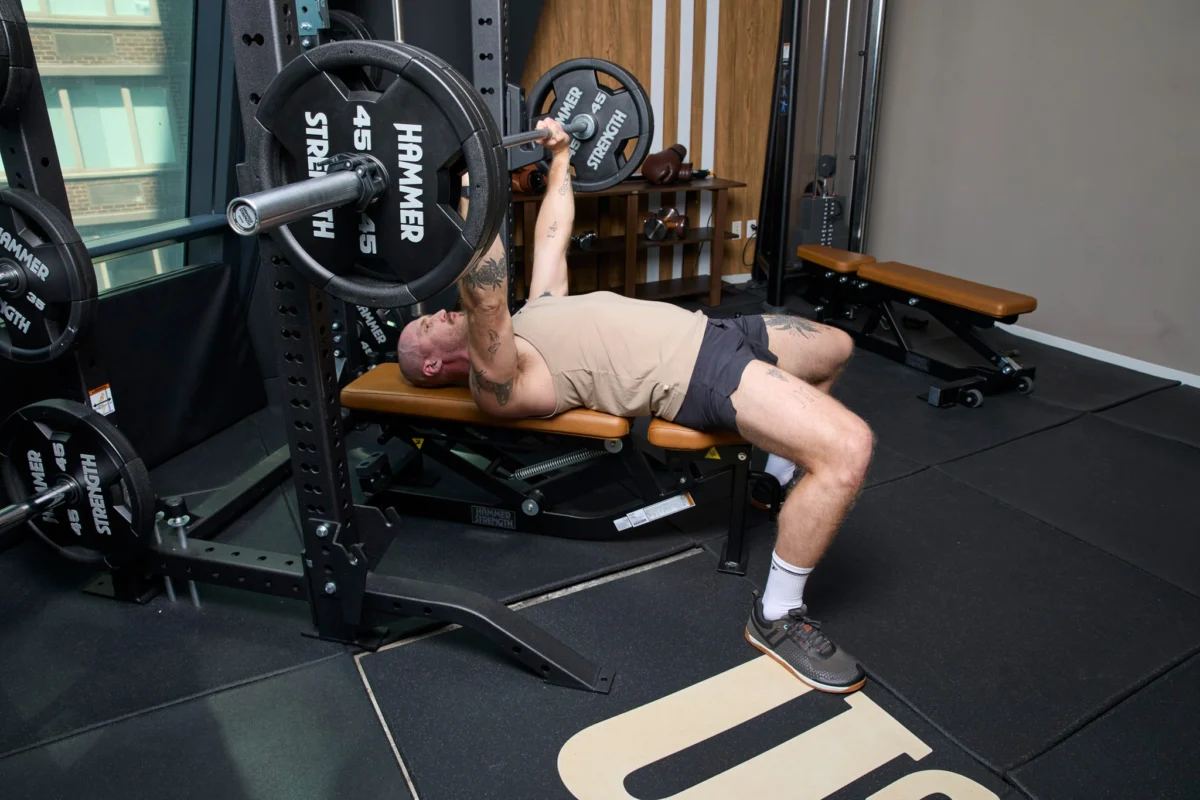
"A successful bench press is built on a foundation of total-body tension, where the legs and core provide the stability necessary for the upper body to exert maximal force safely."
The barbell bench press is often regarded as the definitive measure of upper-body strength, serving as a cornerstone in the programming of powerlifters, bodybuilders, and general fitness enthusiasts alike. While it is frequently categorized simply as a chest exercise, a technically proficient bench press is a complex, multi-joint movement that requires the synchronized recruitment of the pectorals, triceps, anterior deltoids, and a stabilizing network of core and lower-body muscles. To move significant weight without risking acute or chronic injury, lifters must move beyond the "lie down and push" mentality and embrace a disciplined, systematic approach to the setup and execution of the lift.
The Biomechanics of the Gold Standard
The bench press earns its reputation as a "gold standard" lift because of its unparalleled ability to overload the upper body. Unlike isolation movements, the barbell allows for the greatest amount of weight to be moved through a horizontal pressing plane. This high-load capacity triggers significant hypertrophy and neuromuscular adaptations. However, as Ebenezer Samuel, C.S.C.S., fitness director at Men’s Health, observes, the exercise is deceptively complex. For many beginners, the lift is approached with "messy form," which not only limits the potential for muscle gains but also places the shoulder joints—specifically the rotator cuff and the acromioclavicular (AC) joint—in a vulnerable position.
To transform the bench press into an efficient tool for strength, one must understand the "kinetic chain." Force does not start at the chest; it begins at the floor and travels through the legs, hips, and torso before reaching the bar. When this chain is broken—by loose legs or an unstable core—energy "leaks," and the amount of weight one can safely press diminishes.
The Foundation: An Active Setup
A common misconception is that the bench is a place to relax before the work begins. In reality, the setup is the most critical phase of the lift. A casual position on the bench leads to a flat back and loose shoulders, which increases the distance the bar must travel and reduces the stability of the shoulder girdle.
The setup must be "active." This begins with the "ground-up" approach. Rather than merely placing the feet on the floor, the lifter should drive their heels into the ground. This creates a sturdy base and allows for "leg drive," a technique where the lower body assists in stabilizing the torso and maintaining a slight, natural arch in the spine. Following the feet, the glutes must be aggressively contracted. Squeezing the glutes serves two purposes: it anchors the lower body to the bench and creates a rigid midsection, ensuring that the power generated by the chest and arms has a solid platform from which to push.

Upper body stability is achieved by driving the shoulders into the bench. While elite powerlifters often utilize an extreme lumbar arch to minimize the range of motion, the average lifter should focus on scapular retraction—pinching the shoulder blades together and down. This creates a "shelf" of muscle that protects the delicate structures of the shoulder and provides a firm foundation for the press.
Hand Placement and the Physics of the Grip
Grip width is a variable that can significantly alter the mechanics of the lift. A common error is adopting an excessively wide grip. While this shortens the distance the bar travels, it places immense strain on the shoulders and reduces the recruitment of the triceps and chest. Conversely, a grip that is too narrow shifts the load almost entirely to the triceps, turning the movement into a "close-grip" bench press.
To find the optimal grip, a lifter should lower an empty bar to their sternum and adjust their hands until their forearms are perfectly perpendicular to the floor at the bottom of the movement. This "90-degree" forearm angle ensures that the force is directed vertically, maximizing mechanical advantage.
Regarding the grip itself, the standard overhand (pronated) grip with the thumb wrapped around the bar is the safest and most effective method. Some experienced lifters experiment with the "suicide grip" or "death grip," where the thumb is not wrapped. While this can sometimes feel more comfortable for the wrists, the risk is catastrophic; without the thumb as a lock, the bar can slip and fall directly onto the lifter’s chest or neck. Unless working with elite-level supervision, the thumb-wrapped grip remains the mandatory standard.
Execution: The Path of the Bar
Once the bar is unracked, the lifter must engage the lats. This is achieved by attempting to "rotate" the elbows inward toward the hips, which creates a stable "tucked" position for the arms. This is followed by "un-shrugging" the shoulders, pulling them down away from the ears and toward the glutes.
The descent of the bar should not be a straight vertical line to the mid-chest. Instead, the elbows should form a 45-degree angle relative to the torso. This path brings the bar down to the lower chest or sternum. This "tuck" of the elbows is vital for shoulder health, as it prevents the humerus from impinging the rotator cuff tendons.
The ascent follows the same path in reverse. The lifter should press the bar back up and slightly toward the face, ending with the bar directly over the shoulders. Throughout the rep, the elbows should remain under the wrists to ensure efficient force transfer.

Identifying and Correcting Common Faults
Even with a perfect setup, technical breakdown often occurs as fatigue sets in. Recognizing these "leaks" is essential for long-term progress.
1. The Glute Lift: When a weight is too heavy, lifters often instinctively lift their butt off the bench to change the angle of the press. This essentially turns the movement into a decline press and shortens the range of motion. However, it compromises the lower back and negates the stability of the kinetic chain. The solution is to keep the glutes "glued" to the bench by focusing on driving the heels down rather than pushing the hips up.
2. Happy Feet: Movement in the feet during a set indicates a lack of total-body tension. If the feet are sliding or tapping the floor, the base is unstable. Lifters must commit to a foot position before the first rep and maintain it until the bar is safely re-racked.
3. The Larsen Press Fallacy: Some lifters choose to lift their feet off the floor or place them on the bench. While there is a specific variation called the "Larsen Press" used to build core stability by removing leg drive, it is an advanced accessory movement. In a standard bench press, removing the feet from the floor eliminates the ability to generate power and maintain a stable arch, making it a "dumb mistake" for those looking to maximize strength.
4. Range of Motion Issues: "Ego lifting" often leads to partial repetitions where the bar stops several inches above the chest. The bottom two to three inches of the bench press are the most difficult, but they are also the most productive for pectoral and anterior deltoid development. If the bar does not touch the chest, the rep is incomplete.
5. Elbow Flaring: As the lift becomes difficult, the body may try to flare the elbows out to 90 degrees to find more leverage. This puts the shoulders at high risk. To combat this, lifters should use the cue "break the bar." By imagining they are trying to bend the barbell into a U-shape toward their feet, they engage the lats and keep the elbows tucked in the safe, 45-degree power position.
Conclusion: The Path to Progressive Overload
The barbell bench press is more than a simple test of pectoral strength; it is a discipline of tension and geometry. By treating the setup with as much respect as the lift itself, and by prioritizing technical precision over the amount of weight on the bar, lifters can ensure steady, injury-free progress. Strength is built on a foundation of stability, and in the world of the bench press, that stability starts at the floor and ends with a locked-out bar.
