
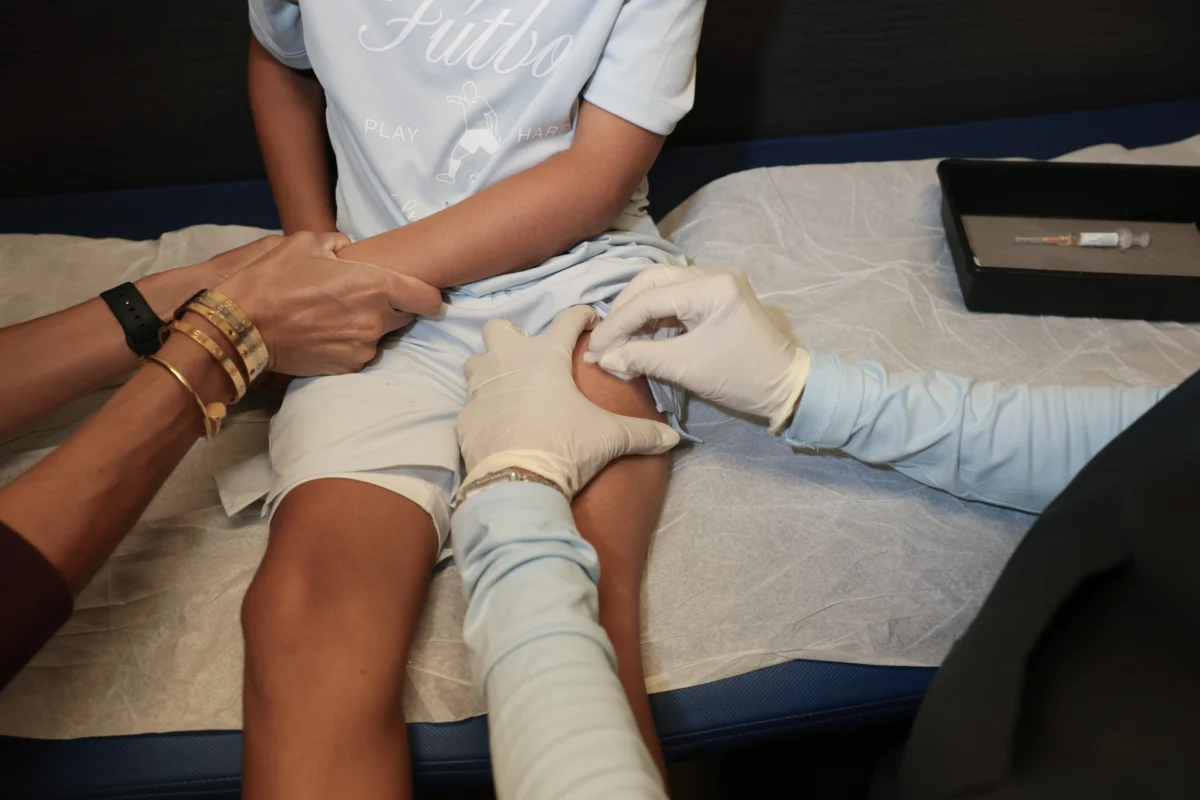
"The resurgence of measles is a stark reminder that highly contagious diseases can spread rapidly when vaccination rates falter, especially in community settings like schools, putting vulnerable populations at severe risk."
The United States is currently experiencing a significant increase in measles cases, with the federal tally surpassing 3,400 confirmed infections for 2026. This surge, largely driven by sustained community spread rather than isolated travel cases, highlights a concerning decline in vaccination coverage among young children and underscores the critical need for robust public health interventions. As outbreaks intensify, particularly in states like Pennsylvania, families are urged to verify their immunization status and take proactive measures to protect themselves and their communities from this preventable, yet potentially severe, illness.
National Measles Tally Climbs Amidst Waning Herd Immunity
As of September 17, 2026, the Centers for Disease Control and Prevention (CDC) has reported a total of 3,471 confirmed measles cases across the United States. This represents an increase of 177 cases, or approximately 5.4%, from the previous week’s count of 3,294. The data, meticulously tracked by Contagion Live, paints a clear picture of a disease that is regaining a foothold in communities where vaccination rates have dipped below crucial thresholds.
Of the total confirmed cases, a staggering 95% are directly linked to ongoing outbreaks, indicating a pattern of sustained community transmission. This is particularly concerning as it coincides with the beginning of the academic year, a period when children are in close contact, facilitating the rapid spread of infectious diseases. Cases have now been reported in 47 jurisdictions, underscoring the widespread nature of the current measles resurgence. The remaining 17 cases involve international visitors to the U.S., a reminder of the global nature of measles and the importance of international vaccination efforts.
The current 2026 case count has already surpassed the full-year total of 2,289 cases reported in 2025, which was itself the highest annual figure recorded since 1991. This trend suggests that 2026 is on track to become a year with exceptionally high measles incidence. It is important to note that the CDC’s national data reflects only laboratory-confirmed cases that have been officially reported by state and local health departments, meaning state-level dashboards may often present more up-to-date figures.
A critical factor contributing to this surge is the documented decline in measles, mumps, and rubella (MMR) vaccination coverage among kindergarteners. Data from the CDC’s SchoolVaxView reveals a drop in coverage from 95.2% during the 2019-2020 school year to 92.4% in the 2025-2026 school year. This decline leaves approximately 280,000 kindergartners unprotected, falling below the 95% herd immunity threshold generally required to prevent widespread outbreaks. Herd immunity, a concept crucial for protecting those who cannot be vaccinated, relies on a high percentage of the population being immune, thereby limiting the virus’s ability to spread.
Pennsylvania Grapples with the Nation’s Most Significant Outbreak
Pennsylvania is currently bearing the brunt of the measles resurgence, reporting a substantial number of cases and hospitalizations. As of its September 18 update, the Pennsylvania Department of Health confirmed 767 cases across 38 of the state’s 67 counties, with 150 individuals requiring hospitalization. This represents an increase of 36 new cases in just two days, highlighting the rapid progression of the outbreak within the state.
Alarmingly, only four of Pennsylvania’s confirmed cases, less than 1% of the state total, occurred in vaccinated individuals, emphasizing the vaccine’s effectiveness in preventing infection. The state has also sadly reported four measles-associated deaths in 2026. Two of these tragic fatalities were announced on September 15, occurring in Jefferson and Mifflin counties, and both individuals were unvaccinated. The Pennsylvania Department of Health has clarified its criteria for classifying a death as measles-associated, requiring clinical evidence of infection, a positive laboratory test, and confirmation that the death was not due to an unrelated cause, occurring within 30 days of symptom onset.
In response to the escalating crisis, vaccination demand in Pennsylvania has surged. State health officials have administered nearly 4,800 MMR doses through 148 pop-up clinics since the outbreak began in late April. Furthermore, state health center staff have administered over 6,900 doses statewide this year. Across all healthcare providers in Pennsylvania, more than 46,000 MMR doses were administered in August, a significant increase from the typical monthly average of approximately 25,000 doses. The trend continued into September, with over 25,000 doses administered in the first two weeks alone.
Discrepancies in Federal and State Death Reporting
A notable discrepancy exists between the CDC’s national tally and state-reported measles deaths. The CDC’s national measles page currently lists zero deaths for 2026. This is attributed to a methodological gap in how mortality data is collected and reported at the federal level. The National Center for Health Statistics (NCHS), which provides death records to the CDC, has not yet logged any death certificates listing measles as the underlying cause of death for 2026.
The CDC acknowledges this difference, explaining that it is collaborating with the Council of State and Territorial Epidemiologists to develop a standardized case definition for measles deaths. Currently, the federal count relies on death certificate data, a slower system not specifically designed for the rapid confirmation of individual measles cases. In contrast, state health departments, like Pennsylvania’s, can often confirm measles-associated deaths more quickly through their own investigative processes, which include clinical evidence, laboratory confirmation, and the exclusion of other causes. Until a standardized federal definition and reporting mechanism are fully implemented, state and federal mortality figures may continue to diverge. This distinction is crucial for understanding the full impact of the disease, even if the federal count lags in reflecting these tragic outcomes.
Identifying High-Risk Populations and Understanding Symptoms
The risk posed by measles is not distributed equally across the population. The highest levels of exposure and severe outcomes are concentrated among several vulnerable groups. Unvaccinated individuals of any age are at the forefront of this risk, as they lack the protective antibodies conferred by the MMR vaccine. Infants under 12 months of age are also at significant risk because they are too young to receive their first dose of the MMR vaccine, which is typically administered around 12-15 months of age. Pregnant individuals are another key group of concern, as measles infection during pregnancy can lead to serious complications for both the mother and the fetus, including an increased risk of miscarriage and premature birth. Furthermore, individuals with weakened immune systems, such as those undergoing chemotherapy, living with HIV, or suffering from other immunocompromising conditions, are highly susceptible to severe measles illness and its complications.
Pennsylvania health officials report that approximately 20% of individuals who contract measles require hospitalization. The mortality rate associated with measles, while relatively low, can range from one to three deaths per 1,000 cases. The state’s own hospitalization figures align closely with this, with 150 hospitalizations recorded among its 767 confirmed cases.
Dr. Erica Schwartz, the newly appointed Director of the CDC, emphasized the contagious nature of measles in a recent media interview, describing it as "the most contagious disease." She highlighted potential severe outcomes, including pneumonia and subacute sclerosing panencephalitis (SSPE), a rare but almost always fatal degenerative neurological disease that can occur years after a measles infection. Dr. Schwartz firmly stated, "The MMR vaccine is safe and effective," underscoring its vital role in preventing these devastating consequences.
Recognizing the symptoms of measles is crucial for prompt action. Initial symptoms typically appear 7 to 21 days after exposure and include fever, cough, runny nose, and red, watery eyes. These prodromal symptoms are followed by a characteristic rash that usually begins on the face and spreads downwards to the rest of the body.
Practical Steps for Families and Healthcare Providers
Given the current measles resurgence, families are strongly advised to take proactive steps to ensure their protection and that of their loved ones. The most critical measure is to verify immunization records for every household member. This includes not only children but also adults, as some individuals may have only received one dose of the MMR vaccine in their lifetime, which provides approximately 97% lifetime protection. Two documented doses are recommended for sustained immunity.
Individuals who suspect they may have been exposed to measles should contact a healthcare provider immediately before visiting a clinic or emergency room. This precautionary measure is essential because the measles virus is highly contagious and can remain infectious in the air and on surfaces for up to two hours after an infected person has left the area. Alerting the clinic in advance allows them to implement appropriate infection control measures, protecting other patients and staff.
If measles symptoms appear, seeking medical attention is paramount. Urgent care should be sought for any signs of breathing difficulties or confusion, which can indicate more severe complications. For residents of Pennsylvania, the state health department offers a dedicated hotline at 877-PA-HEALTH for further information and guidance.
The CDC continues to update its national measles data weekly, providing a crucial overview of the national situation. Pennsylvania also maintains a dashboard with county-level data, offering more localized insights into the outbreak. Health journalists and news outlets will continue to monitor these updates and report on any significant changes, including shifts in how measles deaths are counted and reported.
Accessing the MMR Vaccine
The MMR vaccine is widely available and accessible through various channels, ensuring that individuals can get vaccinated to protect themselves and their communities. Families can obtain the MMR vaccine through their primary care physician or pediatrician. Pharmacies also increasingly offer vaccination services, providing a convenient option for many. Local county and municipal health departments are key resources for vaccination services, often running clinics and providing immunizations at reduced or no cost. State health centers and federally qualified health centers are also important providers of the MMR vaccine, particularly in underserved areas. Additionally, the Vaccines for Children (VFC) program provides eligible children with access to vaccines at no cost, ensuring that cost is not a barrier to protection. Public health campaigns and localized outreach efforts continue to emphasize the importance of vaccination as the most effective tool against the spread of measles.
