
"By weaving the complicated history of Carol Ferris into the foundational fabric of the new DC Universe, Lanterns utilizes decades of comic book mythology to create a narrative that feels both established and emotionally resonant."
The arrival of Carol Ferris in the HBO series Lanterns represents a pivotal moment for the burgeoning DC Universe (DCU) spearheaded by James Gunn and Peter Safran. Rather than subjecting audiences to the standard tropes of a superhero origin story, the series opts for a "lived-in" approach, where characters enter the frame with decades of history, professional rivalries, and romantic entanglements already in place. This narrative strategy allows the show to bypass the introductory phase and dive directly into the emotional consequences of a life spent among the stars, using the appearance of Carol Ferris at a somber crossroads to anchor the cosmic scale of the Green Lantern Corps in a deeply human reality.
The new DC Universe distinguishes itself through its commitment to narrative density and chronological depth. In the upcoming Superman film, audiences are introduced to a Clark Kent who is already established in his dual life, skipping the well-trodden path of his initial arrival at the Daily Planet or his first meeting with Lois Lane. This philosophy extends seamlessly into Lanterns, which focuses on the interpersonal dynamics and professional evolution of John Stewart and Hal Jordan, played by Aaron Pierre and Kyle Chandler, respectively. By the time the series unfolds, the world is already populated by heroes; Nathan Fillion’s Guy Gardner has already been established as a Green Lantern in the Superman film, raising immediate and intriguing questions about the lineage of the mantle and the specific history of those who wear the ring.

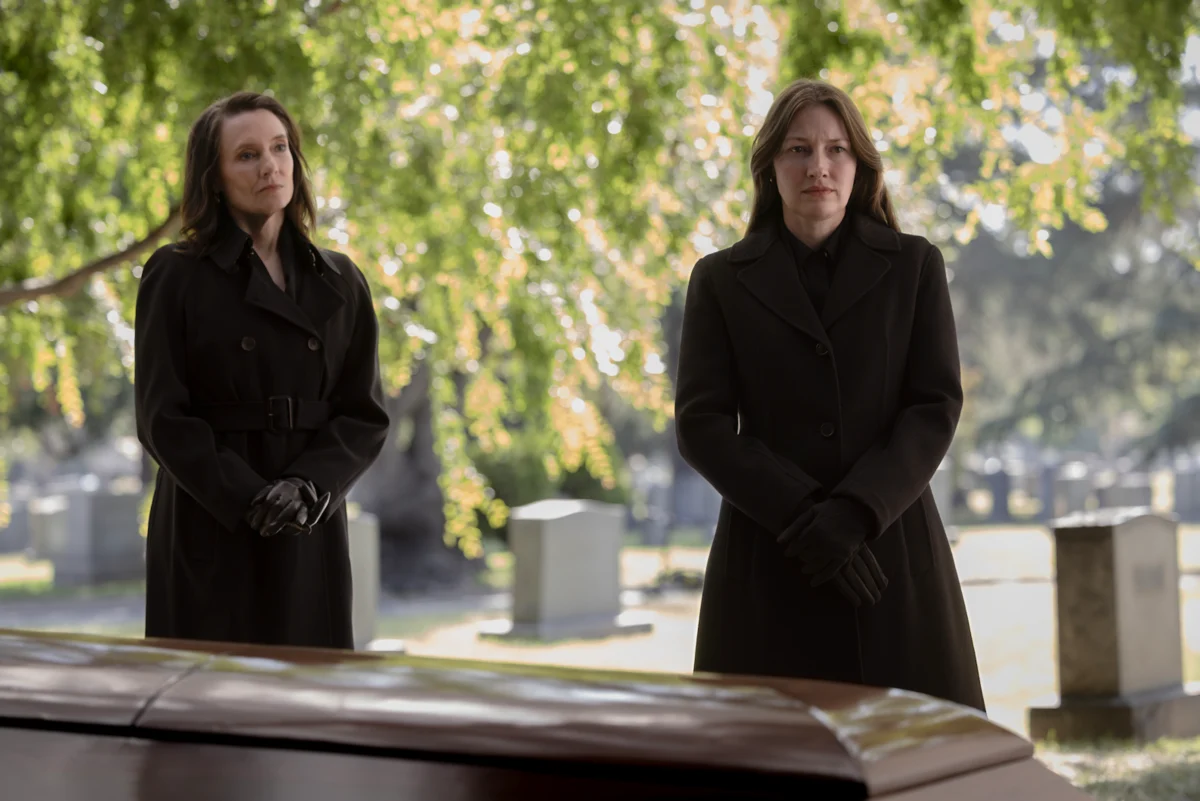
Lanterns employs a non-linear structure to illustrate this history, spanning thirty years of development within the DCU. The series utilizes three distinct timelines—1996, 2016, and 2026—to paint a portrait of a hero’s rise, mentorship, and eventual fall. In 1996, we see Hal Jordan as Earth’s first Green Lantern, a pioneer in a universe that is only beginning to understand the scope of cosmic law enforcement. By 2016, the narrative shifts to Hal’s role as a mentor to a young John Stewart, establishing the bond that serves as the emotional core of the series. However, it is the 2026 timeline that provides the show’s most haunting context: Hal Jordan has been disgraced, blamed for a catastrophic disaster in Rushville, and has spent a decade in prison. When the series depicts his funeral, the atmosphere is not one of universal mourning, but of complicated silence.
The presence of Carol Ferris, portrayed by Amie MacKenzie, at this funeral is the catalyst for exploring the deeper lore of the Green Lantern mythos. In the 2026 timeline, Hal Jordan is a man without a family or a traditional support system, leaving John Stewart to deliver a self-written eulogy for his former mentor. Yet, Carol Ferris appears—a figure from Hal’s past whose name carries immense weight for anyone familiar with DC Comics history. Her inclusion is more than a cameo; it is an acknowledgement of a relationship that, in the comics, spans decades and dimensions.
In the source material, Carol Ferris is far more than a mere love interest. First introduced in 1959’s Showcase #22, she is the daughter of Carl Ferris, the founder of Ferris Aircraft. As the Vice President and eventual President of the company, Carol was Hal Jordan’s employer long before she was his romantic partner. This power dynamic—a test pilot answering to a high-powered executive—added a layer of professional tension to their early relationship. However, their story took a cosmic turn when Carol was selected by the Zamarons, a race of female warriors from the planet Oa who served as the rivals to the Guardians of the Universe.
The Zamarons sought a queen and found a candidate in Carol Ferris. They bestowed upon her the Star Sapphire, a powerful gem that granted her abilities comparable to a Green Lantern but fueled by the violet light of love rather than the green light of will. In the early comics, this transformation often came with a loss of agency; the Star Sapphire persona was frequently depicted as a villainous trance, driving Carol to challenge and even attempt to kill Hal Jordan. This conflict between the Guardians’ rigid adherence to order and the Zamarons’ volatile pursuit of love mirrored the personal struggles between Hal and Carol, making their relationship one of the most complex and tragic in the DC pantheon.

Over the years, the character of Carol Ferris evolved significantly. The "Star Sapphire" title eventually expanded into an entire Corps, and Carol learned to harness the power of the violet ring without losing her identity to the Zamarons’ influence. She transitioned from a possessed antagonist to a formidable hero in her own right, often serving as a stabilizing force for Hal during his most turbulent periods. Their relationship remained a "will-they-won’t-they" saga, complicated by Hal’s frequent absences in deep space and Carol’s own responsibilities on Earth. The comics even saw Carol find companionship with other Lanterns, such as Kyle Rayner, further weaving her into the broader tapestry of the Green Lantern Corps.
By introducing Carol in the 2026 timeline of Lanterns, the showrunners suggest that this entire history—the flights at Ferris Aircraft, the battles between Will and Love, and the years of mutual longing—has already occurred. For the characters in the show, these are not future plot points to be discovered, but scars and memories that define who they are in the present. This approach respects the intelligence of the audience while providing a sense of gravity to the proceedings. When Carol stands at Hal’s grave, the weight of her presence is felt because of what she represents: a life that Hal Jordan could have had if he hadn’t been chosen by the ring, and a legacy that endured even after his reputation was destroyed.
The series also takes care to ground these cosmic elements through high-caliber performances and world-building details. The mention of the Guardians of the Universe, including a portrayal by Laura Linney, and the history of the Manhunters—the robotic predecessors to the Green Lanterns—indicates that the show is unafraid to embrace the denser elements of DC lore. By placing Carol Ferris within this framework, Lanterns bridges the gap between the terrestrial and the extraterrestrial. She is the link to Hal Jordan’s humanity, a reminder of his life in Coast City before he became a galactic peacekeeper.
The inclusion of Carol Ferris also hints at the potential for future expansion within the DCU. As James Gunn continues to build out this interconnected universe, the existence of the Star Sapphires or the intricacies of Ferris Aircraft could play vital roles in other films or series. The "lived-in" nature of the world means that any character introduced has the potential to carry their own narrative weight, as they are not starting from zero.

Ultimately, the appearance of Carol Ferris in Lanterns is a masterclass in narrative economy. Within a few scenes, the series manages to evoke a sense of history that would take other franchises years to establish. It reinforces the idea that the DC Universe is a place where heroes have lived, loved, and failed long before the cameras started rolling. For Hal Jordan, a character defined by his fearless navigation of the unknown, the presence of Carol Ferris at his end is a poignant reminder that his most enduring impact may not have been the battles he won in space, but the relationships he left behind on Earth. As Lanterns continues to explore the mystery of the Rushville disaster and the training of John Stewart, the shadow of Carol Ferris remains a testament to the enduring power of the Green Lantern mythos and its ability to blend high-concept sci-fi with intimate human drama.
