
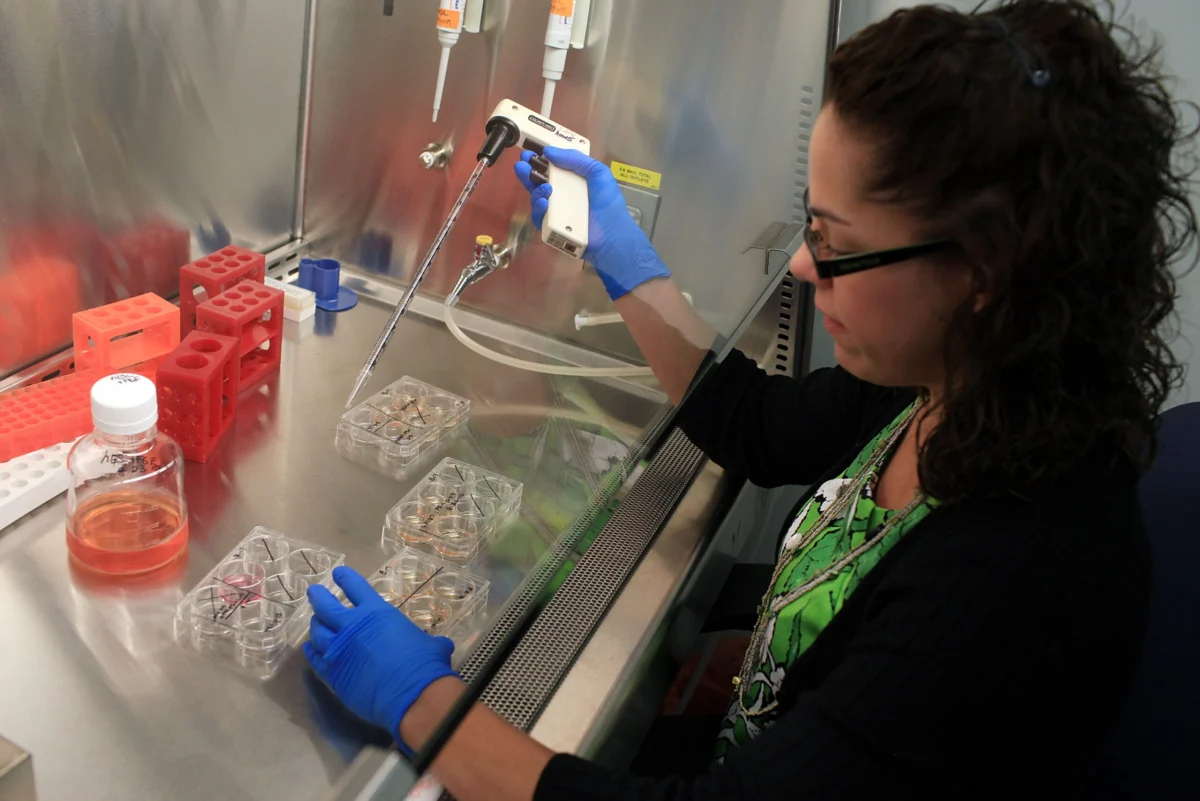
"The FDA’s updated regulations usher in a new era of drug development by officially recognizing and integrating validated human-cell based, organ-on-chip, and computational models into the safety assessment process, offering greater flexibility and potentially accelerating the path to new therapies."
The U.S. Food and Drug Administration (FDA) has significantly updated its regulatory framework for drug and biologic safety, a move poised to accelerate the development of innovative medicines. Announced on September 21 and slated for Federal Register publication on September 22, the direct final rule clarifies that scientifically validated methods employing human cells, organ-on-chip technology, and sophisticated computer modeling can now be utilized, where scientifically appropriate, to establish the reasonable safety of new medications before human trials commence. This pivotal regulatory shift, while not mandating the abandonment of animal testing, rephrases existing regulations to acknowledge the validity and utility of these advanced, human-relevant approaches, thereby streamlining the preclinical safety evaluation process and offering greater scientific flexibility to drug developers.
The modernization of these regulations represents a crucial step forward in the drug development pipeline, directly impacting the initial stages of human trials involving healthy volunteers and, more significantly, patients with serious or life-threatening illnesses who are eagerly awaiting novel therapeutic interventions. By embracing a broader spectrum of nonclinical testing methodologies, the FDA aims to enhance the predictive accuracy of preclinical safety assessments, potentially leading to faster identification of both promising candidates and potential safety concerns. This evolution aligns with a global trend toward more predictive, human-centric safety testing, promising to reduce reliance on traditional animal models while maintaining the rigorous safety standards essential for protecting public health.
A Semantic and Scientific Overhaul of Drug Safety Evaluation
At its core, the FDA’s updated rule involves a substantial redefinition of terminology within federal regulations. The agency has replaced phrases such as "animal tests" and "animal studies" with the more encompassing terms "nonclinical tests" and "nonclinical studies." This semantic shift is underpinned by a broadened definition of these terms to explicitly include a range of cutting-edge methodologies. These now encompass cell-based assays, organ-on-chip systems that mimic human organ function, sophisticated computer modeling and simulation, and other biologically relevant approaches such as bioprinting, alongside traditional animal studies. This inclusive language ensures that diverse, scientifically validated methods can be considered in the preclinical safety assessment of drugs and biologics.
The implications of this terminology change are far-reaching, impacting several critical sections of FDA regulations. For instance, a key patient safeguard previously referred to as "the review of animal studies prior to initial human testing" will now be updated to "nonclinical studies." This adjustment ensures that the review process incorporates data from all relevant preclinical methodologies, not solely those involving animal models. This regulatory update is a direct consequence of and aligns with the legislative changes introduced by the Food and Drug Omnibus Reform Act of 2022, which had already incorporated similar terminology updates into federal law.
Acting FDA Commissioner Kyle Diamantas emphasized the intent behind these changes, stating, "It gives scientists and drug developers greater flexibility to use the testing approach that best addresses their scientific question. Our goal is not to replace one rigid approach with another." This statement highlights the FDA’s commitment to scientific rigor and flexibility, recognizing that no single testing modality is universally superior. The agency’s aim is to empower researchers to select the most appropriate and informative methods for a given scientific question, thereby enhancing the quality and relevance of preclinical safety data.
Complementing these regulatory updates, the FDA has also launched a dedicated database of New Approach Methodologies (NAMs). This initiative, featuring 25 initial examples drawn from publicly available FDA review materials, serves as a valuable resource for researchers and developers seeking to understand and implement these advanced testing strategies. The database aims to demystify the application of NAMs and showcase their potential to generate robust safety data relevant to human biology.
Preserving Patient Protections in Clinical Trials
Crucially, the updated regulations do not diminish the fundamental safety protections afforded to participants in clinical trials. Sponsors remain obligated to demonstrate that initiating human studies is reasonably safe. Furthermore, the requirement to report nonclinical findings that suggest a significant risk to human health remains in place, with a strict 15-calendar-day deadline for reporting such information once it has been identified and qualified. This reporting obligation now explicitly includes findings derived from computer models or organ-on-chip systems, ensuring that crucial safety signals, regardless of their origin, are promptly communicated to regulatory authorities.
The FDA has proactively acknowledged the inherent limitations of newer methodologies within the rule itself. The agency recognizes that for drugs targeting novel biological pathways, animal studies may still be indispensable for identifying complex toxicities that arise from intricate interactions involving hormonal systems, immune responses, and the integrated communication between various organ systems. Conversely, the FDA also notes that methods utilizing human cells possess the potential to detect effects that are more directly relevant to human physiology than some traditional animal models. This nuanced perspective underscores the FDA’s commitment to a science-driven approach, where the choice of testing method is guided by the specific characteristics of the drug and the scientific questions being addressed.
The full impact and quantifiable benefits of these regulatory changes are still unfolding. The FDA anticipates no new costs associated with this rule, as it already permits the use of non-animal data where appropriate. The critical requirement for any method, whether traditional or novel, is that it must be adequately validated for its intended purpose and the specific scientific question it aims to answer. This validation process ensures that the data generated is reliable, reproducible, and predictive. While the rule grants regulators and companies enhanced flexibility, it does not unilaterally declare any single alternative method as superior to animal testing in all circumstances. The ongoing development and validation of these methods will be key to realizing their full potential.
Ultimately, patients suffering from conditions such as cancer, rare diseases, and other serious ailments stand to benefit significantly if validated human-based methods can more effectively identify unsafe drugs early in development or accelerate the progression of promising therapies into clinical trials. This potential for faster access to novel treatments is a key driver behind the regulatory modernization, although it remains a future possibility rather than a currently measured outcome.
A Public Comment Period and Global Momentum Towards Innovation
The FDA has opened a public comment period on the new rule, inviting stakeholders to provide feedback until December 7, 2026. Comments can be submitted electronically through the federal regulations portal, regulations.gov, under docket number FDA-2026-N-5347. Should the FDA receive no significant adverse comments by this deadline, the rule is scheduled to take effect on February 4, 2027. In the event of significant adverse feedback, the agency will withdraw the direct final rule and proceed with a more conventional notice-and-comment rulemaking process for a companion proposed rule.
This regulatory update is part of a broader strategic initiative by the FDA, following its April 2025 roadmap designed to reduce reliance on animal testing. The initial focus of this roadmap was on monoclonal antibody therapies, a complex class of biologics where advanced in vitro and in silico methods are increasingly applicable. The shift towards innovative testing methodologies is not confined to the United States; it reflects a growing international consensus. For example, MedicalDaily reported in August on the United Kingdom’s substantial investment of 22 million pounds in lab-grown human tissues for drug testing, including a 20 million pound research hub dedicated to this field in Cambridge.
Individuals considering participation in a clinical trial are encouraged to engage actively with study teams regarding the safety testing conducted prior to the administration of the first human doses. Asking about identified risks and the planned monitoring for side effects is crucial. These questions are pertinent regardless of whether a drug was tested in animals, human cells, or a combination of methods, empowering potential participants to make informed decisions.
Key Questions Answered
What did the FDA change? The FDA updated its drug and biologic safety regulations by replacing references to "animal" studies with the broader term "nonclinical" studies. This clarifies that validated non-animal methods, such as those using human cells, organ-on-chips, and computer models, can be used in preclinical safety assessments where scientifically appropriate.
Does this ban animal testing? No, the updated regulations do not ban animal testing. Animal studies remain an accepted and often necessary component of preclinical safety evaluation, particularly for assessing complex biological interactions.
Does this lower safety standards? The FDA maintains that the evidence standards for drug approval remain unchanged. Sponsors are still required to demonstrate that a drug is reasonably safe before it can be administered to humans in clinical trials.
What are New Approach Methodologies (NAMs)? NAMs encompass a range of advanced testing methods that aim to provide more human-relevant safety data. These include human cell-based assays, organ-on-chip systems that mimic human organ function, computer modeling and simulation, and other biologically based approaches that can offer insights into drug toxicity and efficacy.
When does the rule take effect? The rule is scheduled to become effective on February 4, 2027, provided that the FDA does not receive significant adverse comments by the public comment deadline of December 7, 2026.
How can the public weigh in? The public can submit comments on the rule through the federal regulations portal at regulations.gov. The specific docket number for this rulemaking is FDA-2026-N-5347.
