
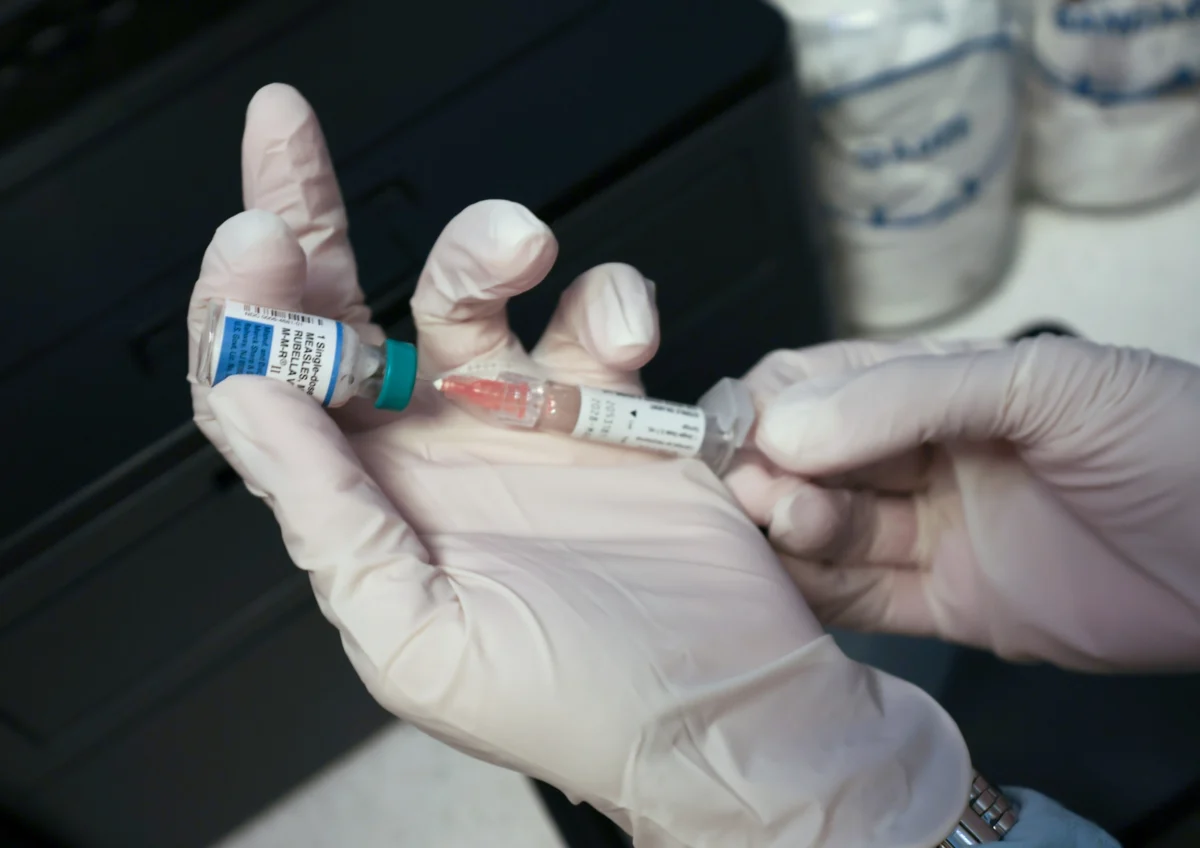
"Measles is no longer a distant concern for central and northern Wisconsin families as cases now appear in Marathon and Chippewa counties, underscoring the virus’s expanding reach beyond its initial southwest outbreak and highlighting the critical need to review childhood and adult vaccination statuses."
Wisconsin is currently grappling with a growing measles outbreak that has surpassed its initial containment zone in the southwest, extending its reach into central and northern parts of the state. As of September 25, 2026, the Wisconsin Department of Health Services (DHS) has confirmed 192 measles cases statewide. This figure represents a significant increase from earlier in the week, indicating an accelerating spread. Notably, the virus has now been detected in Marathon County, home to Wausau, with three confirmed cases, and Chippewa County, with one confirmed case. Health officials have strongly linked these new infections to out-of-state travel, suggesting that infected individuals returning from travel have introduced the virus to these new regions. This development signifies a crucial shift in the outbreak’s dynamics, transforming measles from a localized concern in the southwest into a statewide public health challenge.
The original epicenter of the outbreak, located in the southwestern corner of Wisconsin, has also seen an escalation in case numbers. The DHS outbreak investigation page details that this cluster now encompasses 180 confirmed and six probable cases spread across Grant, Iowa, Lafayette, and Vernon counties. The DHS has explicitly stated that the ongoing investigation into this southwestern cluster indicates local transmission, meaning the virus is actively spreading within these communities. This dual emergence – the expansion of the southwestern outbreak and the introduction of travel-linked cases in new counties – presents a complex scenario for public health officials aiming to curb the virus’s proliferation. For parents and guardians across Wisconsin, particularly those in central and northern regions, these developments serve as a stark reminder to proactively check their children’s and their own immunization records against the measles, mumps, and rubella (MMR) vaccine.
The cases identified in Marathon and Chippewa counties are being meticulously classified by the DHS as travel-related, meaning investigators believe the initial exposure likely occurred outside of Wisconsin, rather than through contact with individuals within the southwestern outbreak cluster. This distinction is vital for epidemiological tracking, as it helps pinpoint potential points of introduction for the virus into new geographical areas. However, it is imperative to understand that "travel-related" does not imply that the virus is contained or cannot spread within Wisconsin. An individual who contracts measles while traveling can readily transmit the highly contagious virus to family members, colleagues, classmates, and other close contacts upon their return. This underscores the importance of robust contact tracing efforts by health departments, which are crucial for identifying and notifying individuals who may have been exposed.
Marathon County’s first confirmed measles case was reported on September 15, 2026, with DHS confirming it was linked to out-of-state travel and was not connected to the ongoing southwestern outbreak. Subsequently, on September 23, the Marathon County Health Department announced two additional cases, bringing the county’s total to three. At the time of that announcement, county officials indicated that no public exposure sites had been identified for these cases. However, they also acknowledged that the emergence of recent cases in other Wisconsin counties suggests that measles exposure is occurring within the state. This observation by local health officials highlights a growing concern that not everyone who contracts the illness seeks medical attention, potentially leading to an undercount of total cases and an increased risk of silent transmission. Chippewa County’s single confirmed case was reported on September 22, also believed to be linked to travel.
Previously, MedicalDaily had reported Wisconsin’s measles case count at 163, with the presence of the virus detected in wastewater from all three initial outbreak counties: Grant, Iowa, and Lafayette. Since that report, the statewide tally has surged by 29 cases. Vernon County has now been officially added to the outbreak map, following the confirmation of two cases there on September 16. The appearance of travel-linked cases in Marathon and Chippewa counties further signifies the virus’s expanding geographical footprint beyond the southwest.
The landscape of wastewater detections has also evolved, mirroring the increase in reported cases. The DHS now reports a measles detection in a Green County sample collected on September 16. Green County is situated outside the four counties initially identified as the southwest outbreak zone. This detection in Green County’s wastewater is a significant indicator, suggesting potential community transmission or the presence of infected individuals in the area, even without confirmed clinical cases being widely reported from that specific county yet. Further, Grant County has recorded additional measles detections in wastewater samples from September 2 and September 7, reinforcing the ongoing presence and circulation of the virus in that region.
Wastewater surveillance acts as an early warning system for infectious diseases. A detection in wastewater means that at least one infected person was likely present in the geographic area served by that wastewater treatment plant around the time the sample was collected. This can encompass a diverse population, including residents, commuters, and individuals traveling into the area for medical care or other reasons. Wisconsin’s robust wastewater monitoring network comprises 44 permanent sites that have been testing for measles since June 2025, supplemented by four temporary sites strategically placed in Grant, Iowa, and Lafayette counties. Detections from facilities serving populations of 3,000 or more are publicly shared on the Centers for Disease Control and Prevention’s (CDC) national wastewater dashboard, providing a broader view of viral circulation.
It is important to note that case counts can sometimes vary slightly between different reporting outlets due to the timing of updates and the specific methodologies used for aggregation. For instance, WBAY reported 184 cases across three counties, while the DHS’s official outbreak page lists 180 confirmed and six probable cases distributed among Grant, Iowa, Lafayette, and Vernon counties. The DHS page is considered the definitive source for official case data.
The DHS also offers a crucial caution against overinterpreting short-term fluctuations in case numbers. "A decrease in reported cases does not necessarily mean that measles spread has slowed or stopped at this time," the department stated. This is particularly relevant in the later stages of an outbreak, where reported cases are often primarily identified when sick individuals seek medical attention. This means that unreported or undiagnosed cases, which can still contribute to transmission, may not be immediately reflected in official tallies.
The overwhelming majority of individuals infected with measles in Wisconsin this year have been unvaccinated. This stark statistic reinforces the effectiveness of the MMR vaccine in preventing infection and severe illness. The DHS emphasizes that unvaccinated young children and adults who are not immune to measles face the highest risk of experiencing serious complications. Nationally, the CDC estimates that approximately one in every five unvaccinated individuals who contract measles requires hospitalization. This highlights the significant public health burden associated with unvaccinated populations during an outbreak.
The measles, mumps, and rubella (MMR) vaccine is highly effective, with two doses providing approximately 97% protection against measles, and a single dose offering about 93% efficacy. Individuals born before 1957 are generally presumed to have acquired immunity through natural infection or vaccination in childhood, as measles was once a common childhood illness. However, for adults born after 1957 who lack laboratory evidence of immunity or a documented two-dose MMR vaccination history, the DHS recommends receiving at least one dose of the vaccine. Children, following the recommended vaccination schedule, should receive two doses.
The incubation period for measles typically ranges from 10 to 21 days following exposure to the virus. Initial symptoms often include a high fever, which can exceed 104 degrees Fahrenheit, accompanied by a persistent cough, a runny nose, and conjunctivitis, characterized by red, watery eyes. A distinctive rash of flat, red spots usually appears three to five days after the onset of initial symptoms. This rash typically begins at the hairline and progresses downwards, covering the face, neck, trunk, and extremities. Individuals experiencing these symptoms are strongly advised to isolate themselves at home and to contact their healthcare provider by phone before visiting a clinic or hospital. This precautionary measure is essential to prevent potential exposure to other patients and healthcare workers in waiting rooms and clinical settings.
Residents of Wisconsin can access their vaccination records through the Wisconsin Immunization Registry (WIR). This secure, confidential online system allows individuals and authorized healthcare providers to track vaccination histories. For eligible children, the Wisconsin Vaccines for Children program helps cover the cost of immunizations. Additionally, local health departments may be able to provide the MMR vaccine to uninsured adults through the Vaccines for Adults program. For those in Marathon County seeking immediate information or assistance, a dedicated measles resource line is available at 715-261-1999.
The emergence of travel-linked cases serves as a critical reminder for individuals planning fall and holiday travel, especially internationally. The CDC strongly advises that international travelers receive two doses of the MMR vaccine at least two weeks before their departure. For infants aged 6 to 11 months who will be traveling abroad, the CDC recommends administering an early dose of the MMR vaccine. Adults who are uncertain about their vaccination status or whether they have acquired immunity are encouraged to consult with a pharmacist or clinician. The CDC emphasizes that there is no harm in receiving an additional MMR dose if there is any doubt about prior immunity.
The trajectory of this outbreak moving forward will depend on several key factors, including the effectiveness of contact tracing efforts in Marathon and Chippewa counties and the potential for new cases to emerge in areas where the virus has been detected in wastewater, such as Green County. The DHS has committed to keeping the public informed and will issue alerts if cases rise significantly or if the virus spreads to additional counties, as reported by WBAY. This proactive communication is vital for maintaining public awareness and encouraging necessary preventative measures.
Developing Story Timeline:
- September 25, 2026: The Wisconsin Department of Health Services (DHS) reported a statewide total of 192 confirmed measles cases for 2026. The outbreak in Grant, Iowa, Lafayette, and Vernon counties encompassed 180 confirmed and six probable cases. Three travel-related cases were identified in Marathon County, and one in Chippewa County.
- September 23, 2026: Marathon County health officials announced two additional confirmed measles cases, bringing the county’s total to three.
- September 22, 2026: A measles case was confirmed in a Chippewa County resident. The statewide case count reached 171.
- September 16, 2026: DHS reported two confirmed measles cases in Vernon County. A wastewater sample collected in Green County on this date later tested positive for measles.
- September 15, 2026: DHS confirmed Marathon County’s first measles case, which was linked to out-of-state travel and not connected to the southwestern outbreak.
- September 14, 2026: MedicalDaily reported 163 measles cases in Wisconsin and noted wastewater detections in all three original outbreak counties (Grant, Iowa, and Lafayette).
Key Questions Answered:
- How many measles cases does Wisconsin have? As of September 25, 2026, the DHS reported 192 confirmed measles cases statewide in 2026, with 21 new cases identified in that update.
- Which counties are affected? The southwest outbreak primarily involves Grant, Iowa, Lafayette, and Vernon counties. Additionally, Marathon County has three travel-related cases, and Chippewa County has one.
- What does "travel-related" mean? This classification indicates that health investigators believe the infected individual was most likely exposed to the virus outside of Wisconsin. However, it does not preclude the individual from transmitting measles to others within the state after their return.
- Are there public exposure sites in Marathon County? As of September 23, the Marathon County Health Department stated that no public exposure sites had been identified in connection with the confirmed cases in their county.
- Who is most at risk? Individuals who are unvaccinated or unsure of their vaccination status are at the highest risk, particularly young children and adults who have not developed immunity to measles.
- How can families check vaccine records? Families can review vaccination records through the Wisconsin Immunization Registry (WIR), by contacting their child’s healthcare provider, or by consulting with their local health department.
- What should someone do if symptoms appear? Anyone experiencing measles symptoms should immediately stay home and contact their doctor’s office or clinic by phone before visiting. This allows healthcare staff to implement appropriate precautions to protect other patients and staff from potential exposure.
