
"Secondhand vapor from an alkyl nitrite-infused candle, burned in a confined space, may be potent enough to cause permanent vision damage, a unique case suggests."
This striking finding emerges from a recent case report detailing how a 29-year-old man experienced significant vision loss in both eyes, a condition doctors believe stemmed from an unexpected source: the secondhand vapor of a candle laced with alkyl nitrite, the primary chemical found in recreational inhalants commonly known as "poppers." The incident, which occurred in a "small, intimate private room" at a nightclub, highlights a novel pathway for exposure to this potent substance and raises concerns about the potential risks associated with unregulated products.
The man, who had no prior medical issues, presented with a sudden and concerning decline in his vision, with each eye testing at 20/50. Standard explanations for vision loss, such as sun-gazing, laser exposure, or inherited retinal diseases, were ruled out due to his denial of such exposures and a lack of family history. This left medical professionals searching for an alternative cause.
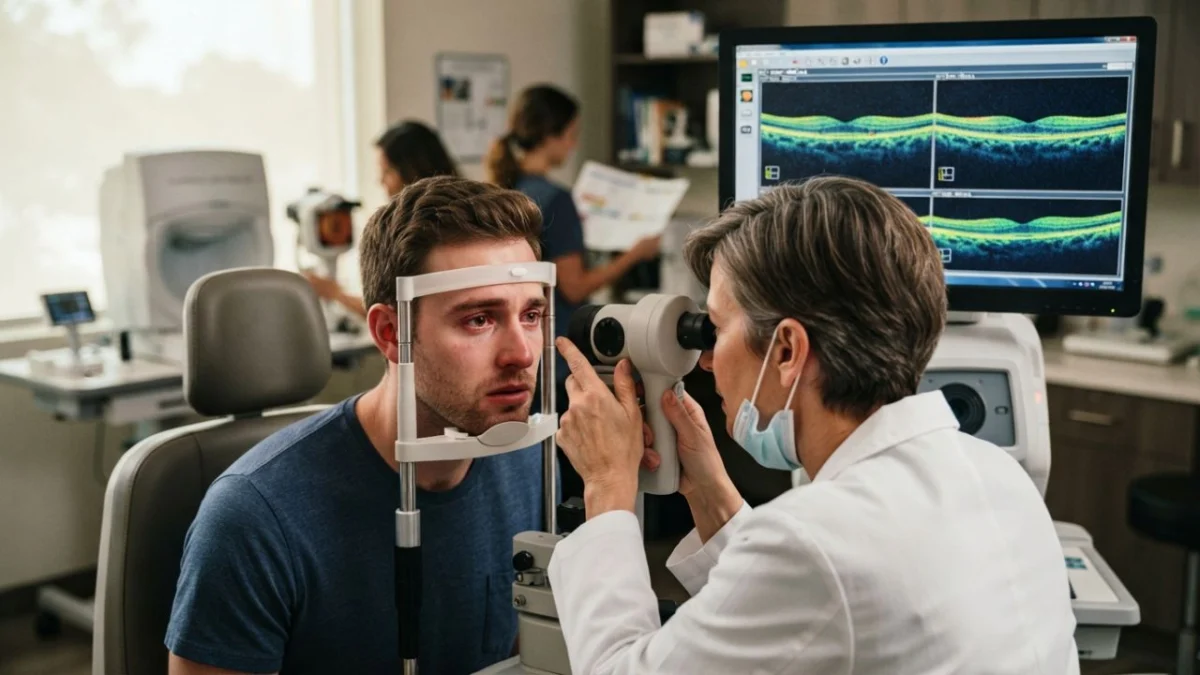
Detailed retinal scans, specifically optical coherence tomography (OCT), revealed damage to the ellipsoid zone at the center of both retinas. This specific area is crucial for the function of photoreceptor cells, which are responsible for light detection and the transmission of visual information to the brain. Damage here, particularly in the macula – the central part of the retina responsible for sharp, detailed vision – is a hallmark of what is known as poppers maculopathy. This condition has historically been associated with the direct use of alkyl nitrites, substances often inhaled for their psychoactive effects and sometimes marketed under misleading product names.
The case report, published in August 2026 in the journal Cureus, describes this as a unique instance of poppers maculopathy arising from indirect exposure. The authors of the report are unequivocal in their conclusion: "alkyl nitrite-infused candles in confined spaces may be potent enough to cause poppers maculopathy." This assertion stems from the observed pattern of damage, which precisely matches that seen in individuals who have directly inhaled poppers.
Understanding Poppers Maculopathy
Poppers, a colloquial term for alkyl nitrites, are volatile organic compounds that, when inhaled, cause rapid vasodilation – the widening of blood vessels. This effect leads to a temporary sense of euphoria and relaxation. However, these same properties can have detrimental effects on the delicate tissues of the eye. Poppers maculopathy is believed to occur due to a reduction in blood flow to the central macula, the area with the highest density of photoreceptors. This compromised blood supply can lead to cellular damage and dysfunction, manifesting as vision loss.
Historically, cases of poppers maculopathy have been documented in individuals who directly inhaled these substances. A significant shift in the landscape of poppers use was noted around 2007, following legislative changes in the UK. This period saw a change in the most commonly used compound from isobutyl nitrite to isopropyl nitrite. Research from a 2012 UK case series published in Eye indicated that reports of poppers maculopathy were virtually non-existent before this transition, suggesting that isopropyl nitrite may possess a higher degree of ocular toxicity.
A Case of Indirect Exposure and Potential for Widespread Risk
The 29-year-old man’s experience is particularly alarming because his exposure was not through direct inhalation but via secondhand vapor. The candle, infused with alkyl nitrite, was burning in a small, enclosed space, creating a concentrated environment for vapor accumulation. This scenario introduces a significant public health concern: individuals who do not actively use poppers but are in proximity to their use, especially in poorly ventilated areas, could be at risk of developing similar ocular damage.
The Cureus authors point out that alkyl nitrite-infused candles are readily available for purchase online and do not appear to be subject to regulatory oversight. This lack of regulation exacerbates the risk, as consumers may be unaware of the potential dangers associated with these products, especially when used in enclosed environments.
The U.S. Food and Drug Administration (FDA) has long expressed concerns about the marketing and use of nitrite poppers. In a 2021 consumer advisory, the FDA urged the public to avoid purchasing or using these products, noting that they are frequently disguised as common household items like nail polish removers or cleaning agents. The agency has detailed a range of severe health risks associated with poppers, including debilitating headaches, dizziness, breathing difficulties, drastic drops in blood pressure, and methemoglobinemia – a dangerous condition that impairs the blood’s oxygen-carrying capacity. Further FDA advisories have highlighted even more dire consequences, such as seizures, irregular heart rhythms, coma, and death, when these substances are ingested or inhaled. Poison Control also lists visual disturbances, such as light sensitivity and blind spots, as potential effects of poppers use.
Recovery and Lingering Damage
Following the incident, the man’s vision showed a slow but partial recovery. Over the course of a year, his visual acuity improved to 20/40 in his right eye and 20/25 in his left. Despite this improvement, the OCT scans still indicated persistent disruption of the ellipsoid zone in both retinas, suggesting that the damage may not be fully reversible.
This pattern of partial recovery with residual structural damage aligns with previous research. A 2017 case series conducted at Sussex Eye Hospital in England examined 12 individuals who used poppers between 2013 and 2016. While most patients experienced symptom improvement after ceasing poppers use, with a median follow-up of approximately five months, the structural integrity of their central retinas often showed only partial recovery. This further supports the notion that isopropyl nitrite is toxic to the fovea, the central pit of the macula responsible for our sharpest vision.
Limitations and Implications for Public Health
While this case report provides compelling evidence, it is important to acknowledge its limitations. As a single case study, it cannot definitively prove causality or establish a precise threshold for harmful exposure levels from candle vapor. However, the temporal relationship between the party, the onset of vision loss in both eyes, and the characteristic retinal scan findings strongly implicate the alkyl nitrite-infused candle as the likely source of the poppers maculopathy.
The report’s authors emphasize the broader implications: the potential for harm to individuals who are not direct users of poppers but are exposed to secondhand vapor in confined spaces. This case suggests that such indirect exposure can indeed lead to significant ocular damage.
Health professionals are urging individuals who experience sudden central blurring, the appearance of blind spots, or changes in color perception, especially after any potential exposure to nitrite-containing products, to seek prompt medical attention from an eye specialist. It is crucial to inform the eye doctor about the nature of the exposure to facilitate accurate diagnosis and treatment.
The case underscores the urgent need for greater awareness and regulation of products containing alkyl nitrites, particularly those marketed in unregulated forms like infused candles. The potential for severe and irreversible vision loss from seemingly innocuous sources highlights a critical gap in consumer safety and public health awareness.
