
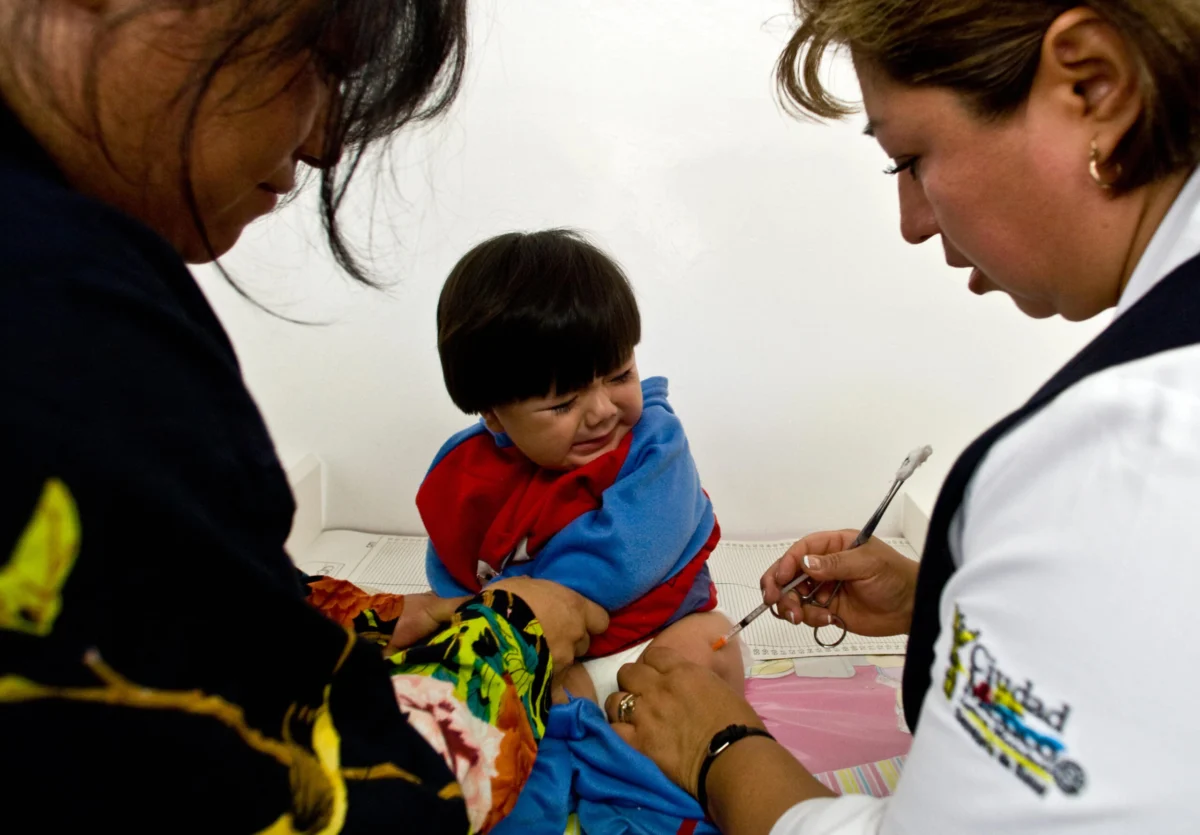
"A U.S.-funded hepatitis B vaccine study in Guinea-Bissau, which proposes to withhold the birth dose from half of newborns, has received approval from the University of Southern Denmark, reigniting ethical debates over research in low-income nations."
The University of Southern Denmark has given the green light to a highly debated, U.S.-funded research study in Guinea-Bissau concerning the hepatitis B vaccine. This study, which plans to administer the hepatitis B vaccine at birth to only 50% of the 14,000 newborns it intends to enroll, has drawn significant criticism from global health organizations who deem it unethical. The dean of health sciences at the University of Southern Denmark confirmed the approval this week, as reported by CIDRAP News. While the university’s ethical review has been completed, the study’s commencement is contingent upon final authorization from the government of Guinea-Bissau, which has not yet been granted. This decision places U.S. public health funding at the forefront of an international discussion about the ethical conduct of research in resource-limited settings, particularly concerning interventions with established efficacy.
The core of the controversy lies in the timing of the hepatitis B vaccine administration. Hepatitis B is a significant global health concern, primarily transmitted from mother to child during childbirth. A vaccine dose administered within the first 24 hours of life is widely recognized as the most effective measure to prevent lifelong infection, which can lead to severe liver diseases, including cirrhosis and liver cancer. Critics argue that withholding this crucial preventative measure from a portion of the study participants, especially when its benefits are well-documented, is not only ethically questionable but also potentially harmful.
Approval Revives a Paused, Contentious Project
Professor Jakob Grauslund, dean of the University of Southern Denmark’s Faculty of Health Sciences, stated that his decision to approve the study was based on a thorough independent ethical assessment conducted by the university’s research ethics committee. He further noted that a revised protocol had received approval from the relevant ethics committee in Guinea-Bissau during the summer. However, Professor Grauslund emphasized, "Final governmental authorization in Guinea-Bissau has, however, not yet been granted," underscoring that the study’s initiation is strictly dependent on obtaining national approval.
The research initiative is spearheaded by Danish researchers Peter Aaby and Christine Stabell Benn, who are affiliated with the Bandim Health Project. Under the proposed trial design, half of the enrolled infants would be randomly assigned to receive the hepatitis B vaccine shortly after birth, alongside routine tuberculosis and polio vaccinations. The remaining half of the participants would follow Guinea-Bissau’s current national immunization schedule, which delays the hepatitis B vaccination until six weeks of age.
Researchers involved in the study have defended their methodology. In a statement released on the Bandim Health Project’s website, they asserted that "no enrolled child will receive fewer vaccines than under current national policy in Guinea-Bissau." They also pointed out that Guinea-Bissau currently lacks a birth dose policy but has plans to introduce one by 2028. This statement seeks to frame the study’s comparison group as receiving standard care, rather than a compromised level of protection.
Earlier in the year, health officials in Guinea-Bissau and representatives from the Danish university had placed the study on hold for several months following a substantial international outcry. Reports from CIDRAP, citing Rolling Stone, indicated that leaders at the U.S. Centers for Disease Control and Prevention (CDC) had been actively advocating for the study’s resumption. Despite attempts to solicit comment, the Department of Health and Human Services reportedly did not provide responses to CIDRAP’s inquiries prior to their publication.
The Critical Window: The First Day of Life
The debate’s crux centers on the critical timing of the initial hepatitis B vaccine dose. The World Health Organization (WHO) unequivocally recommends that all newborns receive the hepatitis B vaccine as early as possible after birth, ideally within the first 24 hours. The WHO highlights that infection acquired during infancy and early childhood results in chronic hepatitis in approximately 95% of cases.
The U.S. Centers for Disease Control and Prevention (CDC) echoes these concerns, providing guidance for healthcare providers that states infants infected with hepatitis B have about a 90% probability of developing a chronic infection. Chronic hepatitis B is a serious condition that can progress to cirrhosis and liver cancer over decades, and it is associated with a mortality rate of 15% to 25% among those with chronic infection, according to CIDRAP.
The implications of delayed vaccination are particularly acute in Guinea-Bissau, where an estimated over 12% of the adult population is living with chronic hepatitis B, according to WHO data. For a baby born to an infected mother, missing the opportunity for a birth dose significantly diminishes the likelihood of preventing transmission. A first dose administered at six weeks of age comes well after the period of highest risk for perinatal transmission.
In a formal statement issued in February, the WHO articulated significant concerns regarding the study’s scientific justification and ethical safeguards. The organization stated that "resource constraints cannot be used to justify withholding proven care in a research study." This stance directly challenges the premise that a study comparing delayed versus immediate vaccination is ethically permissible when a proven preventative intervention exists and is recommended for immediate use.
Global Research Ethics and U.S. Influence
The ethical framework governing randomized controlled trials generally stipulates that they are justifiable only when there is genuine uncertainty regarding the superiority of one intervention over another. Critics of the Guinea-Bissau study argue that the established benefits of a hepatitis B birth dose render the comparison group’s delay not a matter of scientific uncertainty but rather an unnecessary exposure to risk. They contend that assigning babies to wait for a proven preventative measure is inherently unfair.
Conversely, proponents of the study’s design maintain that the control group will receive the standard of care as dictated by local policy. Opponents counter this by arguing that existing local policies in low-income countries often reflect resource limitations rather than a lack of scientific consensus on the best course of treatment. They further contend that research funded by affluent nations should not perpetuate or lock in lower standards of care, particularly for vulnerable populations.
Advocacy groups have expressed strong opposition. Stand Up for Science has publicly committed to efforts aimed at halting the study. Colette Delawalla, the founder and CEO of Stand Up for Science, has characterized the research as "a gross violation of human rights and the use of bad science." Wessam Mankoula of the Africa Centres for Disease Control and Prevention has indicated that discussions between the U.S. and Guinea-Bissau governments are ongoing, suggesting diplomatic channels are being utilized to address the concerns.
The study also has implications for U.S. vaccine policy. Christine Stabell Benn, one of the lead researchers, has previously served as a consultant to a federal vaccine advisory committee. This committee notably voted to cease recommending a hepatitis B birth dose for all American newborns. This connection has raised red flags among public health experts who fear that the findings from the Guinea-Bissau trial could be selectively used to question or undermine existing birth-dose policies in other countries, including the United States.
Unanswered Questions and the Path Forward
Several critical questions regarding the study’s implementation remain publicly unclear. It is not precisely known how mothers will be screened for hepatitis B infection or what specific follow-up care will be provided to infants under the revised protocol. Furthermore, the government of Guinea-Bissau has not indicated a timeline for making its decision on national authorization.
For families in the United States, the international controversy surrounding this study does not alter the established medical recommendations for hepatitis B prevention. Pregnant individuals in the U.S. are routinely screened for hepatitis B, and expectant parents are encouraged to discuss the newborn hepatitis B vaccine with their pediatrician or delivery team well in advance of the birth. Families seeking to verify vaccination records can obtain them from their healthcare provider or their state’s immunization registry.
The ultimate fate of the study hinges on Guinea-Bissau’s government. If authorization is granted, the enrollment process could commence. Conversely, if the government declines to approve the study, the University of Southern Denmark’s endorsement would have little practical impact on the ground. MedicalDaily will continue to monitor this evolving situation, including any potential responses from the WHO, Africa CDC, and the CDC.
