
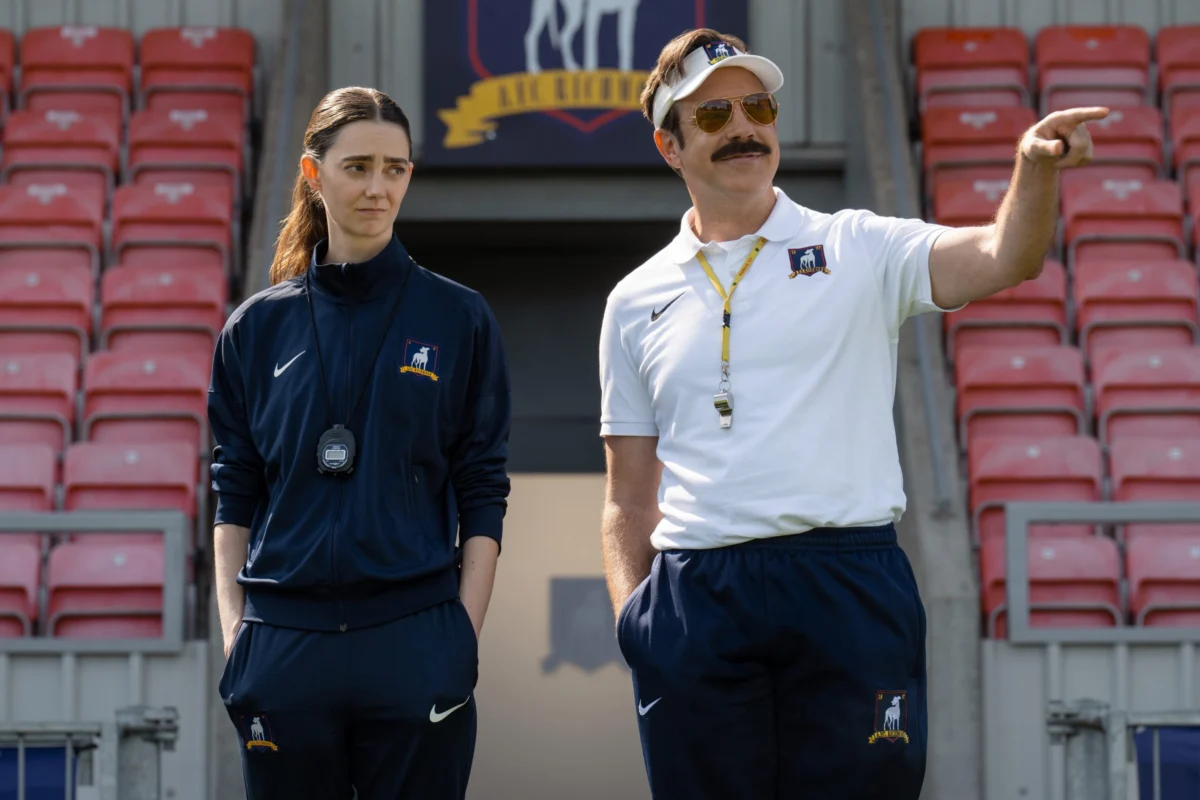
“The return of Ted Lasso signifies more than just a revival of a beloved character; it marks a pivotal narrative shift that brings the ‘Lasso Way’ to the burgeoning world of women’s athletics, proving that the most enduring stories are those that evolve with the times.”
The decision to extend the Ted Lasso saga beyond its seemingly definitive third-season conclusion reflects a broader trend in modern media where "prestige" narratives are being revisited to address new cultural landscapes. By transitioning the protagonist from the male-dominated Premier League to the helm of a newly formed AFC Richmond women’s team, the series utilizes its established framework of radical empathy to explore the unique dynamics, challenges, and triumphs inherent in women’s sports. This shift not only revitalizes the show’s "fish-out-of-water" premise but also aligns the fictional world of Richmond with the real-world surge in visibility and investment in women’s football globally.

The Philosophy of the "Endless" Story
Yogi Berra, the legendary Hall of Fame Major League Baseball player and manager, once famously noted that “it ain’t over til it’s over.” While originally applied to the unpredictable nature of a pennant race, the sentiment has become a cornerstone of sports psychology and, increasingly, television production. In the realm of athletics, Berra’s logic is validated by historic reversals—such as the New York Knicks’ legendary recovery from a 29-point deficit to defeat the San Antonio Spurs in Game 4 of the 2026 NBA Finals. In the realm of television, this philosophy manifests as the revival of stories that felt complete, yet possessed untapped potential.
When audiences last saw Ted Lasso, played by Jason Sudeikis, the narrative appeared to have reached a rational and emotional equilibrium. Having spent three seasons dismantling toxic masculinity and prioritizing mental health within the pressure cooker of English football, Ted returned to Kansas to reconnect with his son. The arc of the "mustachioed mensch" seemed to have fulfilled its purpose: he had left AFC Richmond better than he found it. However, as Julian Casablancas once sang, “the end has no end.” The decision to bring the character back for a fourth season acknowledges that the "Lasso Way"—a philosophy of kindness, curiosity, and collective growth—is not a destination, but a continuous practice.
A New Stomping Ground: The Rise of Women’s Sports
The most significant evolution in Season 4 is the setting. Ted Lasso is no longer navigating the ego-driven world of men’s professional football; instead, he is tasked with building the culture of a newly formed AFC Richmond women’s team. This narrative choice is both timely and intentional. In the years following the show’s initial 2020 debut, women’s sports have seen an unprecedented rise in viewership, sponsorship, and cultural relevance. From the record-breaking attendance at the Women’s Super League (WSL) matches to the explosive growth of the WNBA, the landscape of athletics is being redefined.

Jason Sudeikis, a co-creator of the series and a vocal supporter of women’s athletics, has frequently been spotted at WNBA games, signaling a personal investment in the subject matter. By placing Ted in this environment, the show tackles a professional world that remains underrepresented in mainstream television comedies. While the stakes of winning and losing remain, the interpersonal dynamics of a women’s team offer a fresh palette for the show’s signature blend of drama and humor. The challenges of funding, visibility, and professional respect provide a new set of obstacles for Ted to navigate with his trademark optimism.
The Ensemble as a Metaphor for Family
At its core, Ted Lasso has always been less about the technicalities of football and more about the mechanics of human connection. Sudeikis has frequently emphasized that sports serve as a metaphor for the family unit and the broader ensemble of society. In a 2021 interview, he noted that the challenge of getting a group of people with disparate goals to "row in the same direction" is where the most fertile ground for storytelling lies.
In Season 4, this "rowing in the same direction" takes on a new dimension. The newly formed women’s team represents a blank slate, free from some of the historical baggage of the men’s side, yet burdened by the pressures of establishing a legacy from scratch. The season explores how Ted’s coaching style—which favors emotional intelligence over tactical rigidity—resonates with a new group of athletes. It raises the question: Does the "Lasso Way" translate across different demographics and professional contexts? The answer, as the season suggests, is that while the tactics might change, the fundamental human need for validation and community remains universal.

The "Feel-Good" Architecture of Apple TV+’s Biggest Hit
One of the reasons Ted Lasso became a cultural phenomenon during its initial run was its refusal to rely on cynical tropes. In an era of "anti-hero" television, Lasso was a "pro-hero"—a character who succeeded not through manipulation, but through sincerity. Season 4 maintains this "Lasso magic," offering a viewing experience that prioritizes emotional well-being. Each episode, ranging from 30 to 50 minutes, is designed to provide a sense of catharsis.
The structure of the fourth season follows a traditional weekly rollout, a strategy that Apple TV+ has used to build sustained engagement and "water-cooler" discourse. This pacing allows the audience to sit with the themes of each episode, reflecting on the growth of the characters rather than consuming the entire arc in a single sitting. As the season progresses toward its finale, the titles of the episodes—such as "Richmond’s Got Talent," "Greyhound’s Day Off," and "Mae Rides the Bus"—hint at a narrative that balances the professional development of the team with the personal lives of the beloved supporting cast.
Critical Reception and Cultural Impact
The return of Ted Lasso has sparked a broader conversation about the role of "comfort TV" in a volatile world. Critics have noted that while the show’s premise remains consistent, its willingness to pivot toward women’s sports demonstrates a level of creative maturity. It avoids the pitfall of merely repeating past successes by introducing new stakes and a new set of social issues to explore.

Furthermore, the show’s impact on the perception of coaching cannot be overstated. By highlighting the importance of mental health and vulnerability in a high-stakes environment, Ted Lasso has influenced real-world discussions about leadership and sportsmanship. The fourth season continues this legacy, proving that the character’s influence extends far beyond the pitch.
Season 4 Release Schedule and Episode Breakdown
To ensure fans do not miss the progression of this new chapter, Apple TV+ has maintained a consistent release schedule. The fourth season consists of 10 episodes, culminating in a highly anticipated finale.
- Episode 1, “Home”: Acknowledges Ted’s return to England and the emotional weight of his homecoming.
- Episode 2, “Curioser and Curioser!”: Explores the initial hurdles of the newly formed women’s squad.
- Episode 3, “Richmond’s Got Talent”: A lighter, character-driven look at the team’s off-field chemistry.
- Episode 4, “Greyhound’s Day Off”: Focuses on the importance of rest and perspective in a grueling season.
- Episode 5, “Riches of Embarrassment”: Tackles the team’s first major public or professional setback.
- Episode 6, “Don’t Jump Around Much Anymore”: A mid-season reflection on aging, legacy, and the passage of time.
- Episode 7, “Yes & Baby”: Likely an exploration of the personal lives and family dynamics of the players.
- Episode 8, “Follow the Anger”: A deeper dive into how the team handles competitive pressure and conflict.
- Episode 9, “Mae Rides the Bus”: A spotlight on the community surrounding the club, particularly the pub culture that anchors Richmond.
- Episode 10, “Being Alive”: The season finale, scheduled for release on October 7 (with early streaming available the night of October 6).
Conclusion: The Enduring Power of Optimism
As the final episode of Season 4, titled “Being Alive,” approaches, the series reinforces its central thesis: that growth is a perpetual process. Whether coaching a Premier League team or a startup women’s club, the essence of the "Lasso Way" is the belief that every individual has the capacity to be a better version of themselves. By expanding its horizons to include the world of women’s sports, Ted Lasso has not only justified its return but has also solidified its place as a transformative force in modern television. It reminds us that even when a story feels over, there is always room for another chapter, provided there is a heart at the center of it.
