
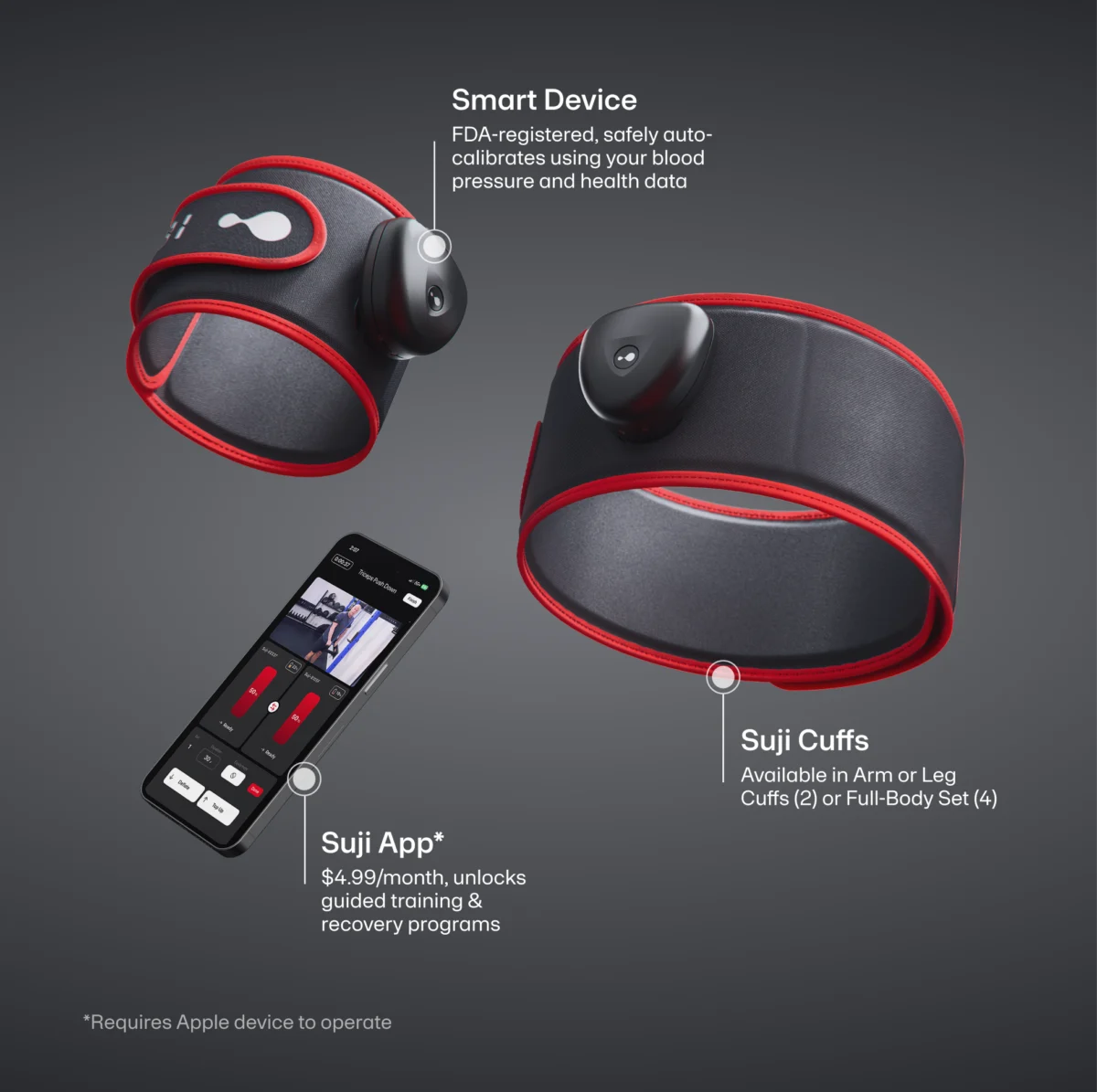
Blood-flow restriction training offers a scientifically backed method to stimulate muscle growth using significantly lighter loads, providing a vital alternative for those navigating injury recovery or seeking to maintain training intensity without the joint stress of heavy lifting.
Blood-flow restriction (BFR) training, once a niche technique used primarily in elite athletic circles and clinical rehabilitation, has emerged as a cornerstone of modern biohacking and fitness optimization. By using specialized cuffs to partially occlude blood flow during exercise, individuals can trick the body into a state of high physiological stress, triggering muscle hypertrophy and strength gains with weights as light as 20% of their one-rep maximum. This methodology bridges the gap between total rest and high-intensity training, offering a sustainable path for "optimized" movement when traditional heavy lifting is either impossible or undesirable.
The Psychological Barrier of the Heavy Rack
In the landscape of modern fitness, there exists a pervasive "all or nothing" mentality. Athletes and enthusiasts alike are conditioned to believe that progress is exclusively the result of progressive overload—continually adding plates to the barbell or reaching for the heaviest dumbbells on the rack. However, the reality of human physiology includes fluctuations in energy, recovery, and health. There are days when, despite being nutritionally fueled and mentally "locked in," the prospect of high-load mechanical tension feels like an insurmountable hurdle.
For many, these days lead to one of two outcomes: a "snooze-worthy" bodyweight session that fails to provide a sufficient growth stimulus, or a complete surrender to a rest day. Blood-flow restriction training introduces a third option. It allows for a "low-load, high-burn" environment where the metabolic demand is high, but the mechanical stress on the joints and connective tissues remains low.
The Genesis of BFR: From Clinical Necessity to Performance Tool
The professional utility of BFR is often discovered through the lens of injury. For Richard Dorment, the editorial director of Men’s Health, the introduction to BFR followed a catastrophic collarbone injury in 2020. The subsequent surgery and recovery period resulted in the loss of 20 pounds of muscle mass in the upper body. In a traditional rehabilitation setting, the inability to lift more than 10 pounds would typically result in prolonged atrophy, as such light weights are generally insufficient to recruit the fast-twitch muscle fibers necessary for growth.
BFR changed this trajectory. By utilizing cuffs—similar in appearance to blood pressure monitors—placed high on the limb, it is possible to create a localized environment that mimics the conditions of high-intensity lifting. This allows a 10-pound dumbbell to provide the physiological stimulus of a 40-pound dumbbell, preserving muscle mass and accelerating the return to peak performance.

The Physiology of Occlusion: Creating the "Pressure Cooker"
The mechanism of BFR is often misunderstood as a simple tourniquet effect. In reality, it is a sophisticated manipulation of the circulatory system. The goal of BFR is to restrict venous outflow (blood leaving the muscle) while still allowing for arterial inflow (blood entering the muscle).
When a cuff is tightened to a specific pressure, oxygenated blood continues to pump into the limb, but the deoxygenated blood is prevented from escaping. This creates a "pressure cooker" effect. As the oxygen levels within the muscle drop (hypoxia), the environment becomes highly acidic. Under these conditions, the body is forced to recruit Type II "fast-twitch" muscle fibers—the fibers usually reserved for heavy lifting or explosive movements—to complete even simple, low-weight tasks.
Furthermore, this metabolic stress triggers a cascade of anabolic responses. The swelling of the muscle cells (the "pump") and the accumulation of metabolites like lactate signal the brain to release growth hormone and other myogenic factors. The result is a hypertrophy signal that rivals traditional heavy lifting, but with a fraction of the systemic fatigue and joint wear-and-tear.
The Importance of Personalized Calibration
A critical evolution in BFR technology is the move away from "guesswork" toward personalized calibration. Early iterations of BFR often involved athletes using knee wraps or resistance bands to "strangle" their limbs. This practice is inherently dangerous, as it lacks a way to measure the actual pressure being applied, increasing the risk of nerve damage or complete arterial occlusion.
Modern systems, such as those developed by Suji, utilize the concept of Limb Occlusion Pressure (LOP). LOP is the minimum amount of pressure required to completely stop the flow of blood to a limb. Because every individual has a different limb circumference, blood pressure, and tissue density, a "one-size-fits-all" pressure is ineffective and potentially hazardous.
Advanced BFR cuffs use internal sensors to calculate a user’s specific LOP and then set the training pressure at a safe percentage of that number—typically 40-50% for the arms and 60-80% for the legs. This ensures that the user stays within the "productive zone": uncomfortable enough to create metabolic stress, but safe enough to avoid the "shriveled claw" effect of total circulation loss.
The Sensory Experience: Discomfort and Relief
Training with BFR is not a passive experience. It requires a high tolerance for a specific type of discomfort. It is often compared to the sensation of holding one’s breath; as the sets progress, the limb feels increasingly tight, heavy, and "full." The temples may tighten, and the muscles will burn with an intensity that belies the light weight being used.

However, the defining characteristic of BFR training is the "reperfusion" phase. The moment the cuff is deflated, a rush of oxygenated blood floods the limb. This provides an immediate sense of relief and a "glorious" sensation of recovery. This rapid influx of blood is also thought to aid in the removal of waste products and the delivery of nutrients to the fatigued tissue.
Strategic Integration into a Fitness Regimen
While BFR is a powerful tool, it is not intended to replace traditional resistance training entirely. Progressive overload and high-load mechanical tension remain the gold standards for building absolute strength and bone density. Instead, BFR should be viewed as a strategic supplement.
- Injury Rehabilitation: BFR allows patients to maintain muscle mass during periods when they are medically restricted from lifting heavy weights.
- Deload Weeks: For athletes who are feeling the cumulative effects of a heavy training cycle, BFR provides a way to maintain a growth stimulus while giving the central nervous system and joints a much-needed break.
- Travel and Limited Equipment: In scenarios where one is limited to a hotel gym with light dumbbells, BFR can turn a sub-optimal workout into a high-intensity session.
- Finisher Sets: Adding a BFR session at the end of a traditional workout can maximize metabolic stress and muscle pump without requiring additional heavy sets.
Safety and Professional Oversight
Despite its benefits, BFR training is a medicalized form of exercise. It is imperative that individuals consult with a physician or physical therapist before beginning a BFR protocol, particularly those with a history of cardiovascular issues, blood pressure concerns, or recent vascular surgery. When performed with calibrated equipment and proper technique, BFR is a remarkably safe and effective intervention.
Conclusion: The Philosophy of Minimum Effective Dose
The broader lesson of BFR training lies in a redefinition of "optimization." True optimization is not always about doing more; it is about identifying the minimum effective dose required to elicit a desired change in the body. By leveraging the physiological "shortcuts" provided by blood-flow restriction, an individual can achieve significant results with less total load.
In a world that often demands "beast mode" and "no days off," BFR offers a more nuanced approach. It acknowledges that some days, the best way to move forward is to lighten the load, strap on the cuffs, and let the science of metabolic stress do the heavy lifting. Whether recovering from a major surgery or simply navigating a low-energy Tuesday, BFR ensures that the muscle-growth signal remains high, even when the dumbbells are light.
