
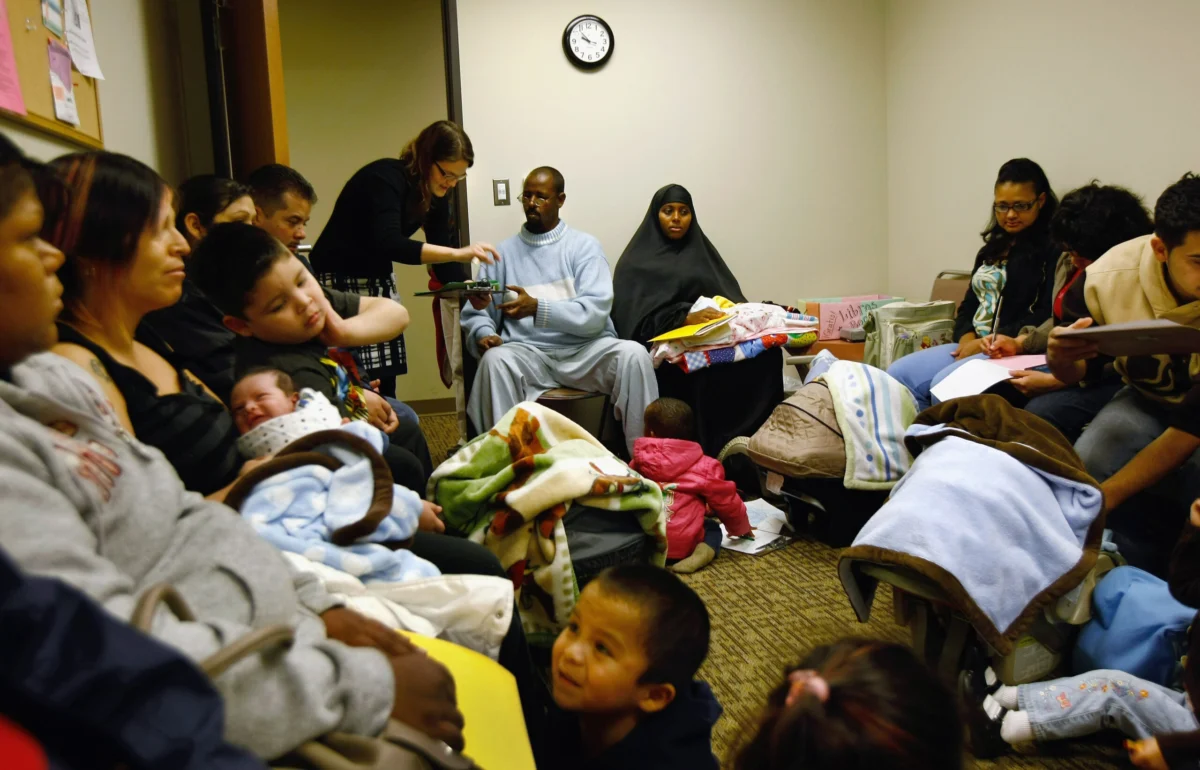
A Seattle federal judge has temporarily shielded over 800 vulnerable immigrants in Washington receiving Supplemental Security Income (SSI) from losing their crucial Apple Health (Medicaid) coverage, a decision that offers a vital reprieve for individuals dependent on daily care and vital prescriptions, while leaving thousands of other immigrant families facing the immediate loss of essential healthcare access.
In a significant legal development, a U.S. District Court in Seattle has intervened to halt the Trump administration’s directive to terminate federal Medicaid funding for certain lawfully present immigrants in Washington who are recipients of Supplemental Security Income (SSI). The ruling, issued by U.S. District Judge Thomas S. Zilly, provides a temporary but critical lifeline to more than 800 individuals who rely on Medicaid for essential healthcare services. This judicial action, however, does not extend to the vast majority of immigrants affected by the broader federal policy change, leaving approximately 10,000 refugees, asylees, and other lawfully present immigrants in the state without coverage since October 1st.
The Supplemental Security Income (SSI) program, a cornerstone of federal support, provides essential monthly payments to individuals with extremely limited financial resources who are either 65 years or older, blind, or disabled. Consequently, the group protected by this preliminary injunction comprises many individuals with complex health needs, who depend on consistent access to daily medical care, specialized treatments, and regular prescription medications. The potential disruption of this coverage represents not just a financial burden but a direct threat to their health and well-being, with the risk of significant health deterioration, permanent disability, or even death.
The Seattle Order: A Crucial, Yet Limited, Injunction
The legal challenge, formally titled Neighborhood House v. U.S. Department of Health and Human Services, was brought forth by Neighborhood House, a Seattle-based nonprofit organization, and one of its clients, Mariia Matsai. The lawsuit contested federal guidance issued in April 2026, which mandated the cessation of federal Medicaid funding for immigrants in Washington who were eligible for both SSI and Medicaid. This directive was a consequence of provisions within H.R. 1, a federal budget law enacted in 2025. The case, docketed as No. C26-3006 TSZ, lists the U.S. Department of Health and Human Services (HHS) and its Secretary, Robert F. Kennedy Jr., as defendants.
In his September 30 preliminary injunction, Judge Zilly explicitly barred HHS from "terminating Medicaid healthcare funding for any qualified noncitizen SSI recipients in the State of Washington." His decision was significantly influenced by a 1997 amendment to federal welfare law, which establishes that qualified immigrants receiving SSI are indeed eligible for Medicaid. Judge Zilly underscored the potential catastrophic consequences of such a cutoff, writing that without the continuity of daily-living assistance provided by Medicaid, there is "a reasonably foreseeable risk of Matsai’s health declining, potentially leading to permanent disability or death." This sentiment highlights the profound human impact of healthcare access, particularly for a vulnerable population.
It is crucial to understand that this judicial order is not a final resolution to the legal dispute. The preliminary injunction remains in effect "pending further order of the Court" and is geographically limited to the state of Washington. Furthermore, the federal government retains the right to appeal this decision. Lee Che Leong, a senior policy advocate with Northwest Health Law Advocates, which, alongside the law firm Barnard Iglitzin & Lavitt, represented the plaintiffs, hailed the ruling as a "crucial victory." The sentiment of fighting for promised care was echoed by Janice Deguchi, Executive Director of Neighborhood House, who stated when the lawsuit was filed in August, "With this lawsuit, we’re standing up for our clients who were promised care in this country." This underscores the moral and ethical dimensions of the legal battle.
Washington’s Broader Immigrant Population Left Without Coverage
While the SSI recipient group finds temporary solace, the broader impact of the new federal rules continues to be felt acutely by other immigrant communities in Washington. Under these revised regulations, categories of immigrants such as refugees, asylees, victims of trafficking, and certain parolees—including individuals from Afghanistan and Ukraine—are no longer eligible for Apple Health. This shift, detailed in a fact sheet from the Washington State Health Care Authority (HCA), has left a significant portion of the immigrant population in a precarious healthcare position. However, certain groups continue to qualify, including lawful permanent residents who have satisfied or are exempt from the five-year waiting period, Cuban and Haitian entrants, and residents of the Compact of Free Association (COFA) islands, provided they meet other eligibility criteria. Crucially, children, pregnant individuals, and those within 12 months postpartum remain eligible regardless of their immigration status, as long as they fulfill other program requirements.
Initial projections from state officials indicated that approximately 14,000 individuals might lose their healthcare coverage. However, subsequent updates to immigration records for around 3,000 people allowed them to maintain their enrollment, according to the Washington State Standard. The HCA had projected a loss of coverage for roughly 11,000 individuals on October 1st. The stark reality for many is articulated by Adam Glickman of SEIU 775, who stated, "Most of them cannot possibly afford to buy insurance on their own, so will be left with no coverage at all." This points to the severe financial implications for individuals and families who lack the means to secure private health insurance, potentially leading to a crisis in healthcare access.
In an effort to mitigate the financial strain on affected immigrants, state lawmakers allocated nearly $20 million to preserve long-term care coverage. However, reports suggest that this funding may not be sufficient to address the scale of the need, indicating a persistent gap in essential services. The situation highlights the complex interplay between federal policy, state-level responses, and the direct impact on vulnerable populations.
Navigating the Path Forward: Steps for Enrollees and Caregivers
The Washington State Health Care Authority has provided guidance for individuals seeking to maintain or re-establish their Apple Health coverage. Enrollees are strongly advised to update their applications if there are any changes to their immigration status, if they become pregnant or have experienced a pregnancy ending after October 2025, or if they are undergoing cancer treatment, receiving anti-rejection medications, or require dialysis.
For individuals aged 19 to 64, assistance is available by calling 1-800-562-3022. Those aged 65 and older, individuals who are Medicare-eligible, or those with disabilities can reach out to 1-877-501-2233. Beyond these direct lines, alternative avenues for coverage may include Alien Emergency Medical (AEM) services, which can provide for emergency medical conditions for certain non-citizens who do not qualify for other programs. Apple Health Expansion, a program designed to extend coverage to more individuals, is currently at its enrollment limit. Additionally, qualified health plans can be explored through the Washington Healthplanfinder marketplace.
Leanne Berge, CEO of Community Health Plan of Washington, emphasized the importance of proactive engagement, stating, "While some people may qualify for other Apple Health programs or coverage through Washington Healthplanfinder, understanding those options now is critical to avoiding gaps in care." This underscores the necessity of timely action to prevent disruptions in healthcare access. For individuals managing chronic conditions and relying on regular prescriptions, Berge also advised, "Anyone running low on a prescription should talk with a pharmacist or clinician before stopping a medication." The article also reiterates that severe medical emergencies, such as chest pain, difficulty breathing, or signs of stroke, still necessitate immediate emergency care, regardless of insurance status. Hospitals are obligated to screen and stabilize patients in emergency situations.
The Lingering Threat: Appeals and Future Coverage Reductions
The legal landscape surrounding immigrant healthcare access remains dynamic. As previously reported by MedicalDaily, the nationwide impact of these policy changes has been substantial, with nine states and Washington, D.C., reporting over 281,000 refugees and asylees at risk of losing Medicaid on October 1st. The Seattle ruling, while significant for Washington’s SSI recipients, only addresses a fraction of the broader challenge.
The federal government has the option to appeal Judge Zilly’s order to the U.S. Court of Appeals for the Ninth Circuit, which could potentially overturn the preliminary injunction. In response to the escalating crisis, Governor Bob Ferguson signed an executive order that established a committee tasked with identifying strategies to help affected individuals retain coverage. The order also mandated a statewide public awareness campaign and the creation of a database to monitor coverage losses. Advocates like Adam Glickman are actively urging Governor Ferguson and state lawmakers to utilize state funds to reinstate coverage for those who have been cut off, highlighting the ongoing pressure for state-level intervention.
The challenges are far from over. Further reductions in coverage are anticipated. Federal Medicaid work requirements are slated to take effect in January 2027, and it is projected that at least 200,000 of Washington’s more than 1.9 million Apple Health enrollees could lose coverage by the end of 2027 due to the provisions of H.R. 1, as reported by the Washington State Standard. This suggests that the current judicial victory, while important, may be a temporary reprieve in a larger, ongoing struggle for healthcare access for immigrant communities. The complex web of federal legislation, judicial review, and state-level policy will continue to shape the availability of essential health services for vulnerable populations in the coming years.
