
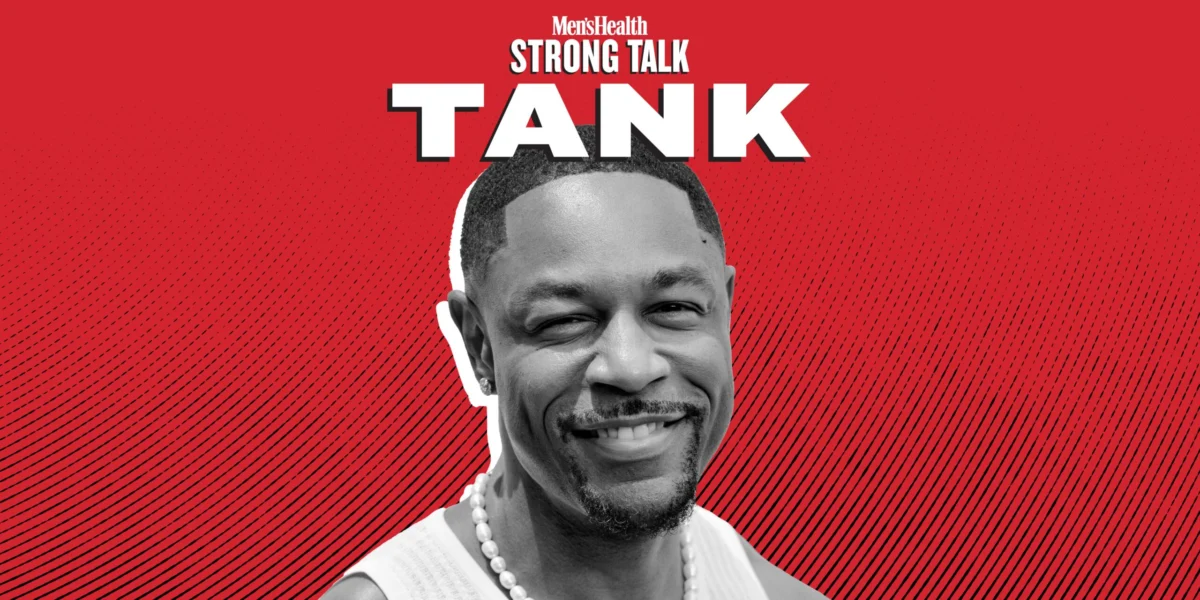
"The physical transformation was more than aesthetic; it was a reclamation of an identity nearly lost to illness and depression, proving that even at 50, a comeback is possible through disciplined adaptation."

When R&B veteran Tank announced his retirement following a sudden and debilitating battle with sensorineural hearing loss, the music industry prepared to say goodbye to one of its most consistent voices. However, the journey from a near-fatal blow to his career to his current standing as a jacked, high-energy performer on tour with Usher and Chris Brown reveals a profound narrative of resilience. This evolution was not merely about returning to the studio, but about a total physiological and psychological overhaul required to overcome vertigo, weight gain, and the loss of self-perception that accompanies chronic health crises.

In 2022, Durrell Babbs, known professionally as Tank, released what was intended to be his swan song: the aptly titled R&B Money. The decision was not born of a waning passion for music but of a frightening medical reality. Tank had been diagnosed with sudden sensorineural hearing loss (SSHL) in his right ear, a condition that can occur instantaneously or over several days. For a musician whose entire livelihood depends on the precision of pitch, tone, and rhythm, the loss of half his auditory input was catastrophic. The condition was further complicated by severe bouts of vertigo—a vestibular disorder that creates a false sense of spinning or movement.

The transition from a peak-performance athlete of the stage to a man struggling with basic equilibrium was jarring. Tank recalls the terrifying moment his health issues manifested in the public eye, describing a walk back to his hotel in Washington, D.C., during which he nearly fell through a Walgreens window due to a sudden loss of balance. This was not an isolated incident; it was the beginning of a period where his physical body felt like an alien environment. The medication prescribed to combat the hearing loss and inflammation—often heavy doses of steroids—brought about a secondary set of challenges. These included significant weight gain, chronic insomnia, and an inability to maintain his signature physique. For a man who had spent decades as a symbol of R&B fitness and vitality, the resulting depression was as debilitating as the physical symptoms.

The psychological toll of losing one’s primary sensory tool cannot be overstated. Tank described the experience of hearing people speak as if through a muffled walkie-talkie, a distortion that made communication exhausting and isolation tempting. When the ability to work out was stripped away by vertigo and the side effects of medication, Tank reached a low point where he no longer recognized the man in the mirror. This "loss of self" is a common theme among high-achievers who face sudden disability; their identity is so inextricably linked to their performance and appearance that the removal of those pillars can lead to a total collapse of confidence.

However, the 50-year-old artist refused to let the 2022 retirement be his final chapter. The road to his 11th studio album, Experience, released in late 2024, was paved with a reconstructed approach to fitness and health. In a recent deep dive with Men’s Health Fitness Director Ebenezer Samuel and exercise physiologist Dr. Pat Davidson, Tank detailed the specific strategies he used to rebuild his body from the ground up. Central to this comeback was a shift in training philosophy that prioritized longevity and functional strength over traditional powerlifting metrics.

One of the most notable aspects of Tank’s new regimen is his "no-squat" philosophy. For many veteran lifters, the traditional barbell back squat—while effective for building mass—can become a liability for the lower back and knees as they age. By pivoting away from high-compression spinal movements, Tank was able to achieve a "jacked" physique while minimizing the risk of injury that could sideline him from his rigorous touring schedule. His workouts now focus on high-intensity isolation movements, unilateral training to improve balance (crucial for his vertigo recovery), and a meticulous backstage warm-up routine that prepares his nervous system for the demands of a two-hour live show.

The physical results of this discipline are evident every night on the joint tour with Usher and Chris Brown. Performing alongside artists a decade or more his junior, Tank views his presence as a "statement." He acknowledges that while the "young guys" can rely on their youth and fashionable outfits, he must command the stage through a display of seasoned mastery and undeniable physical presence. His decision to perform shirtless—or as he colloquially puts it, "with the tits out"—is a calculated move to signal to the audience and the industry that he is not just back, but better than before. It is a visual testament to his victory over the depression and physical decline that threatened to end his career prematurely.

The medical context of Tank’s recovery is equally significant. Sudden sensorineural hearing loss often has no clear cause, and the recovery rate is unpredictable. By focusing on what he could control—his diet, his modified exercise routine, and his mental health—Tank created an environment conducive to adaptation. While he may still navigate the world with altered hearing, his brain has learned to compensate, and his vestibular system has been retrained through movement. This process of "habituation" is a cornerstone of vestibular rehabilitation, and Tank’s commitment to staying active likely played a major role in his ability to return to the stage without the fear of falling.

Beyond the gym and the stage, Tank’s journey offers a blueprint for men facing the "mid-life" health crises that often go undiscussed. The intersection of aging, chronic illness, and mental health is a complex space. Tank’s transparency about his "out of shape" period and his struggle with depression de-stigmatizes the reality of health setbacks. He emphasizes that the path back is rarely a straight line; it involves trial, error, and the humility to change one’s methods. By working with experts like Samuel and Davidson, he leaned into the science of exercise physiology to ensure his second act would be sustainable.

As he promotes Experience, the title takes on a dual meaning. It refers to his decades in the music industry, but it also points to the lived experience of suffering and subsequent triumph. The album serves as a sonic representation of a man who has heard the silence and chosen to keep singing. His role as a "backup" in some capacities on the current tour is not a step down, but a strategic move to remain in the orbit of the industry’s highest tier while showcasing his enduring relevance.

In the broader landscape of R&B, Tank’s return reinforces the idea that the genre’s "General" is not ready to relinquish his post. His story is a reminder that the peak of one’s career does not have to be a fixed point in the past. At 50, through a combination of medical resilience, adapted fitness, and an unbreakable will, Tank has transformed a forced retirement into a triumphant renaissance. He continues to provide deep-dive wisdom for those who follow his Strong Talk sessions, offering advice to any man experiencing a personal challenge: the "statement" you make in the face of adversity is often the most powerful performance of your life.

The legacy of R&B Money has shifted from being a final goodbye to being the catalyst for a new beginning. Tank’s current trajectory proves that while health issues can chip away at one’s identity, they can also provide the raw materials for a more resilient version of oneself. Whether he is warming up backstage or commanding a stadium crowd, the message is clear: the R&B General is still here, still singing, and still making a statement that resonates far beyond the music.
