
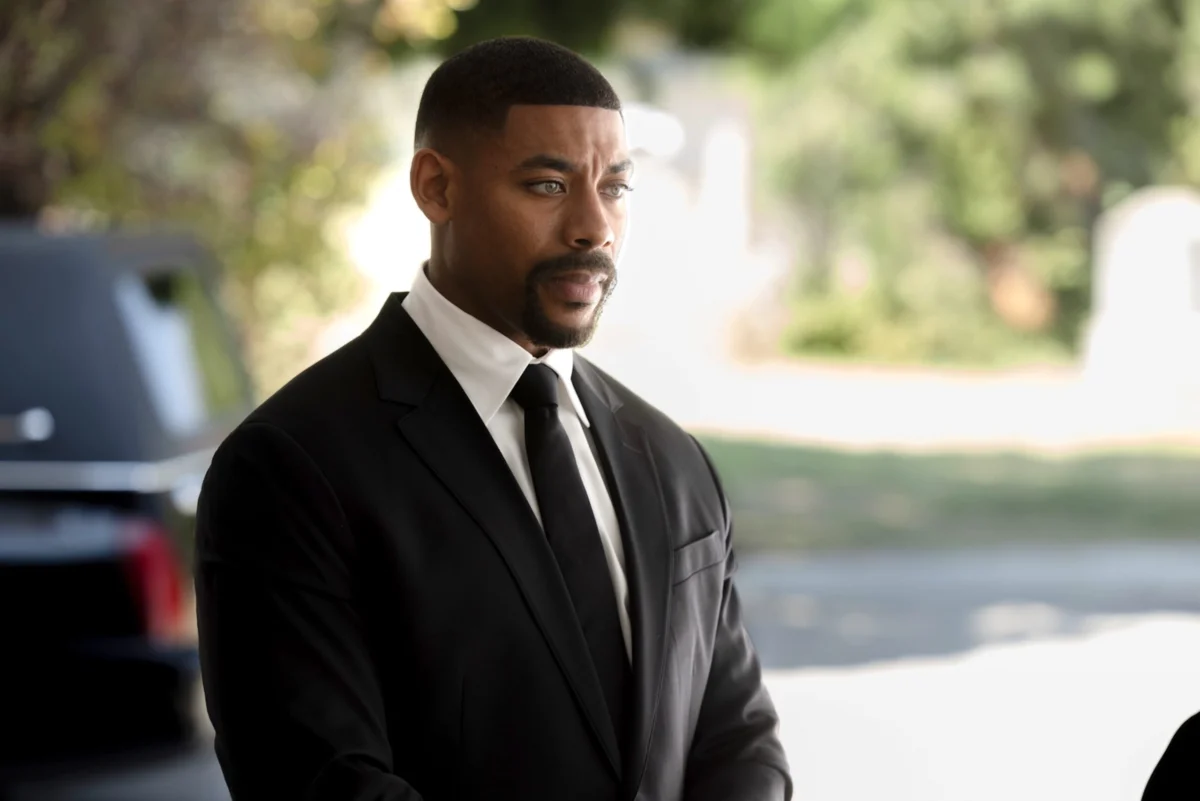
"As James Gunn’s DC Universe transitions from its foundational stages to a broader cinematic tapestry, Aaron Pierre’s portrayal of John Stewart in Lanterns has emerged as the definitive anchor for the franchise’s cosmic storytelling."
The shift toward a more grounded, mystery-driven approach in the DC Universe (DCU) marks a significant departure from the spectacle-heavy era of previous superhero iterations. By positioning Aaron Pierre’s John Stewart as a central figure in the 2026 series Lanterns, DC Studios is prioritizing character depth and genre-bending narratives, effectively utilizing the "True Detective" model to redefine the Green Lantern Corps for a modern audience.
The Dawn of a New Continuity
When James Gunn and Peter Safran took the reins of DC Studios, the mandate was clear: create a cohesive, interconnected universe that balances blockbuster cinema with prestige television. While the early phases of this rollout have seen varying degrees of reception—ranging from the critical acclaim of Creature Commandos and the second season of Peacemaker to the robust success of Superman—the franchise has not been without its growing pains. The perceived underperformance of Supergirl left a vacuum of uncertainty, placing a heavy burden of expectation on the next major pillar of the DCU: Lanterns.
Set to debut in 2026, Lanterns was conceived not as a traditional "superhero" show, but as a gritty, terrestrial-based mystery. By leaning into the atmosphere of a prestige crime procedural, the series sought to ground the cosmic elements of the Green Lantern mythos. The success of this experiment rested almost entirely on the shoulders of its lead actors, Kyle Chandler and Aaron Pierre.

The Casting Masterstroke: Pierre and Chandler
The decision to cast Kyle Chandler as the veteran Hal Jordan and Aaron Pierre as the newcomer John Stewart was a strategic pivot that paid immediate dividends. In the comics, the dynamic between Jordan and Stewart has often been one of mutual respect colored by different philosophical approaches to the "space cop" mandate. Chandler brings a weathered, authoritative presence to Jordan, while Pierre imbues Stewart with a disciplined, cerebral intensity that reflects the character’s background as a Marine and an architect.
The chemistry between the two has been described as magnificent, largely because it eschews the typical "buddy-cop" tropes in favor of a complex mentorship-turned-partnership. Pierre, a rising superstar who previously commanded attention in Rebel Ridge and M. Night Shyamalan’s Old, brings a physical and emotional gravitas to Stewart. His performance has effectively silenced any lingering doubts about the character’s ability to lead the franchise forward, especially given the narrative risks taken in the series’ opening act.
The Mystery of Hal Jordan and the Ascension of Stewart
The central hook of Lanterns involves a mystery that fundamentally alters the landscape of the DCU: the apparent death of Hal Jordan. Revealed at the conclusion of the first episode, Jordan’s disappearance—or demise—shifts the narrative focus entirely onto John Stewart. This bold storytelling choice serves two purposes: it creates a high-stakes emotional vacuum for Stewart to navigate, and it positions him as the primary Green Lantern for the DCU’s immediate future.
While Nathan Fillion’s Guy Gardner remains a chaotic presence within the mix, the narrative weight is firmly placed on Stewart’s shoulders. James Gunn has explicitly noted that Lanterns is, in many ways, "John Stewart’s story." This focus is not merely a television choice; it is a long-term franchise strategy. By allowing Stewart to anchor a prestige HBO series, DC is building a foundation for the character to transition into the film side of the universe with an established history and an invested audience.
Expanding the Horizon: Man of Tomorrow and Beyond
The confirmation that Aaron Pierre will reprise his role as John Stewart in Man of Tomorrow, the sequel to Superman, reinforces the character’s importance. While the extent of his role remains under wraps—ranging from a pivotal supporting turn to a significant cameo—his inclusion alongside other heroes like Xolo Maridueña’s Blue Beetle and Adria Arjona’s unannounced character suggests a "world-building" approach to the sequel.

The transition from the small screen to the silver screen is a hallmark of the new DCU strategy. Unlike previous iterations where TV and film were siloed, the current regime treats them as a singular narrative flow. Pierre’s Stewart is the first major test of this cross-medium synergy. If audiences embrace him as the "face" of the Green Lanterns, it opens the door for a standalone feature film that could explore the cosmic side of the Corps in ways that Lanterns—with its terrestrial, mystery-focused scope—could not.
A Visionary Future: Potential Directorial Paths
As speculation turns toward a potential Green Lantern feature film starring Pierre and Fillion, the conversation has shifted to who might direct such a project. James Gunn has shown a preference for filmmakers with distinct visual styles and unique narrative voices. Given the success of the "True Detective" vibe in the series, several directors have emerged as ideal candidates to take the property to the next level.
The Crime Procedural Specialist: Bart Layton
Layton, known for American Animals and the upcoming Crime 101, offers a style that mirrors the intensity of Michael Mann’s Heat. A Green Lantern film directed by Layton would likely lean into the "intergalactic cop" aspect, treating the Power Ring not as a magic wand, but as a tool in a high-stakes tactical thriller.
The Neon-Noir Visionary: Rose Glass
Following the success of Love Lies Bleeding, Rose Glass has proven she can handle gritty, visceral storytelling with a trippy, psychological edge. Her ability to craft compelling duos—as seen with Kristen Stewart and Katy O’Brian—could translate into a fascinating exploration of the friction between John Stewart and Guy Gardner.
The Visceral Realist: Jeremy Saulnier
Having already worked with Aaron Pierre on the acclaimed Rebel Ridge, Saulnier is a natural fit. His work on Green Room and Blue Ruin demonstrates a mastery of tension and brutal realism. A Saulnier-directed Green Lantern would likely be the most grounded and physically intense version of the character ever seen on screen.

The Non-Linear Stylist: JT Mollner
Mollner’s work on Strange Darling showed a knack for subverting audience expectations through non-linear storytelling. A Green Lantern movie that jumps across different eras of the Corps’ history—or explores a mystery through fragmented perspectives—would be a bold stylistic departure for the genre.
The High-Concept Master: M. Night Shyamalan
While Shyamalan is often associated with original high-concept thrillers, his previous collaboration with Pierre in Old provides a baseline for a potential reunion. Shyamalan’s unique sense of framing and his penchant for "the big reveal" could turn a cosmic mystery into a genre-defining event, provided he is given the creative freedom to "get weird" with the Lantern mythos.
The Stake for the DC Universe
The success of John Stewart as a character and Aaron Pierre as an actor is vital for the health of the DCU. For too long, the Green Lantern brand was tarnished by the 2011 film, leaving one of DC’s most popular concepts in a state of cinematic limbo. By utilizing a "slow-burn" television introduction followed by a major film appearance, Gunn and Safran are rehabilitating the brand through quality and consistency.
John Stewart represents more than just a hero; he represents the "architect" mindset that the new DCU is trying to project—disciplined, structural, and forward-thinking. As the franchise moves toward 2026 and the release of Man of Tomorrow, the emerald light of the Green Lantern Corps, led by Aaron Pierre, appears brighter than it has in decades. Whether through a second season of Lanterns or a massive cinematic crossover, the story of John Stewart is just beginning, and the results thus far suggest that the DCU has finally found its rhythm.
