
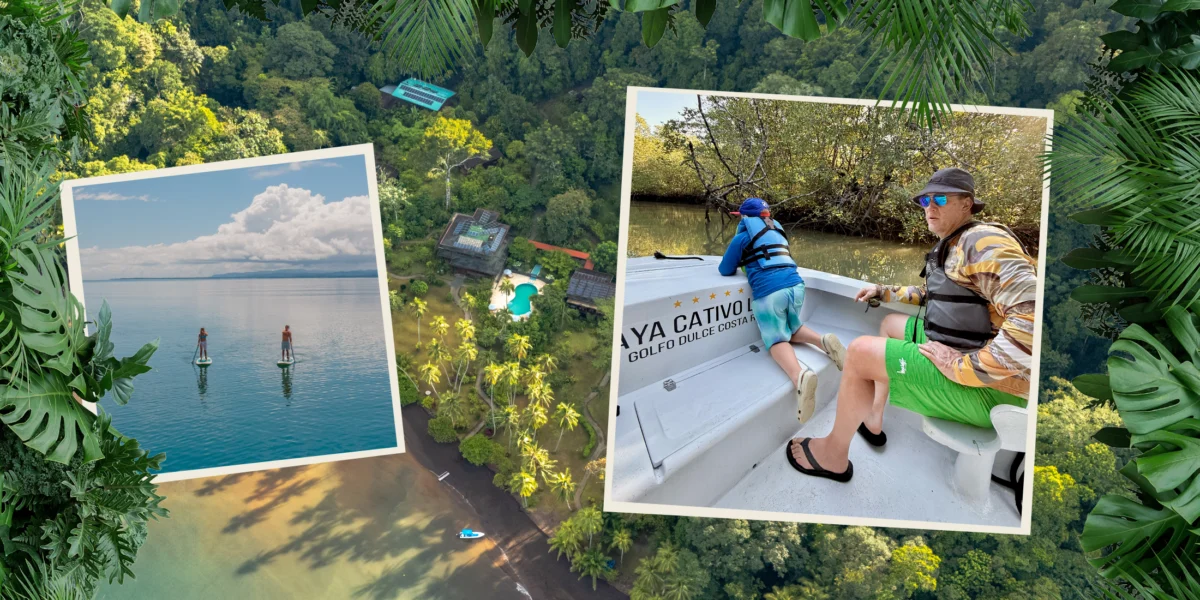
“True luxury in the modern age is found not in excess, but in the rare intersection of total isolation and biological abundance, where the environment dictates the pace of life.”
Playa Cativo Lodge represents a shift in the global travel paradigm, moving away from high-density tourism toward regenerative experiences that prioritize ecological immersion and mental restoration. Located in the remote southern reaches of Costa Rica, this boat-access-only sanctuary leverages its unique position between a 1,000-acre private reserve and a rare tropical fjord to offer a profound case study in the physical and psychological benefits of nature-centric living.

The Geography of Isolation
The journey to Playa Cativo Lodge begins where the road ends. Situated on the inner coast of the Osa Peninsula region, the lodge is accessible exclusively by boat, typically departing from the small ports of Puerto Jiménez or Golfito. This geographical barrier serves as a functional filter, stripping away the noise of conventional infrastructure and placing guests in a setting that feels less like a hotel and more like a biological research station refined with boutique sensibilities.
The lodge is comprised of only 18 rooms, a deliberate choice in scale that ensures the human footprint remains secondary to the surrounding ecosystem. To the back and sides, the property is encroached upon by a lush, unspoiled rainforest that serves as a corridor for the Osa Peninsula’s legendary biodiversity. To the front lies the Golfo Dulce, one of only four tropical fjords on the planet. This specific intersection of primary rainforest and deep, nutrient-rich marine waters creates a "bio-hotspot" where the density of life per square meter is among the highest in the world.
A Symphony of Biological Rhythms
In urban environments, the human circadian rhythm is often disrupted by artificial light and mechanical noise. At Playa Cativo, the "alarm clock" is a natural acoustic phenomenon. The day begins with the guttural, low-frequency howls of mantled howler monkeys, a sound that can travel up to three miles through the dense canopy. This is accompanied by the high-pitched trills of songbirds and the raucous calls of scarlet macaws.

The 1,000-acre private reserve serves as an extension of the guest experience. Walking to breakfast is an exercise in field biology. Hummingbirds, including the endemic Mangrove Hummingbird, can be seen fueling up on nectar, while Morpho butterflies—famed for their iridescent blue wings—provide flashes of electric color against the deep greens of the understory. The presence of scarlet macaws is particularly significant; once endangered, these birds have seen a resurgence in this region due to dedicated conservation efforts, and their presence in the trees surrounding the lodge is a testament to the health of the local habitat.
The Tropical Fjord: An Underwater Wilderness
The Golfo Dulce (Sweet Gulf) is a geological marvel. Created by ancient tectonic movements, it reaches depths of over 200 meters while remaining protected from the open Pacific. This creates a calm, lake-like environment that serves as a critical nursery for marine life. For the traveler, this translates into a world-class arena for paddleboarding and snorkeling.
The clarity of the water allows for the observation of a complex marine hierarchy. Schools of rays cruise over coral outcrops, while white-tip reef sharks—generally docile and non-threatening to humans—patrol the deeper ledges. The gulf is home to two distinct species of dolphins: the bottlenose and the pantropical spotted dolphin, both of which are frequently sighted by guests.

One of the most physically demanding yet rewarding activities offered is the two-hour kayak expedition through the mangrove forests. Mangroves are often referred to as the "kidneys of the coast" for their ability to filter water and sequester carbon at rates significantly higher than terrestrial forests. Navigating these twisted root systems requires a combination of core stability and upper-body endurance, providing a functional workout that doubles as a "forest bathing" session. The quietude of the mangroves allows for sightings of more elusive wildlife, including tree-dwelling snakes and specialized avian species that thrive in the brackish water.
The Architecture of the Rainforest Hike
While the beach offers serenity, the true heart of the Osa Peninsula lies deep within its primary forest. Led by expert nature guides, hikes into the interior reveal the complex layers of the rainforest. High in the 150-foot emergent trees, white-faced capuchin monkeys display remarkable agility, moving through the canopy with a precision that mimics a high-wire act.
On the forest floor, the industry of the rainforest is on full display. Leaf-cutting ants move in disciplined columns, carrying sections of foliage many times their own body weight to subterranean fungus farms. Larger ground-dwelling birds, such as the Great Curassow—a large, turkey-like bird with a curly crest—can be seen scurrying through the leaf litter. Above them, toucans, with their oversized, multi-colored bills, hop between branches. These birds are not just aesthetic marvels; they are essential seed dispersers that ensure the continued regeneration of the forest.

Regenerative Gastronomy: From Forest to Table
The culinary program at Playa Cativo is an extension of its ecological philosophy. In remote locations, supply chains are often a challenge, but the lodge has turned this into a virtue by establishing its own agricultural infrastructure. Most of the produce is grown in a forest clearing roughly a mile from the main lodge, ensuring that the carbon footprint of the food is negligible.
The menu is a reflection of the immediate environment. Freshly caught tuna and mahi-mahi are staples, often prepared as sashimi or grilled with local herbs. The lodge maintains its own apiary and poultry farm, providing a steady supply of fresh honey and eggs. This hyper-local approach extends to the more creative aspects of the menu, such as house-made sorbets featuring basil and passion fruit, or unconventional ice creams flavored with guava and carrot. This "farm-to-table" model is not a marketing buzzword here; it is a necessity of the location that results in a superior nutritional profile for the guests.
The Psychological Impact of the "Slow-Burn" Sunset
Beyond the physical activities and the biological sightings, the lodge offers a profound mental health benefit through its forced deceleration. The absence of television and the limited digital distractions encourage a state of mindfulness. The "slow-burn" sunsets over the Golfo Dulce are more than just a visual spectacle; they serve as a signal to the nervous system to transition into a parasympathetic state.

Science suggests that "blue spaces"—areas near water—can significantly lower cortisol levels and improve overall well-being. Watching the sun dip below the horizon of a tropical fjord, framed by the silhouettes of palm trees, provides a "mental massage" that prepares the body for deep, restorative sleep.
Seasonal Dynamics and Travel Planning
When planning a visit to this remote corner of Costa Rica, timing is dictated by the rhythms of the earth. The dry season, running from December to May, offers the most consistent blue skies and higher temperatures, making it ideal for those focused on hiking and sun-drenched beach days.
However, the "green season" offers its own unique spectacles. August is a premier month for marine enthusiasts, as it marks the arrival of humpback whales in the Golfo Dulce. These majestic mammals migrate from both the Northern and Southern Hemispheres to the warm, protected waters of the gulf to breed and give birth, offering one of the most spectacular wildlife encounters in the Americas.

Playa Cativo Lodge is more than a destination; it is a reminder of the world’s original state. It proves that a travel experience can be physically strenuous, mentally refreshing, and ecologically responsible all at once. In an era of over-tourism, it stands as a sanctuary for those seeking to reconnect with the raw, unedited power of the natural world.
