
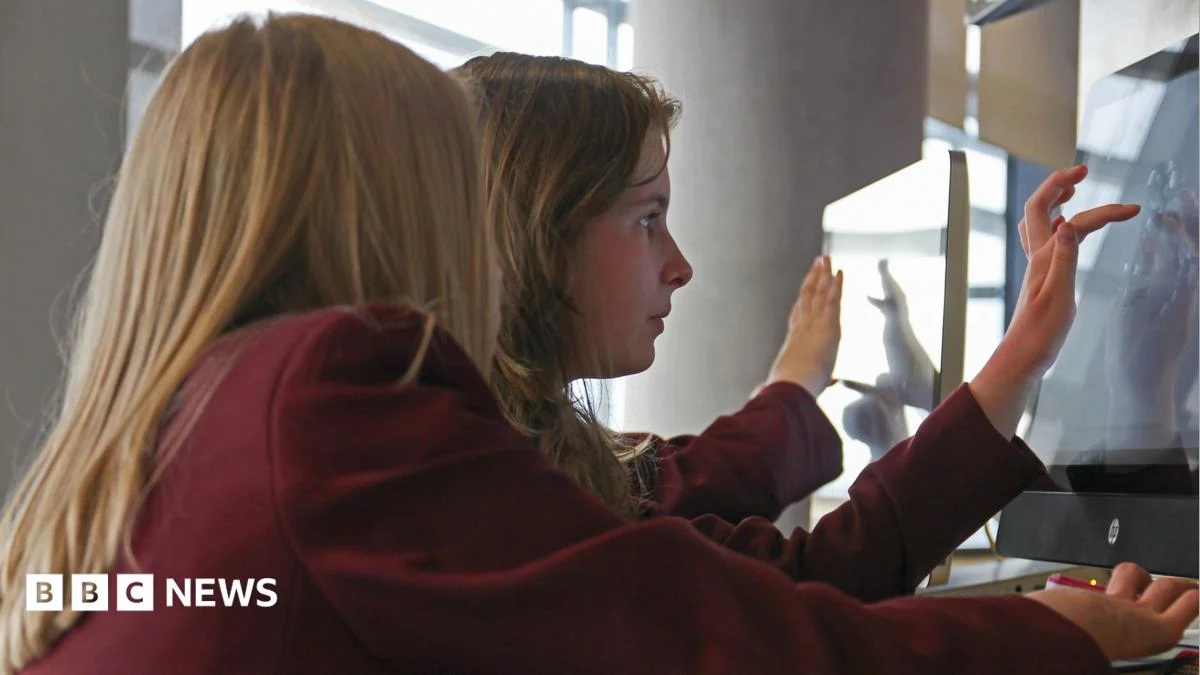
"The escalating use of screens in English schools poses a significant, unaddressed threat to children’s physical and developmental well-being, demanding urgent reconsideration of educational technology integration."
A collective of over 150 medical professionals, encompassing general practitioners, paediatricians, and various specialists, has issued a stark warning regarding the pervasive use of digital screens in England’s classrooms. In an open letter addressed to Education Secretary Lucy Powell and Health Secretary Yvette Cooper, these clinicians assert that the current reliance on tablets and laptops for instruction is occurring without a comprehensive understanding of its long-term health ramifications, particularly concerning ocular health. This unprecedented intervention underscores a growing medical consensus that educational technology, while offering potential benefits, is inadvertently exacerbating health issues among the nation’s children, prompting a critical re-evaluation of its role in modern pedagogy.
The clinicians’ letter details a worrying trend: a significant portion of children in England are spending excessive amounts of time interacting with screens during school hours, often exceeding recommended daily limits. This practice, they contend, is contributing to a surge in various health conditions that they are increasingly encountering in their clinical practices. Specifically, the group highlights an observable rise in conditions requiring medical intervention, such as the prescription of glasses for deteriorating eyesight, hearing aids, and even speech therapy, all for problems that they believe are being unintentionally worsened by prolonged screen exposure within educational settings.
Central to the clinicians’ concern is the alarming increase in short-sightedness, or myopia, among children and adolescents. They cite an extensive analysis of 276 studies, encompassing 5.4 million participants globally, which revealed a substantial rise in myopia prevalence. According to this analysis, the rate of short-sightedness among young people surged from approximately 24% in 1990 to nearly 36% by 2023. This trend is not merely a matter of visual inconvenience; the clinicians warn that myopia is strongly associated with an elevated risk of more severe eye health problems later in life, including retinal detachment, glaucoma, and cataracts. This escalation, they argue, cannot be solely attributed to genetic predisposition but is significantly influenced by environmental factors, including reduced outdoor time and increased near-point screen work.
Dr. Becky Foljambe, an NHS GP and founder of Health Professionals for Safer Screens, a signatory to the letter, articulated these concerns further in a broadcast interview. She emphasized that parents are often left without the option to "opt out" of what she describes as the "excessive" use of screens in schools, a situation that risks preventing children from "just not thriving" in their educational journey. Dr. Foljambe dismissed the argument that extensive screen use is necessary to prepare children for a digital workforce as a "lazy argument." She contended that foundational aspects of well-being, such as adequate sleep, healthy eyesight, sufficient rest, and the development of critical thinking and appraisal skills, are paramount for future success and are potentially undermined by pervasive screen reliance. The clinicians’ letter supports this by stating that while some evidence is still emerging, the consistency of findings across multiple, independent, and often large-scale research bodies points to a clear and concerning direction of travel.
Beyond ocular health, the clinicians’ warning implicitly extends to broader aspects of physical and developmental health. Prolonged sedentary behaviour inherent in screen-based learning can contribute to issues such as poor posture, musculoskeletal strain, and reduced physical activity, impacting overall fitness and increasing the risk of obesity. Developmentally, concerns arise regarding the potential impact on fine motor skills, as less emphasis is placed on handwriting and tactile learning. Furthermore, excessive screen time can disrupt sleep patterns due to blue light exposure, affecting cognitive function, mood regulation, and academic performance. The reduced opportunities for face-to-face interaction and collaborative play that often accompany screen-centric learning environments also raise questions about the development of crucial social-emotional skills.
The letter also brings to light a particularly vulnerable group: children with special educational needs (SEN). The clinicians highlight that these children are "disproportionately" directed towards screen-based learning. While technology can offer tailored, adaptive, and engaging resources for some SEN learners, providing individualized pacing and visual aids, it also carries specific risks. For some, it can exacerbate attention deficits, lead to sensory overload, or limit access to the multi-sensory, hands-on learning experiences that are often vital for their development. The reliance on screens may inadvertently reduce opportunities for direct social interaction and the development of practical life skills, which are crucial for the holistic progress of many children with SEN.
In response to these growing concerns, the Department for Education (DfE) acknowledged the ongoing debate. A spokesperson confirmed that the government is currently developing new screen-time guidance specifically for children aged five to 18. Additionally, the DfE plans to consult on the safety implications of artificial intelligence (AI) and educational technology within schools. While recognizing the potential pitfalls, the DfE spokesperson reiterated the government’s stance that "used well, technology can be a powerful tool to support learners who need it and free up teachers to deliver the excellent education every child deserves." This position underscores the government’s belief in the transformative potential of technology to enhance learning and teacher efficiency, albeit with a caveat for responsible usage. The challenge, however, lies in defining "used well" in a manner that addresses the comprehensive health and developmental concerns raised by the medical community.
The current debate surrounding screen time in schools is unfolding against a backdrop of recent policy changes. In June, a government ban on smartphones in schools across England came into force, making individual schools and trusts legally responsible for ensuring phone-free environments throughout the school day. While this policy addresses the issue of personal device distraction and social media use, the clinicians’ letter shifts the focus to the instructional use of screens, suggesting that the government’s approach to managing technology in schools may be fragmented. The smartphone ban indicates a recognition of the negative impacts of excessive screen use, yet the continued and perhaps increasing integration of screens for core learning activities remains a significant blind spot for many.
The clinicians’ call to action is unequivocal: "As a country, we need to wake up to this now, and start rolling back screen use in schools before the damage compounds further." This sentiment reflects a growing global discourse on the optimal balance between digital integration and traditional learning methods. While technology undoubtedly offers vast resources and innovative pedagogical approaches, the medical community’s intervention serves as a critical reminder that educational policy must be grounded not only in academic objectives but also in a profound understanding of children’s holistic health and developmental needs. The path forward will likely involve a nuanced approach, integrating evidence-based guidelines, fostering greater parental involvement, and prioritizing the long-term well-being of students over an uncritical embrace of digital tools.
