
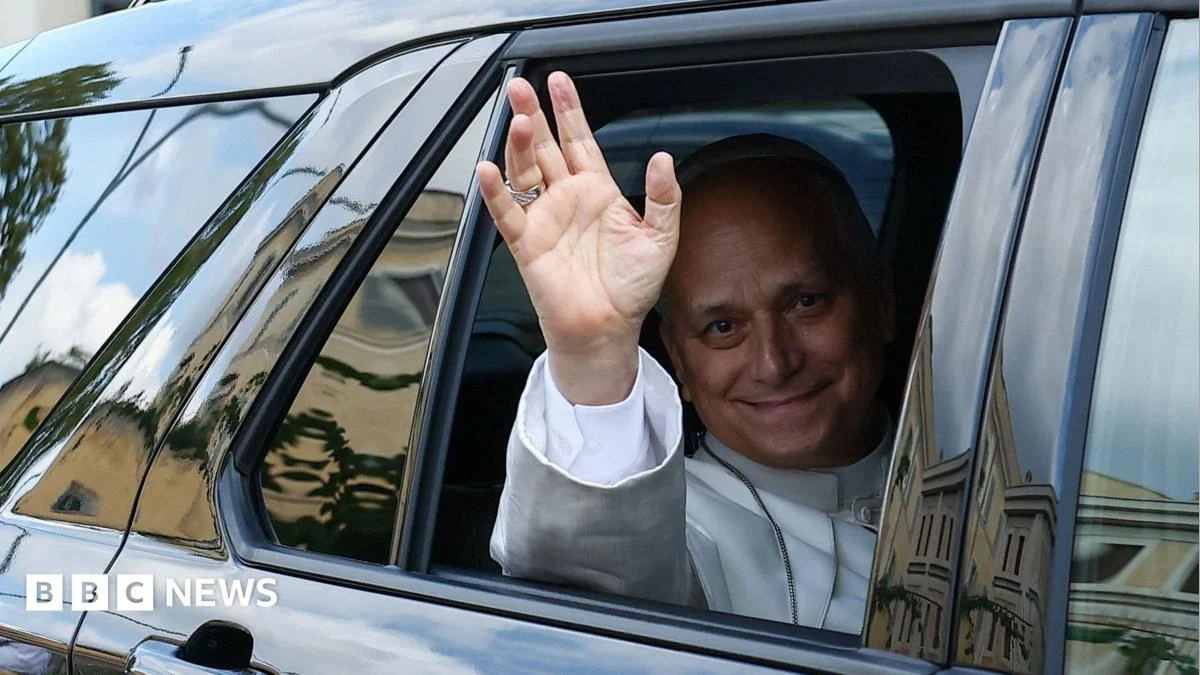
"In a remarkable display of resilience, Pope Leo XIV has returned to the Vatican just four days after lung cancer surgery, immediately re-engaging with both his spiritual flock and pressing global diplomatic challenges, signaling his unwavering commitment to his pontifical duties despite significant health concerns."
The swift discharge of Pope Leo XIV from Rome’s Gemelli Hospital, a mere four days following a critical operation to remove a cancerous growth from his lung, underscores a pontiff’s profound dedication to his spiritual and temporal responsibilities. His unexpected return to public life, marked by an unaided walk to his waiting vehicle and a brief interaction with well-wishers, provides a reassuring image to a global Catholic community that had been holding its breath since the surprise announcement of his surgery last week. This rapid recuperation and immediate re-engagement with key duties, including a significant diplomatic intervention regarding the conflict in Ukraine, highlight the unique demands and personal sacrifices inherent in the papacy.
A Swift Recovery and Return to the Vatican
The 71-year-old pontiff’s discharge on Saturday, after a Tuesday operation, was met with palpable relief across the globe. Known as "the Pope’s hospital," the Gemelli Polyclinic has a long history of caring for popes, including St. John Paul II, who underwent multiple surgeries there. Pope Leo XIV’s decision to announce his surgery only last week, coupled with his remarkably quick public reappearance, reflects a modern papacy increasingly transparent about health matters while simultaneously projecting an image of strength and continuity. The Vatican confirmed that the Pope is scheduled to deliver the traditional Angelus prayer and blessing to crowds in St. Peter’s Square on Sunday, a powerful symbol of his return to public life and a source of solace for millions.
During his brief hospital stay, photographs were released depicting Pope Leo XIV celebrating Mass and distributing communion for hospital staff on Friday. This gesture, deeply symbolic, not only underscored his priestly devotion but also served as a testament to his recovery and gratitude towards his medical caregivers. Such acts of pastoral care, even from a hospital bed, resonate deeply with the faithful, reinforcing the image of a spiritual leader connected to the everyday realities of his flock.
Medical Insights and the Path Ahead
According to a statement from his medical team, blood tests and a chest X-ray indicated "steady improvement" following his operation. The surgery, which lasted 90 minutes on Tuesday, involved the removal of the lower lobe of the Pope’s right lung. A lobectomy, the surgical removal of a lung lobe, is a standard procedure for early-stage lung cancer, aiming to remove cancerous tissue while preserving as much lung function as possible. For a pontiff, whose demanding schedule involves extensive travel, public speaking, and often strenuous physical activity, the implications of such surgery are significant. While the immediate recovery appears promising, the long-term prognosis hinges on the results of further tests to check for any sign that the cancer has spread, which have not yet been announced.
The Vatican’s measured communication regarding the Pope’s health reflects a delicate balance between public transparency and the need for medical privacy. Historically, papal health has often been shrouded in secrecy, but Pope Leo XIV’s approach suggests a more open era. The global Catholic community, however, remains keenly aware that even with a successful operation, managing cancer requires ongoing vigilance and potentially further treatment, which could impact the rigorous demands of the papal office. The removed lobe’s pathology report will be crucial in determining the cancer’s exact stage and guiding any subsequent therapeutic decisions.
A Voice for Peace Amidst Escalating Conflict
Beyond his personal health, Pope Leo XIV wasted no time in re-engaging with the pressing geopolitical crises facing the world. On Friday, he held a significant telephone conversation with Russian President Vladimir Putin, their first direct contact since June 2025. While the Vatican stated the call was to urge "dialogue and peace," its timing and context are profoundly significant. The previous interaction in June 2025, which saw a fragile, albeit ultimately unsuccessful, papal initiative to broker a humanitarian corridor, had been followed by a protracted period of diplomatic silence as the conflict intensified. This renewed contact signals the Pope’s persistent commitment to leveraging the moral authority of the Holy See in pursuit of de-escalation.
The call came against a backdrop of intensifying Russian bombardment of cities across Ukraine, leading to a growing number of civilian casualties and no discernible indication of President Putin’s readiness to halt the invasion. The pontiff has consistently used his platform to condemn the violence and advocate for humanitarian relief, distinguishing his role as a moral leader from that of a political actor. His diplomatic efforts, though often limited in their immediate political impact, serve to keep the plight of the Ukrainian people on the global agenda and underscore the universal call for human dignity and peace.
During the call, Pope Leo XIV specifically called for a humanitarian ceasefire in the Ukrainian city of Oleshkiy, a region currently occupied by Russia and subjected to constant shelling. The situation in Oleshkiy has been highlighted by recent reports detailing residents being forced to consume garden weeds to survive, a stark indicator of the dire humanitarian crisis unfolding there. The Pope’s plea was aimed at facilitating the evacuation of civilians and ensuring the urgent delivery of food and medicine to a population on the brink of collapse. This focused intervention demonstrates the Holy See’s commitment to addressing specific, critical humanitarian needs within the broader conflict, advocating for the most vulnerable.
Future Engagements and the Demands of the Papacy
Prior to his surgery, the Pope’s schedule had been cleared completely until October 20, making his rapid reappearance in public a clear demonstration of his dedication and resilience. This unexpected return undoubtedly brings immense relief to Catholics worldwide, who view the pontiff’s health as intrinsically linked to the stability and spiritual leadership of the Church.
Despite his recent surgery, those close to the Pope have indicated his keen desire not to delay a planned trip to Latin America in early November. This itinerary includes a significant visit to Peru, a nation where he served as a missionary for many years, holding deep personal and spiritual resonance for him. Papal trips are physically demanding, involving long flights, numerous public appearances, and often navigating diverse climates and altitudes. The question of whether he will be deemed medically fit to travel, or if further treatment might necessitate a postponement, remains open.
The ability of Pope Leo XIV to maintain a robust international travel schedule will be a critical indicator of his recovery and long-term health. His commitment to global engagement, particularly in regions where the Catholic Church plays a vital social and spiritual role, underscores the expansive nature of the modern papacy. The coming weeks will offer further clarity on his medical progress and the feasibility of his ambitious plans, as the world watches a resilient leader balance personal health with profound global responsibilities.
