
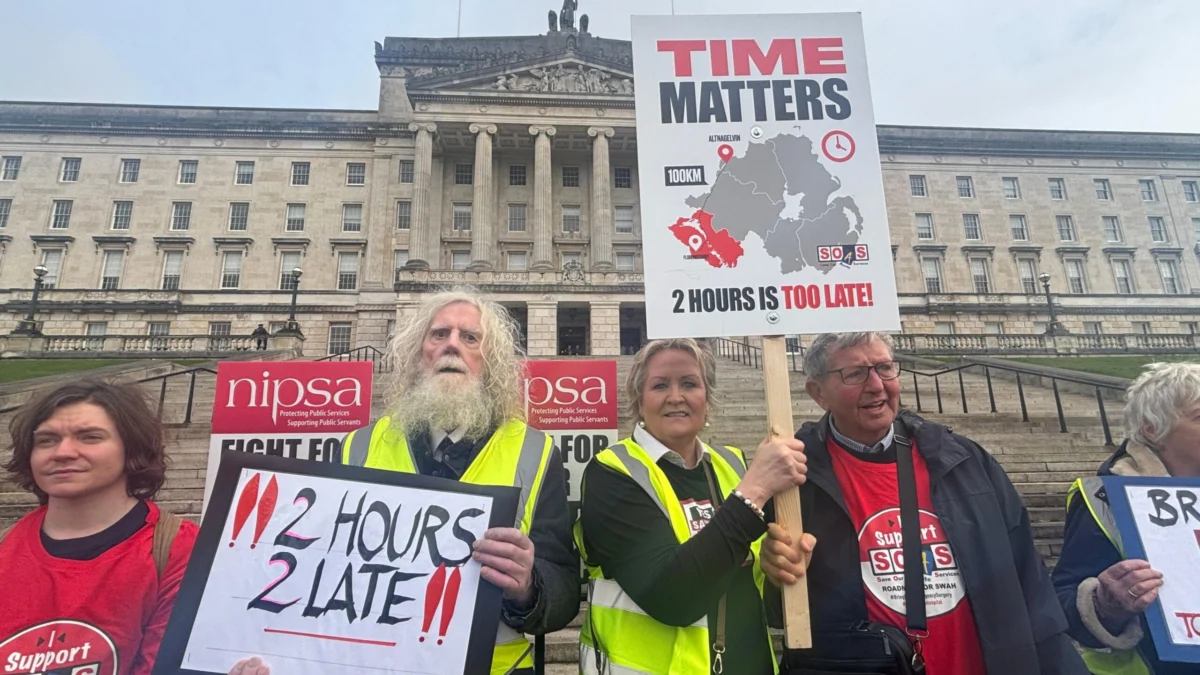
"Rural lives cannot be an afterthought in healthcare transformation," assert campaigners across Northern Ireland, warning that communities face the grave threat of being cut off from timely access to vital acute services, potentially costing lives and entrenching a two-tier health system.
A powerful coalition of four dedicated hospital campaign groups has issued a stark "letter of concern" to the Northern Ireland Executive, calling for immediate and decisive action to address what they describe as a systemic neglect of rural healthcare needs. Their collective appeal highlights a growing crisis where geographical isolation, diminishing local services, and an perceived lack of strategic oversight are pushing rural populations to the brink of healthcare inequality, demanding a cross-departmental working group to safeguard their fundamental right to accessible, timely medical care.
Northern Ireland’s Rural Health Crisis: A Battle for Equity and Access
Healthcare campaigners across Northern Ireland are intensifying their calls for the Executive to fundamentally rethink its approach to health transformation, arguing that rural communities are being systematically overlooked, with potentially dire consequences for patient safety and equitable access to vital services. A joint "letter of concern," spearheaded by four prominent hospital campaign groups, paints a sobering picture of a system where rural lives are treated as an "afterthought," leading to concerns that residents face the "real threat of being cut off from timely access" to acute and other critical hospital services.
The unified voice of Save Our Acute Services (SOAS) from County Fermanagh, SoS Causeway Hospital group, Save Our Services Daisy Hill, and the Down Community Health committee, represents a growing frustration with what they perceive as a sustained erosion of local healthcare provision. For several years, these groups have been at the forefront of local battles against the suspension or removal of acute services in their respective areas, bearing witness to the tangible impacts on their communities.

Donal O’Cofaigh, a prominent voice from SOAS, articulated the campaigners’ core demand for a holistic, executive-level approach. He stressed the "vital" importance of collective ministerial consideration for decisions regarding the removal of services from local hospitals. The campaigners contend that past healthcare decisions have been narrowly framed as "purely operational or clinical," lacking the comprehensive, cross-departmental scrutiny necessary to understand and mitigate their broader societal impact. This siloed approach, they argue, has allowed significant service changes to proceed without adequate assessment of their effects on rural populations, leading to what O’Cofaigh describes as a situation where rural residents are "second-class citizens."
The Erosion of Local Services: A Deeper Look
The concerns raised by the campaign groups are not merely theoretical; they reflect a lived reality for many in rural Northern Ireland. The progressive centralisation of specialist services, often driven by workforce shortages, clinical efficiency arguments, and financial pressures, has frequently come at the expense of smaller, local hospitals. While the Department of Health maintains that "every decision across the health and social care system is taken on the basis of safety and delivery of the best outcomes for all citizens," campaigners argue that the practical implications of these decisions disproportionately burden rural communities.
One of the most pressing examples cited is the impending move of inpatient maternity services from Daisy Hill Hospital in Newry to Craigavon Area Hospital, anticipated next month. For expectant mothers and their families in the Newry area and surrounding rural hinterland, this change translates into increased travel times during a critical and often time-sensitive period. The loss of local maternity care can have profound impacts, from increased anxiety and stress for families to potential risks associated with longer journeys during labour, particularly in adverse weather conditions or for those without immediate access to private transport. It also diminishes the sense of local community support and access to familiar care providers.
Beyond maternity services, the broader concern encompasses a range of acute care, including emergency departments, surgical units, and specialist medical interventions. When these services are withdrawn, rural residents are forced to travel "long, unsafe distances for emergency care when they are at their most vulnerable." This geographical barrier can mean the difference between life and death for conditions like stroke, heart attack, or severe trauma, where every minute counts. The "golden hour" concept in emergency medicine, which emphasizes the critical importance of immediate intervention, becomes a cruel irony for those facing extended ambulance journeys to distant regional centres.
The Human Cost: "People are Already Losing Their Lives"

Donal O’Cofaigh’s assertion that "people are already losing their lives" due to reduced rural services underscores the gravity of the situation. This stark claim highlights the tangible human cost of delayed access to care. Longer travel times can exacerbate medical conditions, complicate treatment, and ultimately lead to poorer health outcomes. Patients arriving at hospitals in a more critical state often require more intensive and prolonged interventions, placing additional strain on the larger regional centres that absorb the caseloads from closed rural units.
The campaigners also lambast the current system for allowing services to "temporarily [be removed] or collapse under pressures and then do nothing about it for years and just leave that as the situation." This lack of accountability and clear pathways for restoration creates a sense of abandonment and reinforces the perception that temporary closures are merely precursors to permanent withdrawals. To counter this, they advocate for a "presumption of restoration"—a robust pathway designed to reinstate services in cases where they were removed from rural hospitals without appropriate assessments or rigorous scrutiny. Such a mechanism would place the onus on health authorities to actively plan for and implement the return of services, rather than allowing de-facto closures to become the norm.
The Call for Comprehensive Rural-Proofing
A central plank of the campaigners’ demands is the implementation of genuine "rural-proofing" in healthcare policy. They assert that this crucial step is currently "non-existent," with "decisions repeatedly made without meaningful assessment of the differential impact on our communities." Rural-proofing involves systematically evaluating all new policies, programmes, and legislation to determine their potential impact on rural areas and populations. This process aims to ensure that rural needs are considered from the outset, preventing unintended negative consequences and promoting equity.
The groups are calling for independent rural-needs and equality assessments to be integral to any decision-making process involving healthcare service changes. Such assessments would provide an objective analysis of how proposed changes might affect rural access, socio-economic factors, transport infrastructure, and the specific needs of diverse rural populations, including older residents, those with disabilities, and low-income families. By mandating these assessments, campaigners hope to bring greater transparency and accountability to decisions that profoundly affect their communities.
Furthermore, the demand for a cross-departmental ministerial working group on rural health access speaks to the interconnected nature of the problem. Healthcare access is not solely a Department of Health issue. It intersects significantly with transport infrastructure (Department for Infrastructure), economic development (Department for the Economy), social well-being (Department for Communities), and even environmental considerations. A ministerial working group, with representation from across the Executive, could facilitate a more integrated approach, identifying synergies and addressing challenges that transcend traditional departmental boundaries. This holistic perspective is crucial for developing sustainable solutions that truly support rural thriving.

The Executive’s Response and the Path Forward
In September, Health Minister Robbie Butler acknowledged the complexity of health service transformation by announcing a new independent expert committee. This committee is tasked with providing advice on "major or controversial proposals for permanent changes to health and social care services." Minister Butler also initiated a review of existing guidance governing the change or withdrawal of services, specifically including consideration of rural and equality impacts.
While these steps are a recognition of the concerns, campaigners will be closely scrutinizing their implementation and effectiveness. The success of the independent expert committee will depend on its composition, its independence, and the weight its recommendations carry within the Executive. Similarly, the review of guidance must lead to tangible changes in policy and practice, ensuring that rural-proofing and equality assessments are not merely token gestures but fundamental requirements for any significant service alteration.
The ongoing debate surrounding rural healthcare in Northern Ireland highlights a broader challenge faced by many regions globally: how to deliver high-quality, equitable healthcare in areas characterized by lower population density, geographical remoteness, and often, an aging demographic. The campaigners’ message is clear: rural communities are not simply geographic spaces; they are vibrant, integral parts of Northern Ireland’s fabric, deserving of the same standards of healthcare access and provision as their urban counterparts. The Executive’s response to this urgent call will determine whether rural lives remain an "afterthought" or become a priority in shaping the future of health and social care. The stakes, as Donal O’Cofaigh warns, are nothing less than people’s lives.
