
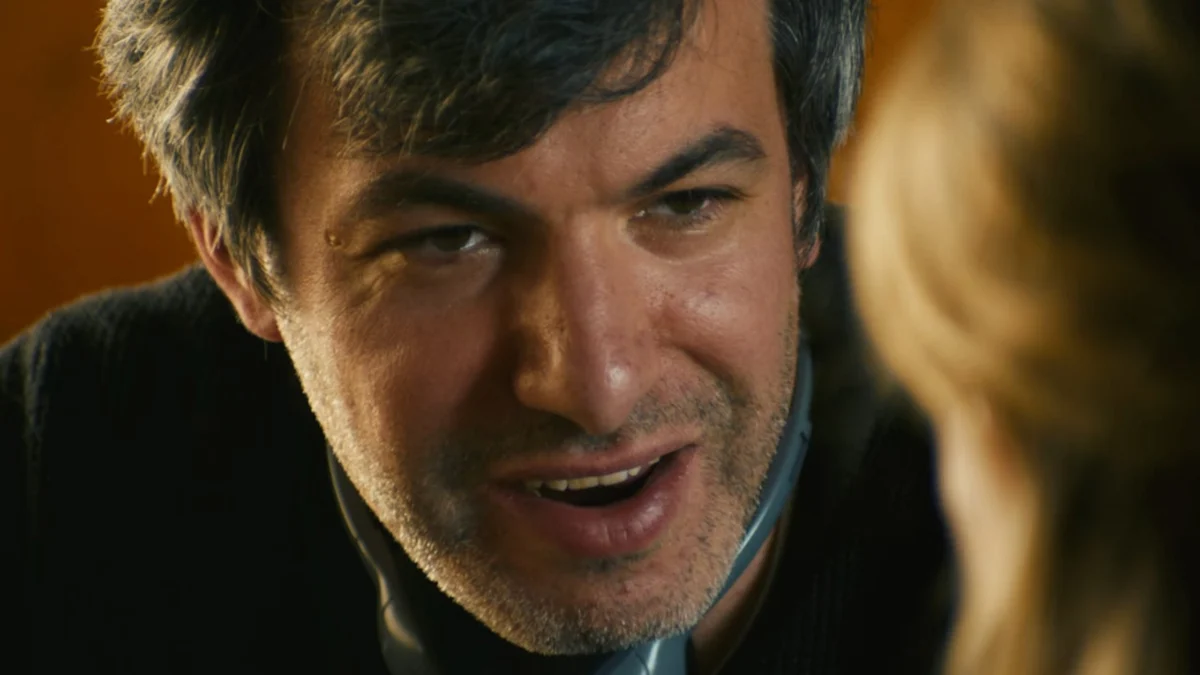
"By placing a master of manufactured reality alongside a convicted architect of corporate fraud, You Can See Everything transcends the true-crime genre to interrogate the very nature of truth, performance, and the human capacity for denial."
The documentary You Can See Everything, a collaborative effort between visionary directors Nathan Fielder and Lance Oppenheim, represents a watershed moment in non-fiction filmmaking. By chronicling the final thirty-four days of Elizabeth Holmes’s freedom before she reported to federal prison, the film moves beyond the tabloid fascination of the Theranos scandal to explore the psychological landscape of a woman defined by her relationship with the truth. Fielder, whose career has been built on dismantling the barriers between the scripted and the spontaneous, finds in Holmes a perfect, if enigmatic, subject—resulting in a three-hour odyssey that challenges the audience’s perception of sincerity in an era of curated identities.
The Evolution of Nathan Fielder: From Parody to Post-Truth
To understand the weight of You Can See Everything, one must first examine the trajectory of Nathan Fielder. Emerging from the Canadian comedy scene as a contemporary of Seth Rogen, Fielder initially gained notoriety with the Comedy Central series Nathan for You. What began as a dry spoof of business rescue programs like Kitchen Nightmares or Undercover Boss quickly evolved into a profound social experiment. Fielder’s "character"—a socially awkward business consultant—pushed real people into increasingly absurd scenarios, exposing the inherent desire for human connection and the lengths to which individuals will go to remain polite or follow an authority figure.
As his career progressed, Fielder’s work became more "Lynchian," a term often applied to his HBO series The Rehearsal. In that project, Fielder constructed elaborate, full-scale replicas of real-world locations to help people "rehearse" difficult life conversations. The show eventually folded in on itself, with Fielder rehearsing his own life, leaving audiences to wonder which emotions were genuine and which were part of the artifice. This obsession with the "truth of the performance" made him the ideal candidate to document Elizabeth Holmes, a woman whose entire public persona was built on a foundation of meticulously crafted deception.
The Subject: Elizabeth Holmes and the Theranos Legacy
Elizabeth Holmes remains one of the most polarizing figures in modern American history. As the founder of Theranos, she promised to revolutionize healthcare with a device that could perform hundreds of tests from a single drop of blood. At its peak, the company was valued at $9 billion, and Holmes was hailed as the next Steve Jobs. However, the technology was a failure, and the company’s downfall led to a high-profile trial where Holmes was convicted of multiple counts of fraud.

The public has seen many iterations of this story. John Carreyrou’s investigative book Bad Blood provided the definitive account of the corporate malpractice, while the Hulu series The Dropout, starring Amanda Seyfried, offered a dramatized look at Holmes’s psychological descent. Yet, You Can See Everything offers something these previous works could not: direct, unfiltered access to Holmes during her most vulnerable period. In May 2023, Holmes was sentenced to 11 years and 3 months in federal prison. It was during the final 34 days leading up to her reporting to the Federal Prison Camp in Bryan, Texas, that she and her partner, Billy Evans, invited Fielder and Oppenheim into their private lives.
The Oppenheim Aesthetic: A New Vision for Documentary
While Fielder provides the thematic backbone, co-director Lance Oppenheim brings a distinct visual language to the project. At only 30 years old, Oppenheim has already established himself as a master of the "cinematic documentary." His previous works, such as Some Kind of Heaven (exploring the surreal retirement community of The Villages) and the HBO series Ren Faire, are characterized by stylized lighting and formal compositions that feel more like scripted features than traditional fly-on-the-wall documentaries.
In You Can See Everything, Oppenheim’s camera does not just observe; it interrogates. The film avoids the grainy, handheld aesthetic common in true-crime exposés, opting instead for a lush, beautifully lit presentation. This choice is intentional. By filming Holmes and Evans in such a polished manner, the directors reflect the subjects’ own desire for a "perfect" life, even as the walls of the federal justice system close in. The result is a portrayal of Holmes not as a caricature of a villain, but as a human being existing in a domestic space, stripped of the black turtlenecks and corporate boardrooms that once defined her.
A Tale of Two Movies: The Mid-Film Shift
The structure of You Can See Everything is as unconventional as its creators. The first half of the film follows the promotional promise: a domestic portrait of a family in its final days of cohesion. We see Holmes and Evans navigating the mundane—packing boxes, spending time with their children, and engaging in moments of levity. One standout scene involves Fielder showing Holmes the classic Abbott and Costello "Who’s on First?" routine, a moment that highlights the strange, almost alien social dynamics at play.
However, once Holmes reports to prison, the film undergoes a radical transformation. The timeline jumps forward, and the movie enters a second phase that critics have described as "mind-bending." Here, Fielder employs the meta-narrative techniques he perfected in The Rehearsal. The film begins to question its own existence and the motivations of everyone involved—including the directors. It is in this second half that the "truth" becomes a kaleidoscope. Characters reveal hidden layers, and unexpected guests appear, leading to a climax that challenges the viewer’s initial judgments of Holmes.
The Philosophical Implications of "Seeing Everything"
The title of the film is both a promise and a provocation. In the digital age, we often feel we have total access to public figures, yet You Can See Everything suggests that the more we see, the less we may actually understand. Fielder and Oppenheim use the camera as a "fair" observer, but they acknowledge that the presence of a camera always alters the reality it records.

For Fielder, the project was filmed amidst his own busy schedule, including the production of The Rehearsal Season 2—a period during which he famously obtained his pilot’s license. This context adds another layer of surrealism to the documentary; while Fielder was exploring the literal heights of aviation for one project, he was simultaneously plumbing the depths of human deception for another.
The film also serves as a critique of the media circus that has followed Holmes for years. By removing the sensationalist headlines and focusing on the quiet, often uncomfortable interactions between Fielder, Holmes, and Evans, the documentary forces the audience to confront their own voyeurism. Is the joy of the film in seeing a "criminal" humanized, or is it in the meta-commentary on how we consume the lives of others?
Critical Reception and Award Prospects
Since its release by A24, You Can See Everything has garnered some of the strongest reviews of the year. Critics have praised its ability to sustain tension over its three-hour runtime, noting that the length is necessary to fully immerse the viewer in the psychological "waiting room" that Holmes inhabited.
The film is widely considered a frontrunner for the Academy Award for Best Documentary Feature. Furthermore, there is significant buzz regarding a potential nomination in an acting category for a secret participant whose role in the second half of the film shifts the entire narrative. This blurring of categories—documentary vs. performance—is the hallmark of a Nathan Fielder project, and it has clearly resonated with the industry.
Conclusion: The Kaleidoscope of Truth
Ultimately, You Can See Everything does not provide a simple answer to the question of who Elizabeth Holmes "really" is. Instead, it offers a reflection on the nature of perspective. Just as a kaleidoscope changes its pattern with a slight turn, the film suggests that our understanding of people is dependent on the lens through which we view them.
Whether you choose to take the events at face value or question the sincerity of every frame, the film succeeds in its primary goal: it stays with you. It is a haunting, often hilarious, and deeply intellectual exploration of the stories we tell ourselves to survive, and the stories we tell the world to thrive. In the hands of Nathan Fielder and Lance Oppenheim, the story of Elizabeth Holmes is no longer just a case of corporate fraud; it is a mirror held up to the very concept of reality in the 21st century.
