
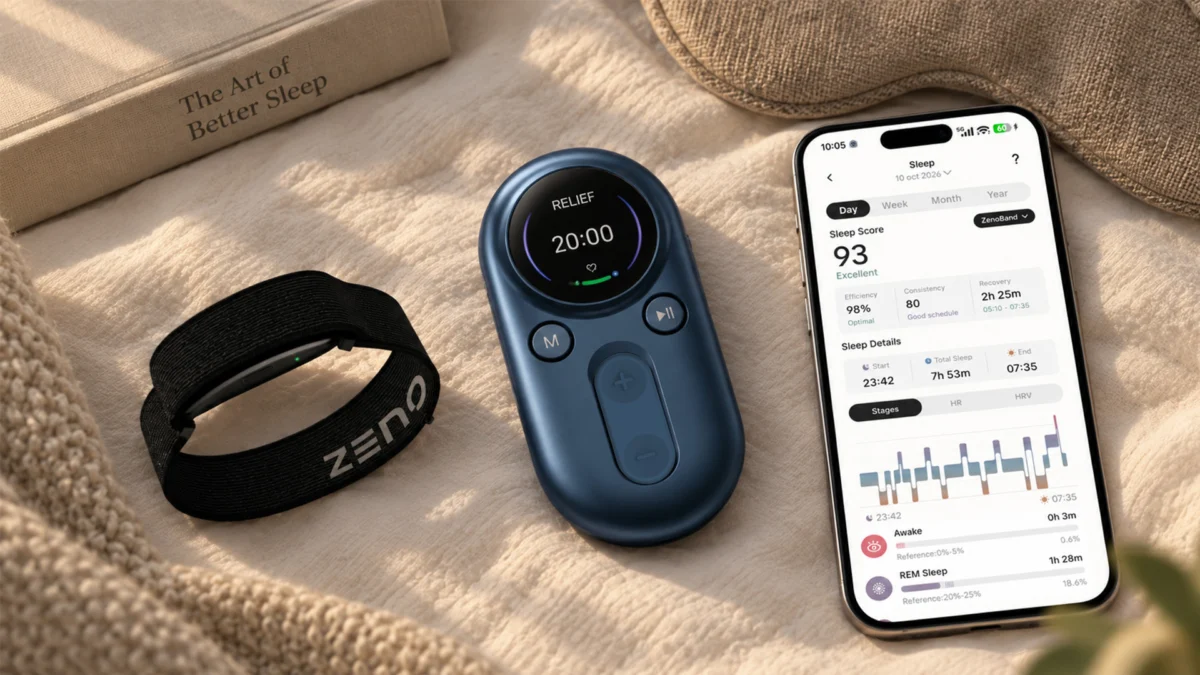
"As sleep technology evolves from mere measurement to actionable support, a new era of personalized sleep care is dawning, integrating advanced neuromodulation with AI-driven insights to empower individuals in their pursuit of better rest and overall well-being."
The landscape of sleep technology is undergoing a profound transformation, moving beyond the mere quantification of sleep duration, stages, and heart rate variability. While these advancements have made our sleep patterns more visible than ever, the true challenge lies in translating this data into tangible improvements in sleep quality and health. Reflecting this critical shift, the European Sleep Research Society (ESRS) is elevating "Sleep Technology" to a dedicated track at its upcoming Sleep Europe 2026 conference, underscoring the burgeoning interest in technology-enabled approaches to sleep assessment and intervention. At the forefront of this innovation is transcutaneous auricular vagus nerve stimulation (taVNS), a non-invasive technique that utilizes mild electrical impulses delivered through the external ear to modulate the vagus nerve and, consequently, the body’s autonomic regulation.
Clinical evidence supporting the efficacy of taVNS in sleep care, while still emerging, is increasingly promising. A significant randomized, sham-controlled trial published in JAMA Network Open in 2024 demonstrated notable improvements in sleep quality and reductions in insomnia severity among adults grappling with chronic insomnia. Further bolstering these findings, a comprehensive systematic review and meta-analysis conducted in 2025, encompassing six studies with 336 participants, also reported positive outcomes, though the certainty of the evidence was rated as low to very low, highlighting the need for more extensive research. A more recent meta-analysis in 2026, pooling data from 13 randomized controlled trials, provided broader support for favorable sleep outcomes associated with vagus nerve stimulation (tVNS) in general.
Beyond the direct clinical applications, the field of neuromodulation technology is witnessing a pivotal evolution from open-loop stimulation, which relies on pre-set stimulation parameters, towards sophisticated closed-loop systems. These advanced systems leverage real-time physiological signals to dynamically guide and adapt stimulation, offering a more personalized and responsive therapeutic approach. Research published in 2023 by Szulczewski et al. explored the potential of respiratory-gated taVNS, a method that synchronizes stimulation with the natural rhythm of breathing. Complementing this, a pilot study in 2024 by Tian et al. investigated the synergistic effects of combining taVNS with slow breathing techniques in individuals experiencing insomnia. Collectively, these studies signal a growing momentum towards developing stimulation protocols that are not only more physiologically attuned but also uniquely tailored to individual needs.
From Clinical Research to Everyday Sleep Support: The ZenoWell Luna Plus Set
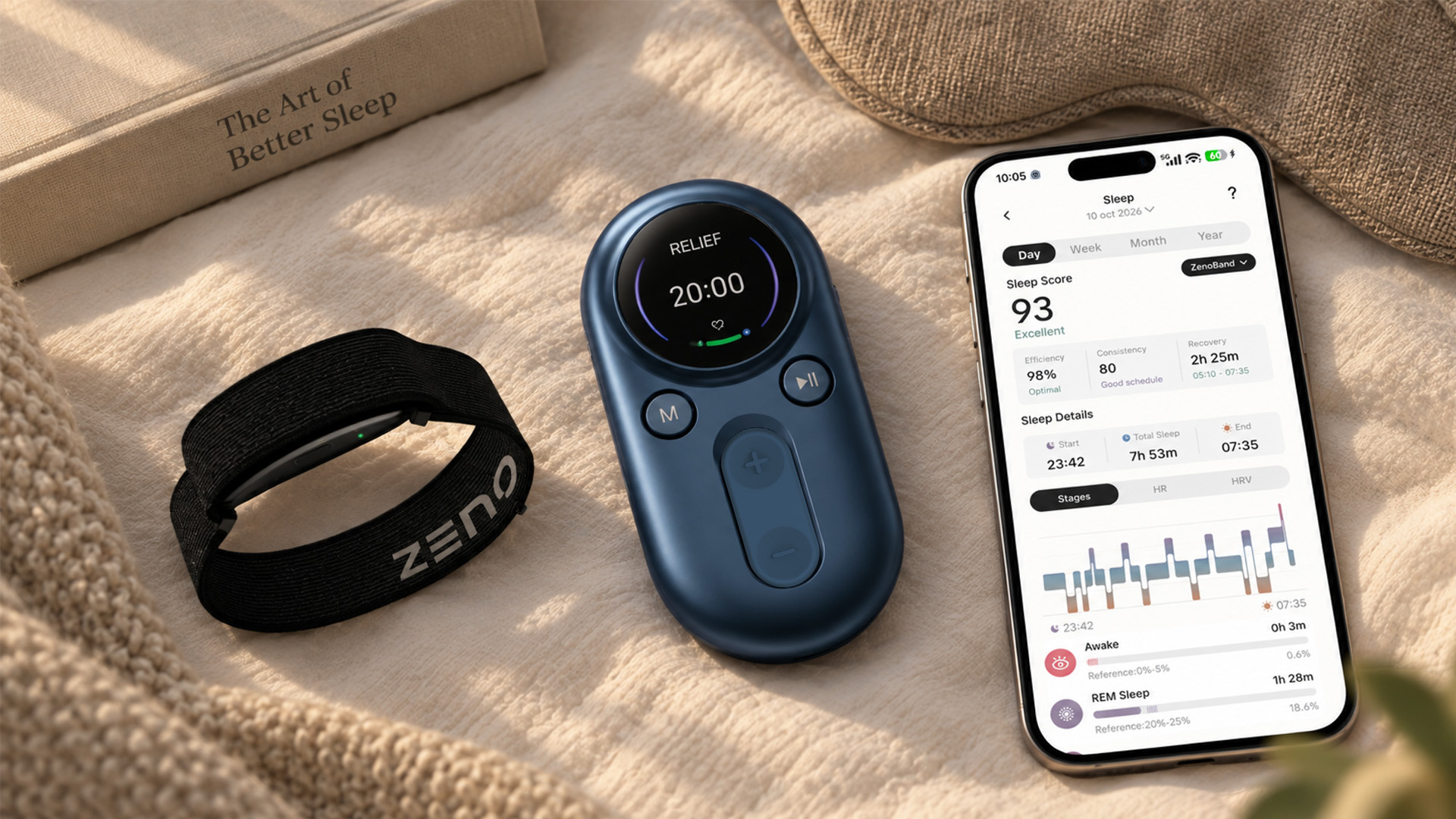
Against this backdrop of scientific advancement and technological innovation, the ZenoWell Luna Plus Set emerges as a groundbreaking integrated system designed to bridge the gap between cutting-edge research and practical, everyday sleep support. This comprehensive solution combines three core components to create an AI-guided, closed-loop taVNS experience: the Luna Plus Vagus Nerve Stimulator, the ZenoBand MOBI wearable, and the ZenoWell app, which features an advanced Multimodal AI Coach. The system is meticulously structured around a three-step process—Track, Understand, and Improve—representing a novel paradigm for translating the potential of taVNS research into tangible benefits for home use.
Track: Making Sleep Patterns Visible and Actionable
The ZenoWell app serves as the central hub of this ecosystem, seamlessly connecting with ZenoWell wearables and a growing array of compatible third-party devices, including popular options like the Apple Watch and Oura Ring. This integration consolidates a user’s sleep data into a single, accessible platform, transforming complex overnight physiological signals into clear, comprehensible insights. By aggregating data from various sources, the "Track" component empowers users with a holistic view of their sleep architecture, laying the groundwork for deeper understanding and informed action.
Understand: Uncovering the Drivers of Sleep Quality
At the heart of the ZenoWell system lies its Multimodal AI Coach, a sophisticated engine powered by Retrieval-Augmented Generation (RAG) technology and a meticulously curated database of vagus nerve research. This AI goes beyond simple data aggregation; it intelligently synthesizes wearable metrics, detailed logs of taVNS sessions, and crucial daily contextual information. Factors such as travel, late-night meals, and subjective user check-ins are all factored into its analysis. The AI’s primary function is to identify potential disruptors that may be negatively impacting sleep quality. By analyzing shifts in heart rate, heart rate variability (HRV), and overall sleep patterns, particularly in relation to individual taVNS sessions and longer-term trends, the coach helps users discern their unique sleep dynamics. This enables them to explore whether consistent application of taVNS is correlated with observable improvements over time, providing personalized guidance on the most effective next steps.
Improve: Integrating taVNS into the Daily Sleep Routine
The Luna Plus vagus nerve stimulator is specifically engineered with a dedicated "Sleep Mode," featuring a 20-minute taVNS session optimized for pre-bedtime use. This mode is built upon a foundation of research-informed stimulation parameters, incorporating respiratory gating and real-time physiological response monitoring. During each session, the device meticulously tracks changes in heart rate and HRV, providing valuable data before, during, and after the stimulation. This approach draws directly from compelling clinical research, including the aforementioned 2024 randomized, sham-controlled trial by Zhang et al., which reported significant enhancements in sleep quality and insomnia severity. While these findings provide a robust scientific rationale for exploring taVNS in sleep management, the ongoing development and refinement of individual devices and specific stimulation protocols necessitate continued investigation.
Building upon this solid scientific foundation, ZenoWell is committed to advancing personalized taVNS stimulation through the power of artificial intelligence. By integrating insights gleaned from extensive clinical sleep datasets with an individual’s unique physiological responses and subjective feedback, the system aims to continuously refine and tailor stimulation parameters, fostering a truly individualized approach to sleep wellness.
A Connected Approach to Sleep Care for Professionals and Individuals
For sleep professionals, the ZenoWell Luna Plus Set offers an invaluable tool for comprehensive patient management. The integrated system facilitates the incorporation of home-based routines, observed physiological trends, and user-reported experiences into follow-up discussions, providing a richer context for clinical assessment and therapeutic planning. It is important to emphasize that this technology is positioned as an adjunctive wellness tool, not a substitute for established, evidence-based interventions such as Cognitive Behavioral Therapy for Insomnia (CBT-I) or the critical judgment of healthcare professionals.
"ZenoWell has reached more than 100,000 users, many of whom are actively seeking support for sleep difficulties, and we have consistently received positive feedback on our holistic approach to sleep enhancement," stated Dr. Jane, Founder & Chief Scientist at ZenoWell. "We firmly believe that sleep technology must transcend mere measurement. By seamlessly connecting physiological tracking, personalized insights derived from AI, and a structured bedtime routine, our objective is to empower individuals to gain a deeper understanding of their sleep patterns and discover more individualized pathways to support their overall well-being."
ZenoWell is set to showcase its innovative solutions at Sleep Europe 2026 in Maastricht, from October 20th to 23rd, at Booth A75. Further details about the Luna Plus Set and its comprehensive approach to sleep wellness are available at zenowell.ai.
About ZenoWell: A Legacy of Innovation in Neuromodulation
ZenoWell’s technological foundation is deeply rooted in its incubation at Heidelberg University Medical School and the extensive expertise of its parent company, BrainClos. BrainClos has been instrumental in developing advanced closed-loop taVNS technology, contributing significant patents and research publications across a diverse spectrum of health and wellness domains. These areas include sleep science, pain management, stroke rehabilitation, motor balance enhancement, and heart rate variability analysis. This robust research heritage underpins ZenoWell’s commitment to developing non-invasive taVNS technology specifically for the regulation of the autonomic nervous system and the promotion of personalized wellness. The company is actively engaged in fostering more than 50 potential clinical and research collaborations, further expanding its impact and reach.
Building upon this strong scientific and technological bedrock, ZenoWell offers distinct product lines, including the Luna Plus and Vita. Each product is meticulously designed to address specific user needs across a range of wellness objectives, encompassing sleep improvement, stress recovery, pain management, metabolic health optimization, enhanced focus, and mood regulation. ZenoWell products are made accessible to users through strategic partnerships with wellness professionals and direct-to-consumer channels, ensuring broad availability and impact.
