
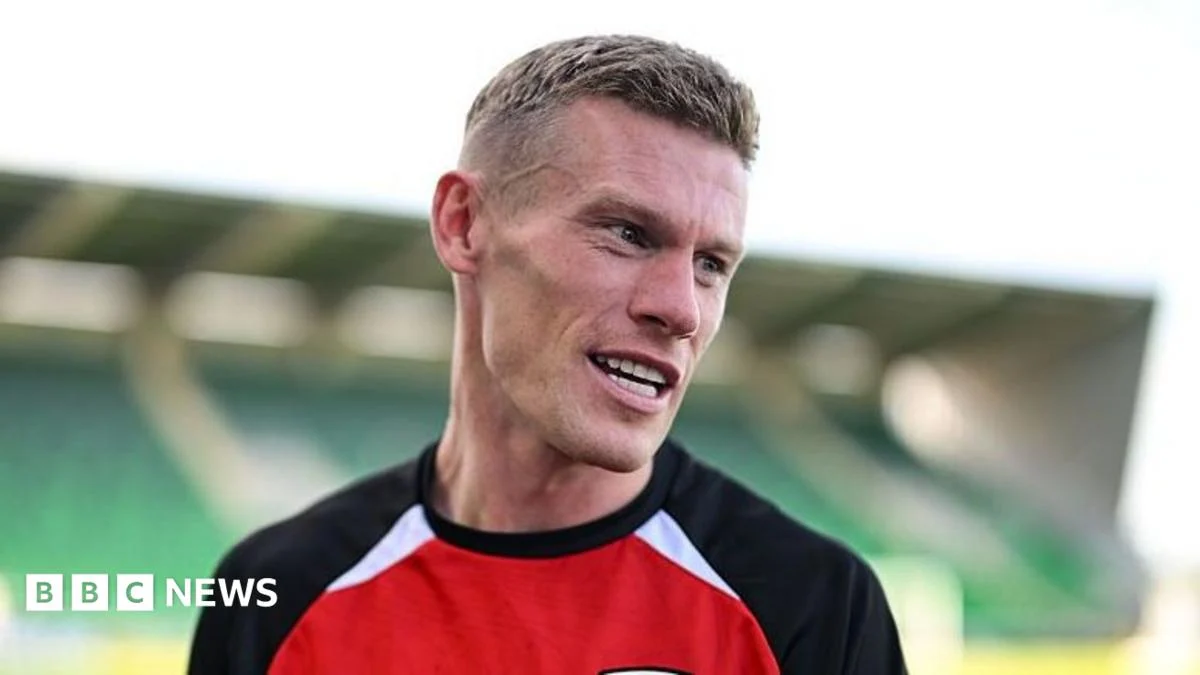
"Asking for help isn’t a sign of weakness; for men to recognise they need support and act on it is incredibly brave. A dialogue with influential figures like James McClean can bridge divides and amplify crucial messages of support, especially for young men navigating complex mental health challenges."
This statement encapsulates the proactive stance of the Men’s Action Network (MAN), a Derry-based mental health charity, as it extends an invitation to prominent footballer James McClean. The initiative comes in the wake of McClean expressing personal views on mental health, prompting a nuanced discussion about individual perspectives versus the collective effort required to dismantle persistent stigmas surrounding men’s mental well-being. The charity’s objective is to foster understanding, leverage McClean’s considerable influence, and reinforce the vital message that seeking support is a testament to strength, not fragility.
In a climate where discussions around mental health are increasingly open yet remain fraught with complexities, the Men’s Action Network (MAN) has taken a significant step by publicly inviting James McClean, the esteemed Derry City and Republic of Ireland international footballer, to a meeting. The invitation, extended by MAN’s representative, James Lynch, as initially reported by Derry Now, aims to foster dialogue surrounding McClean’s recently articulated views on mental health. Lynch underscored that while McClean is unequivocally entitled to his personal opinions, given the intricate nature of men’s mental health, a collaborative discussion could yield profound benefits, particularly for the community he so strongly influences.
Lynch articulated a position of respectful engagement, acknowledging the multifaceted aspects of mental well-being. He conceded a degree of agreement with McClean’s presumed emphasis on personal agency, noting that ultimately, the decision to seek support rests with the individual. This point resonates with a fundamental principle of mental health care, which prioritizes self-determination and readiness in the therapeutic process. However, Lynch promptly introduced the crucial counterpoint that, from MAN’s perspective, a palpable stigma continues to impede men from openly admitting distress and actively seeking help. This societal barrier, often rooted in traditional constructs of masculinity, creates an environment where vulnerability is misconstrued as weakness, hindering essential outreach.
The charity’s core message, championed by Lynch, unequivocally states that "asking for help isn’t a sign of weakness." Instead, he reframed this act as one of immense courage. For men, often socialized to suppress emotions and project an image of stoicism, the journey to acknowledge a need for support and subsequently act upon it demands significant inner strength. This perspective challenges long-held societal norms that have historically contributed to disproportionately high rates of male suicide and delayed help-seeking behaviors. By reframing help-seeking as bravery, MAN aims to empower men to overcome internalized resistance and engage with available support systems.
James McClean’s stature in Derry and beyond renders his views particularly influential. With an acclaimed career that includes 103 caps for the Republic of Ireland and extensive experience across top-tier English football clubs, McClean is a formidable figure. His journey from his hometown club, Derry City, to the Premier League with Sunderland, and subsequent stints with West Bromwich Albion, Stoke, and Wigan Athletic, culminating in a return to Derry, paints a picture of resilience and success. For young men in Derry, many of whom aspire to emulate his sporting achievements, McClean serves as a potent role model. Lynch highlighted this precisely, emphasizing that a meeting with a figure of such renown could provide invaluable insights and demonstrate the power of hard work, while simultaneously allowing for a more nuanced discussion on well-being. The potential for McClean to engage with the individuals MAN supports daily could humanize the mental health conversation and make it more accessible to those who admire him.
The gravity of the issue was further underscored by Derry City Football Club’s swift and decisive response. In a formal statement, the club clarified that McClean’s views "do not reflect our core values or beliefs." This public distancing is a testament to the heightened awareness and commitment within professional sports organizations to mental health and well-being. The statement emphasized the club’s highest priority on the mental health of its players, staff, and the broader Derry City community. Bolstered by an in-house psychologist, the club actively champions an open dialogue around mental health challenges, encouraging individuals to seek support and reassuring them that they are never alone in their struggles. This proactive stance by a prominent sporting institution is crucial, as it sets a benchmark for player welfare and community engagement, reinforcing the message that mental health support is an integral component of overall well-being.
McClean’s current personal circumstances add another layer of complexity and empathy to the unfolding narrative. His return to his hometown club, initially a celebrated homecoming, has been overshadowed by a protracted and "incomprehensible" contract dispute. This period has been publicly described by McClean as "one of the most difficult" of his life, further exacerbated by social media posts in which he aired frustrations, for which he later apologized. These personal tribulations serve as a poignant reminder that mental health challenges are indiscriminate, affecting individuals regardless of their public profile or professional achievements. It highlights the universal human experience of grappling with stress, disappointment, and public scrutiny, underscoring the very need for accessible and non-judgmental support systems that MAN advocates for.
The proposed meeting between MAN and McClean carries significant potential. It could serve as a platform for a constructive exchange of ideas, where diverse perspectives on mental health can be explored with mutual respect. Such a dialogue might not only clarify McClean’s specific views but also allow him to hear firsthand the experiences of those struggling with mental health issues and the vital work being done to support them. For the public, particularly young men, witnessing such an engagement could model a healthy way to approach disagreements and foster a more nuanced understanding of mental health advocacy. It could demonstrate that while personal beliefs are valid, the collective effort to reduce suffering and provide support is paramount.
Beyond the immediate context of James McClean and MAN, this situation reflects broader trends in the public discourse surrounding mental health. There is an increasing societal recognition of the importance of mental well-being, yet significant challenges persist, especially in how men are encouraged—or discouraged—from engaging with their emotional health. Professional sports, once a bastion of stoicism, are now increasingly recognizing the immense pressures athletes face, both on and off the field. Comprehensive mental health support, including access to psychologists and counselors, is becoming a standard expectation within elite sporting organizations, reflecting a global shift towards a more holistic approach to athlete welfare.
Ultimately, the invitation from the Men’s Action Network to James McClean is more than just a request for a meeting; it is a profound call to action. It seeks to leverage the influence of a local hero to confront the enduring stigma around men’s mental health, particularly in a community that holds him in such high regard. By advocating that "asking for help isn’t a sign of weakness" but an act of "incredible bravery," MAN strives to create an environment where vulnerability is seen as strength, and where every man feels empowered to seek the support he needs, knowing he does not have to face life’s challenges alone. The outcome of this proposed dialogue could profoundly shape the mental health narrative in Derry and beyond, offering a powerful example of how open conversation, even in the face of differing opinions, can pave the way for greater understanding and support.
