
"The strategic pursuit of local power by the Query Club in Tredegar, driven by figures like Aneurin Bevan and Walter Conway, not only transformed a Welsh industrial town but also laid foundational principles for universal healthcare and ignited Bevan’s lifelong quest for national systemic change."
In the industrial heartland of 1920s South Wales, the town of Tredegar epitomized the stark realities of an era where private enterprise held immense sway over working-class lives. Collieries and iron works, the lifeblood of the community, were also its masters, with owners and managers wielding disproportionate power within local institutions, from town councils to hospital boards. It was against this backdrop of entrenched power imbalances and limited agency for ordinary people that a remarkable movement emerged, one that would not only reshape Tredegar but also profoundly influence the architect of Britain’s National Health Service, Aneurin Bevan. This local struggle for self-determination, spearheaded by a group of committed socialists known as the Query Club, reveals the grassroots origins of a vision that would eventually transform national healthcare and redefine the role of the state in public welfare.
Aneurin Bevan, born into a miner’s family, experienced the harsh realities of underground labor firsthand. His time in the coal seams instilled in him an intimate understanding of the precariousness of working life and the profound lack of control ordinary individuals had over their destinies and living conditions. This personal insight fueled his early political convictions and his determination to challenge the status quo. Bevan, along with his comrades, coalesced around the Query Club, an organization dedicated to dissecting the mechanisms of power and strategizing for meaningful change in Tredegar. As Dr. Nye Davies, a senior lecturer at Cardiff University and author of books on Bevan, explains, the club’s fundamental question was, "How do we actually achieve change here in Tredegar? How do we try to influence things?" Their decisive answer was revolutionary in its simplicity and ambition: "What we need to do is be on every single committee, every single board, every single institution that has some level of influence in the community and we need to get like-minded socialists on to those boards." This strategic infiltration of local governance was not merely about occupying positions but about fundamentally shifting the locus of power from vested private interests to the collective will of the community. Davies emphasizes that this relentless "search for power" was the core driver of the Query Club’s agenda, a quest for systemic rather than superficial reform.
Central to the club’s endeavors, and a figure whose contributions are often overshadowed, was Walter Conway. Conway’s personal story was as compelling as his impact. An orphan raised in the local workhouse, his experience defied the popular, often grim, perception of such institutions. The master of the house, against expectations, recognized and nurtured Conway’s intellect, teaching him to read and write and instilling in him a lifelong passion for learning—a trait he shared deeply with Bevan. This intellectual foundation proved crucial for Conway’s later leadership. In 1915, he secured the highly competitive position of secretary for the Tredegar Medical Aid Society, beating 50 other applicants. This society, like others across industrial towns, was a testament to working-class solidarity: members contributed a small sum from their wages to ensure access to medical care when needed. Under Conway’s astute leadership, the Tredegar Medical Aid Society flourished dramatically, expanding its membership from an initial 5,000 to an astonishing 20,000 by the time of his death in 1933. This growth meant that 95% of the town’s population was covered, gaining access to a comprehensive suite of healthcare services including doctors, nurses, dentists, and hospitals. Crucially, Conway championed the inclusion of wives, children, and non-miners, transforming what began as a workers’ mutual aid system into a truly universal health service for Tredegar – a remarkable precursor to the ideals of the National Health Service.
The Query Club’s strategic approach to power was acutely aware of the obstacles they faced. They recognized that all significant local institutions – the town council, the hospital board, the workingmen’s club, and even the medical aid society itself – were largely dominated by individuals linked to the Tredegar Iron and Coal Company, the town’s dominant economic force. These board members invariably had a vested interest in maintaining the existing power structures, keeping control firmly in the hands of the well-to-do. As committed socialists and members of the burgeoning Labour party, the Query Club systematically targeted these institutions. Their goal was to dismantle this entrenched control by electing their own members, people who championed the interests of the working class, to these influential positions. Their efforts began to bear fruit: in 1922, they successfully put Bevan forward for the town council. By 1929, the political landscape of Tredegar had visibly shifted, with 10 of the 16 council members belonging to the Labour party, and five of those being active members of the Query Club. This demonstrated the tangible impact of their strategic, grassroots organizing.
The legacy of the Query Club and its impact on Tredegar is still palpable today. John Morgan, a local councillor and the great-nephew of one of the club’s 20 members, continues to live in the town and has dedicated himself to researching its rich history. While the Workman’s Institute, where the club eventually met after its early days in local cafes, is no longer standing, the former Medical Aid Society building has been lovingly preserved as the Tredegar Medical Aid Society Heritage Centre. Within its walls, a small meeting room at the back is specifically dedicated to the Query Club, adorned with photographs and information that meticulously preserve its memory and significance. Morgan reflects on his childhood interactions with his great-uncle: "I used to go out walking with my uncle when he was in his 80s and 90s. He died when I was about 12 but if I knew then what I know now I’d have spent hours talking to him about the Query Club because some of the things they got up to – they were radicals." This sentiment underscores the revolutionary spirit and far-reaching impact of their early activism.
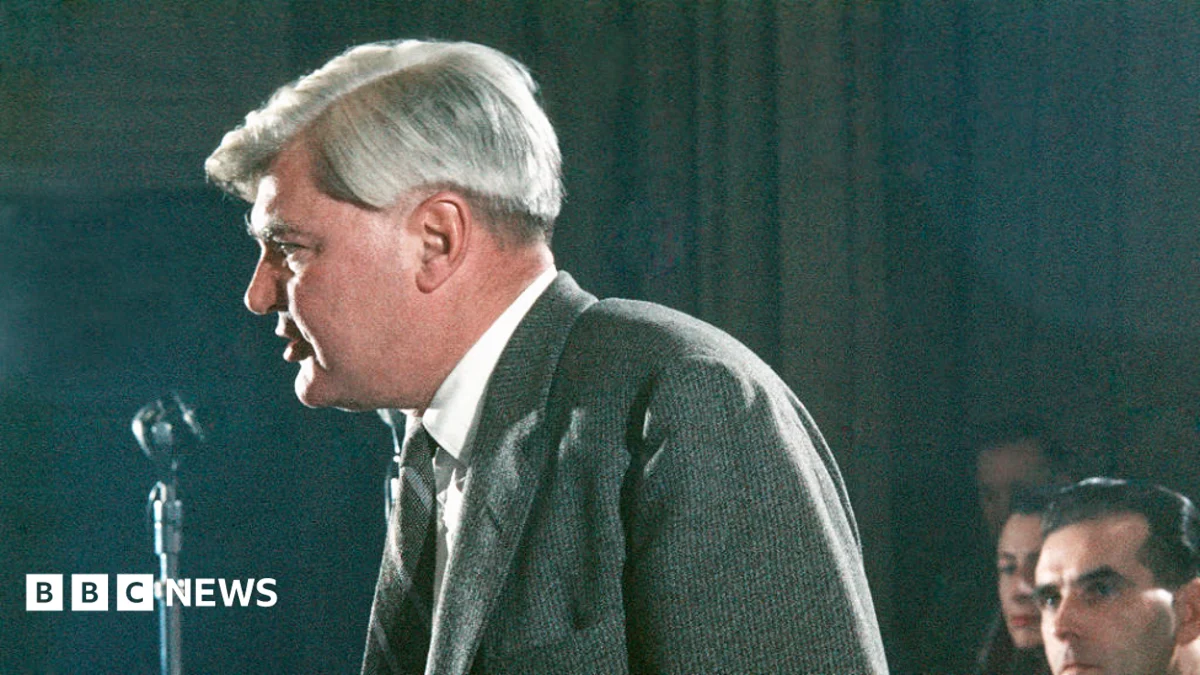
Bevan’s journey mirrored the Query Club’s escalating ambition. His success in Tredegar propelled him to the next level of political power, securing a seat on the county council in Newport. However, as Dr. Davies elucidates, this achievement only sharpened Bevan’s understanding of the true nature of power. "Bevan said ‘power is still eluding us, it’s still elsewhere’," Davies recounts. This realization was the pivotal moment that drove Bevan to seek the ultimate seat of power: Parliament. His election as MP for Ebbw Vale in 1929 marked his entry into Westminster, where he quickly earned a formidable reputation as a powerful and incisive orator. Davies credits the Query Club significantly with shaping Bevan’s intellectual prowess and rhetorical skills. The intense debates and rigorous arguments over ideas within the club were instrumental in "shaping Bevan’s outlook" and honing his ability to articulate complex arguments. "One of Bevan’s strengths was his debating skills and his ability to deconstruct arguments," Davies notes, highlighting how the crucible of the Query Club’s intellectual environment prepared him for the national stage.
The enduring influence of the Query Club and the Tredegar Medical Aid Society extends far beyond local history. They represent a compelling case study in strategic grassroots organizing and the transformative potential of local power. The society’s universal coverage model, meticulously managed by Walter Conway, provided a practical, working example of socialized medicine that Bevan would later champion on a national scale. The Query Club’s systematic approach to gaining influence within every local institution demonstrates a sophisticated understanding of political power and how to wield it for community benefit. This relentless "quest for power," born in the industrial valleys of South Wales and meticulously cultivated by Bevan and his comrades, became the driving force behind his entire career, culminating in his monumental achievement: the creation of the National Health Service in 1948, a service built on the very principles of universal access and social equity first demonstrated in Tredegar. The story of the Query Club is a powerful reminder that profound national change often begins with radical, strategic action at the local level.
