
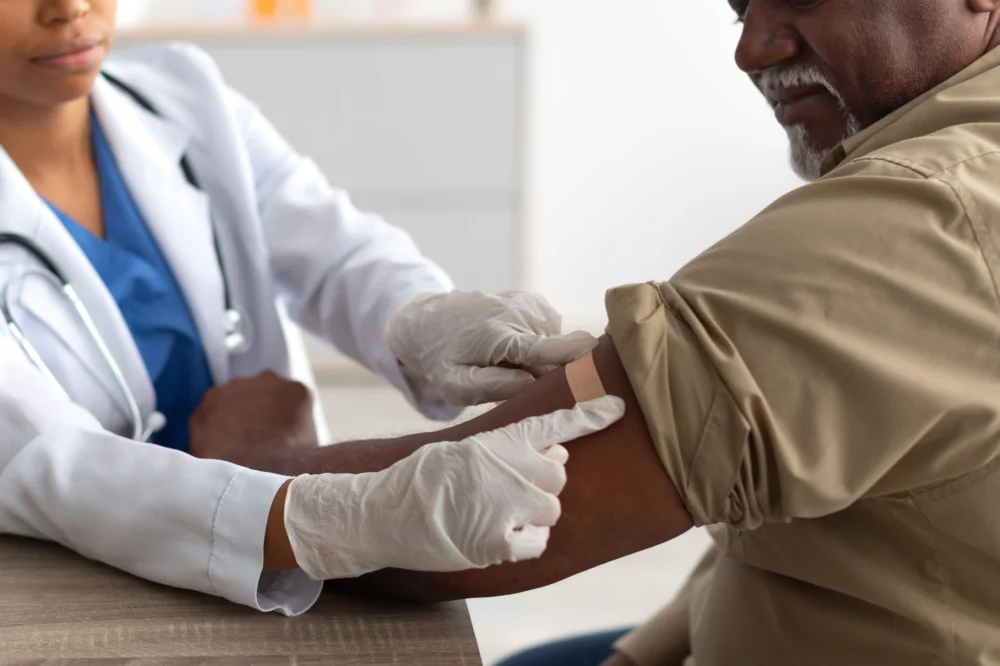
"Vaccines are increasingly recognized as powerful tools not only for preventing specific diseases but also for promoting overall healthy aging, offering a cascade of ‘indirect benefits’ that safeguard against cognitive decline and cardiovascular issues."
The landscape of vaccination is rapidly evolving, revealing a spectrum of benefits that extend far beyond the immediate protection against the targeted illness. While the primary purpose of vaccines like those for shingles, RSV, and influenza remains the prevention of severe disease, a growing body of research points to significant "indirect benefits"—positive health outcomes that are a consequence of vaccination, yet not the direct aim of the vaccine itself. These emergent findings suggest that vaccinations are pivotal in fostering healthier aging, mitigating the risks of physical and cognitive deterioration, and potentially offering a broader protective shield for the aging population.
The principal driver for getting vaccinated against shingles (herpes zoster) is the robust protection it offers. Two doses of the shingles vaccine provide approximately 90% efficacy against this painful, blistering infection, which can lead to persistent nerve pain (postherpetic neuralgia) and other serious long-term complications. This viral infection, a reactivation of the varicella-zoster virus, affects about one-third of Americans over their lifetime, making vaccination a critical preventive measure.
Similarly, for older adults, the rationale for vaccination against the Respiratory Syncytial Virus (RSV) is compelling. This common respiratory virus, typically causing mild cold-like symptoms in younger individuals, can lead to severe illness, hospitalization, and even death in seniors. Vaccination significantly reduces the risk of hospitalization due to RSV, with studies indicating a nearly 70% decrease during the first year post-vaccination and a roughly 60% reduction in the two years that follow. This substantial reduction in severe outcomes underscores the importance of RSV vaccines for this vulnerable demographic.
The annual influenza vaccine, while its effectiveness can fluctuate based on the accuracy of strain prediction by scientists, reliably reduces the severity of illness. Even if it doesn’t always prevent infection, it significantly mitigates the risk of severe complications, hospitalizations, and fatalities associated with the flu. This consistent reduction in disease burden makes the flu shot a cornerstone of preventive health for older adults.
Beyond these direct protective effects, a compelling narrative is emerging around the indirect benefits of these vaccines for the senior population. Medical professionals refer to these as "indirect benefits" or "downstream effects"—positive health impacts that extend beyond the prevention of the disease for which the vaccine was specifically designed. As Dr. William Schaffner, an infectious disease specialist at Vanderbilt University Medical Center, explains, "Research has been accumulating and has accelerated over the last 10 years," shedding light on these broader protective capabilities.
Some of these indirect benefits are supported by decades of data, while others are emerging from more recent studies, with their full implications still being elucidated. The RSV vaccine, for instance, only became widely available in 2023, meaning long-term data on its indirect effects is still nascent. Nevertheless, the findings are described as "very consistent" by Dr. Stefania Maggi, a geriatrician and senior researcher at the National Research Council Neuroscience Institute in Padua, Italy. Dr. Maggi, lead author of a recent meta-analysis published in the journal Age and Ageing, observed a reduced risk of dementia following vaccination against various diseases. This suggests that vaccines act as crucial tools in promoting healthy aging and preventing both physical and cognitive decline.
Despite the growing evidence of these benefits, a significant portion of older adults remain under-vaccinated. Their immune systems are naturally weaker, and the prevalence of chronic health conditions further elevates their susceptibility to infectious diseases. Data from the Centers for Disease Control and Prevention (CDC) in mid-December revealed that approximately 37% of older adults had not yet received the flu vaccine. Vaccination rates for RSV were even lower, with only 42% having received it at least once, and less than one-third had received the most recent COVID-19 vaccine. The CDC recommends a single dose of the pneumococcal vaccine for adults aged 50 and older. However, an analysis in the American Journal of Preventive Medicine estimated that between 2022 and 2024, only 12% of individuals aged 67-74 and a mere 8% of those over 75 had received these vaccines, even after updated recommendations.
The most robust evidence for indirect benefits, tracing back 25 years, points to a reduction in cardiovascular risk following influenza vaccination. Healthy older adults who get the flu shot demonstrate a significantly lower risk of hospitalization for heart failure, as well as for pneumonia and other respiratory infections. Furthermore, flu vaccination has been linked to a reduced risk of heart attack and stroke. Importantly, many of these foundational studies predated the availability of the more potent flu vaccines currently recommended for seniors, suggesting that current vaccination strategies may offer even greater cardiovascular protection.
This raises a pertinent question: could the RSV vaccine, which targets another dangerous respiratory illness, offer similar cardiovascular benefits? A large-scale study conducted in Denmark on older adults found a nearly 10% reduction in cardiorespiratory hospitalizations (those involving the heart and lungs) among vaccinated individuals compared to a control group—a significant decrease. However, the reduction in cardiovascular disease and stroke hospitalizations did not reach statistical significance. Dr. Helen Chu, an infectious disease specialist at the University of Washington and co-author of an accompanying editorial in JAMA, suggests this could be due to a short follow-up period or inadequate diagnostic testing. "I don’t think RSV behaves very differently from the flu," Dr. Chu stated, expressing optimism that the RSV vaccine will demonstrate similar, if not greater, cardiovascular benefits as more data becomes available.
Vaccination against COVID-19, another serious respiratory illness, has also been associated with a reduced risk of developing "long COVID," a condition with debilitating physical and mental health consequences.
Perhaps the most provocative findings relate to the shingles vaccine. Researchers gained significant attention last year for demonstrating an association between this vaccine and lower rates of dementia. This association was observed even with earlier, less effective versions of the vaccine, preceding the approval of Shingrix in 2017. The vast majority of studies on indirect benefits are observational, as ethical considerations prevent researchers from withholding a safe and effective vaccine from a control group. This observational nature means findings can be influenced by "healthy volunteer bias," where vaccinated individuals may possess other healthy lifestyle habits that differentiate them from unvaccinated counterparts. While researchers attempt to adjust for factors like age, sex, health, and education, Dr. Maggi emphasizes that "we can only state that there is a strong association between the vaccine and a decrease in dementia, but not a causal relationship."
A notable "natural experiment" in Wales, dating back to 2013, provided compelling evidence. When the first shingles vaccine, Zostavax, was offered to individuals under 80, those who were ineligible due to being just over the age cutoff served as a control group. Over seven years, dementia rates in those eligible for the vaccine decreased by 20%, even though only half ultimately received it, compared to those who missed eligibility by a narrow margin. "There’s no reason to think that people born a week earlier were different from those born a few days later," Dr. Maggi commented, highlighting the robustness of this finding. Further studies in Australia and the United States have also reported a link between shingles vaccination and a reduced likelihood of developing dementia.
In the comprehensive review by Dr. Maggi’s team, several childhood and adult vaccines appear to confer similar indirect benefits. "We now know that many infections are associated with the development of dementia, whether it’s Alzheimer’s or vascular type," she explained. Across 21 studies involving over 104 million participants in Europe, Asia, and North America, shingles vaccination was linked to a 24% reduction in dementia risk. Influenza vaccination showed a 13% reduction, and the pneumococcal vaccine was associated with a 36% lower risk of Alzheimer’s disease. The Tdap vaccine (tetanus, diphtheria, and acellular pertussis), recommended every 10 years for adults, was associated with a one-third decrease in dementia risk. Many adults opt for Tdap vaccination when a grandchild is born, as newborns are not fully protected in their early months. Researchers are also exploring whether the shingles vaccine can reduce the risk of heart attack and stroke, and if COVID-19 vaccination improves survival rates for cancer patients.
The underlying mechanisms for these additional vaccine benefits are largely hypothesized to revolve around inflammation. When the immune system is activated to combat an infection, it generates an inflammatory response that can cause damage to the surrounding cellular environment. "This damage to the environment takes a while to return to normal," Dr. Chu noted. The effects of inflammation can persist long after the initial infection, potentially creating a conducive environment for other infections or triggering cardiovascular events like heart attacks and strokes through blood clot formation in narrowed vessels. "If you prevent the infection, you also prevent that downstream damage," she added. Furthermore, hospitalization itself can be a risk factor for dementia and other health problems in older adults, leading to loss of strength, mobility, or the development of delirium. Vaccines that help prevent hospitalization, therefore, could potentially delay or even avert cognitive deterioration.
The broader context of vaccination policy is also critical. While some political figures have expressed skepticism towards childhood vaccines, this open opposition may inadvertently contribute to lower vaccination rates among older adults. This not only deprives them of emerging indirect benefits but also leaves them more vulnerable to preventable diseases. Dr. Schaffner, a former member of the CDC’s Advisory Committee on Immunization Practices, expressed concern, stating, "Current national policy on vaccination is, at best, ambiguous, and in some aspects seems anti-vaccine. All of us in public health are very, very concerned." This sentiment underscores the public health imperative to champion vaccination as a multifaceted strategy for promoting longevity and well-being.
