
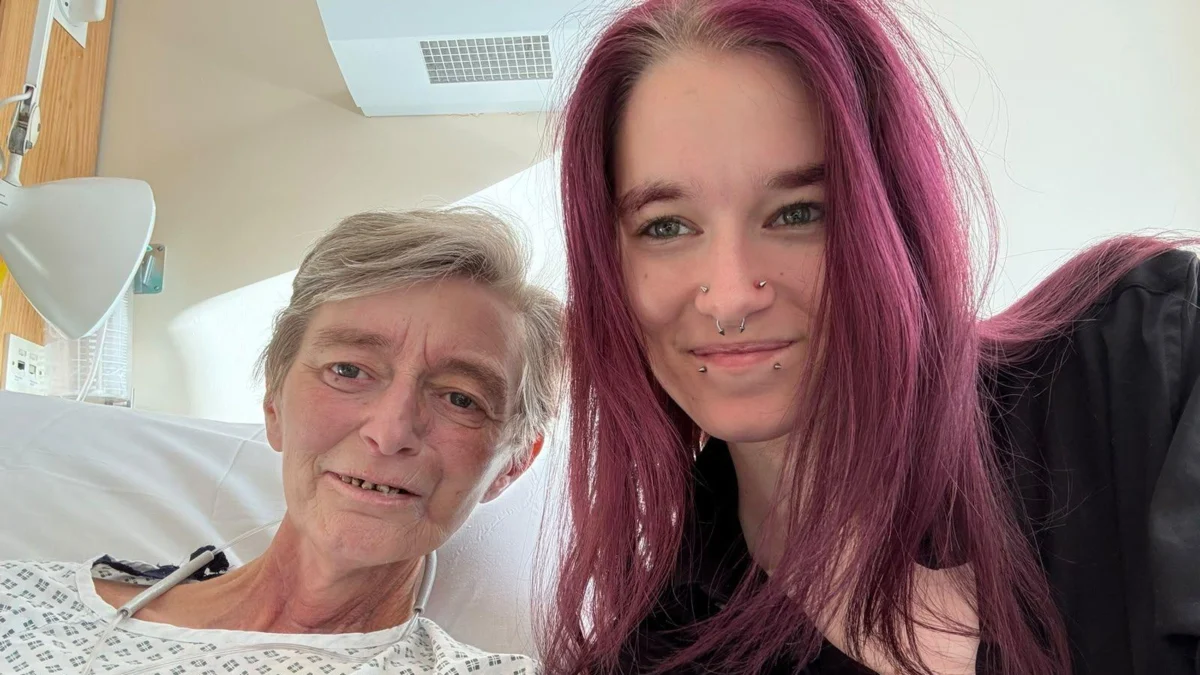
"The tragic case of Rachael Field, a terminally ill mother stripped of her ability to speak, eat, or care for herself, yet denied Personal Independence Payment, exposes a profound flaw in a welfare system that appears to prioritize rigid checklists over the lived reality of profound suffering."
This deeply troubling decision by the Department for Work and Pensions (DWP) has left Rachael Field, a 56-year-old from Rhondda Cynon Taf with advanced tongue cancer and a prognosis of three years or less to live, without the crucial financial support intended for those with severe disabilities. Her family’s desperate struggle highlights systemic issues within the Personal Independence Payment (PIP) assessment process, prompting renewed calls for a more compassionate and responsive approach to terminal illness.
Rachael Field’s journey with cancer began six years ago, a relentless battle that has seen her endure four recurrences of the disease. The aggressive nature of her tongue cancer has necessitated life-altering surgeries, including the complete removal of her tongue and voice box, and a complex reconstruction of her windpipe using chest tissue. These procedures, while critical for her survival, have left her with profound disabilities. She is entirely dependent on a feeding tube for nutrition, unable to communicate verbally, and requires constant assistance for basic functions such as washing, dressing, and using the toilet. Her mobility is severely restricted, limiting her to just a few assisted steps.

In May of this year, amidst her deteriorating health and escalating care needs, Ms. Field applied for Personal Independence Payment (PIP). PIP is a non-means-tested benefit designed to help individuals aged 16 to state pension age with the extra costs of living with a long-term health condition or disability. It is divided into two components: daily living, which covers help with tasks like preparing food, washing, and communicating, and mobility, which addresses difficulties with getting around. Eligibility is determined through a points-based assessment conducted by a health professional, evaluating an individual’s ability to perform various everyday tasks. To qualify for either the standard or enhanced rate of the daily living component, a claimant must score between 8 and 12 points, respectively. Similar thresholds apply to the mobility component.
Shockingly, despite her extensive and undeniable needs, Rachael Field’s PIP application was denied, with the assessment awarding her zero points across all categories. This outcome has been met with incredulity and outrage by her family, who contend that the assessment process fundamentally failed to capture the severity and permanence of her condition. Her daughter, Kyra Hawkins-Field, critically described the system as overly reliant on a "checklist" that does not accurately reflect the complex, real-life struggles faced by individuals like her mother. The discrepancy between Ms. Field’s medical reality—a terminally ill individual completely reliant on others for survival—and the DWP’s assessment of zero points underscores a significant disconnect in the benefit’s application.
A critical aspect of disability benefit claims for those with severe, progressive, or terminal illnesses is the "Special Rules for Terminal Illness" (SRTI), formerly known as the "DS1500 rules." Under SRTI, if a medical professional confirms that a person has a progressive disease and can reasonably be expected to die within 12 months, their application for certain benefits, including PIP, is fast-tracked. This often results in an automatic award of the highest rate of the daily living component and, if applicable, the mobility component, without the need for a full assessment. The explicit purpose of SRTI is to reduce stress and expedite support for individuals nearing the end of their lives. Given Rachael Field’s prognosis of "three years or less to live," the fact that her application was denied and subject to a standard assessment process raises serious questions about whether the SRTI provisions were adequately considered or applied in her case. The DWP’s stated need for "further evidence" to complete her claim, despite her severe and documented condition, further complicates this issue and suggests a potential breakdown in communication or information processing.

The procedural hurdles faced by the family have only exacerbated their distress. Repeated rescheduling of the assessment process caused significant delays, and despite lodging an appeal several months ago, they are still awaiting an outcome. For a terminally ill individual, time is a precious commodity, and a prolonged, bureaucratic process for accessing vital support adds immeasurable stress and anxiety. As Rachael herself articulated, "People need the help while they are alive," highlighting the urgency and dignity at stake. The protracted waiting period means that financial assistance, intended to alleviate burdens, arrives too late, or not at all, to make a meaningful difference during their final months.
The financial strain on Rachael’s family has been immense. As a former factory worker, her terminal diagnosis forced her to stop working, eliminating a crucial source of income. Her husband, Eddie, has become the family’s "superhero," working full-time while also dedicating himself to her care, visiting her in hospital daily. This dual responsibility places an extraordinary burden on him, both emotionally and physically. Beyond the loss of income, terminal illness often brings a raft of additional costs: increased heating bills for a home-bound individual, specialized dietary needs (even with a feeding tube, specific formulas or equipment might be costly), transportation to numerous medical appointments, and potential adaptations to the home. The denial of PIP means these extra costs, intended to be covered by the benefit, fall squarely on the family’s already stretched finances.
In response to her mother’s plight and the systemic roadblocks, Rachael’s 20-year-old daughter, Kyra Hawkins-Field, took initiative by launching a GoFundMe appeal. Her aim is to raise £1,000 to help her mum enjoy what precious time she has left with her family, including some trips around the UK, while she is still able. Kyra’s heartfelt plea underscores the tragic reality that families are often forced to resort to crowdfunding platforms to secure basic comfort and dignity for their loved ones when the official welfare system fails. She expressed her frustration, stating it was "ridiculous" her mum couldn’t claim PIP, and that she doesn’t want her "stressing about money" when she has "a couple of years left." Kyra shared insights into her mum’s personality, highlighting her enjoyment of the "little things in life," particularly "big, really, really difficult, intricate jigsaw puzzles" and reading—simple pleasures that become increasingly challenging to access amidst financial and health worries.

A DWP spokesperson, when questioned about Ms. Field’s case, offered an apology for "any distress Ms Field and her family are feeling at this difficult time." The statement clarified that the department had "been unable to complete the claim as we need further evidence from Ms Field" and that they had "attempted to contact her in order to resolve the situation and will continue to do so." While an apology is offered, the reliance on "further evidence" from a person who cannot speak, is severely debilitated, and has a clear terminal diagnosis, points to potential inflexibility within the bureaucratic process. The family’s subsequent confirmation that they are "in discussion with the DWP" suggests an ongoing effort to navigate these requirements, but the initial denial and protracted process remain deeply concerning.
Rachael Field’s case is not an isolated incident. Disability charities and advocacy groups in the UK have consistently highlighted systemic flaws in the PIP assessment process, particularly its impact on individuals with complex or terminal conditions. Criticisms often center on the assessors’ lack of specialized knowledge, the generic nature of the assessment questions, and the perceived pressure to deny claims. For individuals with conditions like cancer, where symptoms can fluctuate and the prognosis is often uncertain, a single snapshot assessment can fail to capture the holistic impact of their illness. There have been numerous calls for reforms, including a more compassionate approach for terminal illness cases, ensuring that the SRTI provisions are consistently and effectively applied, and reducing the administrative burden on vulnerable claimants and their families.
The ethical implications of denying support to someone facing terminal illness are profound. A welfare system is designed, in part, to provide a safety net for its most vulnerable citizens. When that net fails, particularly for those whose remaining time is short, it not only compounds their suffering but also erodes public trust in the system’s fundamental principles of fairness and compassion. The story of Rachael and her family serves as a poignant reminder of the urgent need for the Department for Work and Pensions to re-evaluate its assessment procedures, especially for terminal illness, to ensure that dignity, compassion, and timely support are paramount. The financial relief provided by PIP could significantly improve Rachael’s quality of life in her remaining time, allowing her and her family to focus on shared moments rather than overwhelming financial anxieties.
