
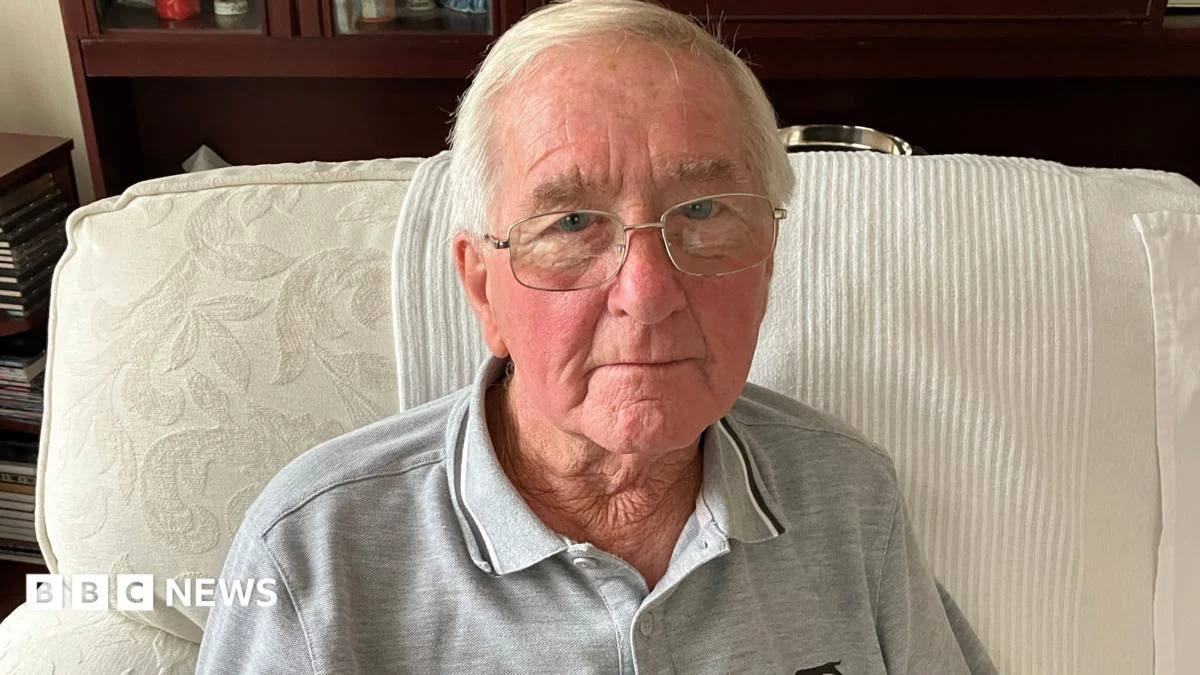
An 83-year-old cancer survivor’s forced four-hour drive for vital heart tests exposes critical gaps in non-emergency patient transport, underscoring the severe challenges faced by vulnerable individuals in rural healthcare landscapes. This incident highlights a systemic failing where car ownership ironically becomes a barrier to necessary medical assistance, leaving the most fragile patients to navigate significant logistical and physical hurdles alone.
The distressing experience of Charles Swift, an 83-year-old recovering cancer patient from Borth, Ceredigion, who was compelled to undertake a gruelling 140-mile round trip for cardiac tests, casts a stark light on the escalating crisis in rural healthcare access across Wales. Despite his advanced age, history of multiple cancers, and two heart attacks, Mr. Swift was denied non-emergency patient transport by the Welsh Ambulance Services Trust (WAST) because he owned a car. His plight has not only sparked outrage but has also intensified calls from local councillors and voluntary organisations for an urgent overhaul of a system that appears to be failing its most vulnerable citizens.
Mr. Swift’s journey began with a referral for heart tests at Withybush Hospital in Haverfordwest, Pembrokeshire – a facility located 70 miles from his home in Borth. For a healthy individual, a 140-mile round trip might be manageable, but for someone of Mr. Swift’s age and complex medical history, it represented a significant physical and emotional burden. He had previously battled three different types of cancer and endured two heart attacks, rendering him particularly susceptible to the stresses of such an arduous journey. His inquiries about non-emergency transport were met with refusal after a call handler from WAST learned he owned a vehicle. "I can’t understand why pensioners have to run about in their own car," Mr. Swift lamented, articulating a frustration shared by many in similar situations. "I don’t understand. What’s the difference if you’ve got a car or not? I’m 83. It’s not a good journey to do. It was tiring."
This incident brings into sharp focus the often-overlooked paradox within patient transport eligibility criteria. While the Hywel Dda University Health Board’s website clearly states that patients are generally expected to organise their own transport, it also outlines specific criteria for non-emergency patient transport provided by the Welsh Ambulance Service. These criteria include individuals receiving regular dialysis or cancer treatment, those needing a stretcher or oxygen, or requiring travel in their own wheelchair. Crucially, Mr. Swift was a recovering cancer patient, yet his car ownership was deemed a disqualifying factor, suggesting a fundamental disconnect between policy intent and practical application. The implication is that owning a car, even if one is physically unfit to drive long distances due to age and illness, absolves the system of its responsibility to provide support.
The geographical realities of rural Wales further exacerbate these challenges. Ceredigion and Pembrokeshire are characterised by vast distances between communities and specialist healthcare facilities. Public transport options are often inadequate or non-existent for direct hospital travel. For instance, a train journey from Borth to Haverfordwest would involve multiple changes and take a minimum of three-and-a-half hours in each direction, making it an impractical and equally exhausting alternative for a frail patient. This lack of viable public transport infrastructure means that non-emergency patient transport is not merely a convenience but a critical lifeline for many, particularly the elderly and those with chronic conditions.
The issue extends beyond individual refusals to a broader pattern of systemic strain and unreliability. WAST acknowledged that it is not always able to meet the increasing demand for transport, citing ongoing changes to improve the service. However, the experience of patients like Mr. Swift and the testimonies of local representatives paint a picture of a service under severe pressure. On a separate occasion, Mr. Swift’s hospital transport for a Monday appointment in Haverfordwest was cancelled on the preceding Friday afternoon, forcing him to cancel the appointment altogether. Such last-minute cancellations are not isolated incidents. Councillors and voluntary organisations involved in patient transport have highlighted that bookings are frequently cancelled the day before appointments, leaving vulnerable patients in a desperate scramble to find alternative arrangements or, more often, to miss vital medical care.
Hugh Hughes, a Ceredigion councillor, recounted meeting Mr. Swift shortly after his first appointment, when the health board requested a second visit. "He was distraught. He didn’t know how he was going to manage it. He was absolutely exhausted after the first experience," Hughes stated, underscoring the profound emotional and physical toll these logistical hurdles impose. The increasing centralisation of specialist services, a trend noted by Councillor Hughes – who observed that "many of the services seem to be migrating further south" from local hospitals like Bronglais in Ceredigion – means that patients are increasingly compelled to travel longer distances, intensifying the demand on an already stretched transport system.
Voluntary organisations are often left to pick up the pieces, highlighting the scale of the problem. Bowen, representing one such charity, revealed that they had received 145 calls in just two months concerning hospital transport cancellations the day before appointments. While the charity managed to assist in approximately a third of these cases, filling "an important gap" and ensuring patients could reach their appointments, this statistic underscores the immense pressure on the official transport service and the vital role of community support. Bowen also noted a "huge increase of people having to travel past their main hospital door to a hospital that could be anything up to 40 to 50 miles away," adding that older patients are "not really comfortable" driving to unfamiliar hospitals in distant areas. This highlights a broader issue of patient comfort, safety, and the psychological burden of navigating complex healthcare systems.
In response to Mr. Swift’s case, WAST conducted a review of his initial phone call. Mark Harris, WAST’s assistant director of operations, admitted that transport would likely not have been refused had the service received more information. He stated, "We’ve changed our processes now, and we’ve put some training out to our call taking team, so when Mr Swift rings again, he’ll get a different answer." This admission suggests a recognition of internal procedural shortcomings and a commitment to improvement. Harris also acknowledged the growing challenges: "We are seeing an increase in the volume of journeys we have to cancel where the demand exceeds our available resource," he said, citing "more work than we can fit on our vehicles within a day." He confirmed that WAST is "in the middle of a significant improvement programme now to address that."
Andrew Carruthers, chief operating officer at Hywel Dda University Health Board, also weighed in on the issue, acknowledging the difficulties faced by patients in the large rural area covered by the board. "We are aware of the challenges that some of our patients face especially when they have to travel longer distances to access specialist treatment," he said, confirming collaboration with WAST to explore improvements to "transport options available for our patients."
However, these promises of improvement and ongoing programmes must translate into tangible change on the ground. Councillor Hughes’s plea that the health board and ambulance service "needed to work together as people were falling through the net and are not getting the transport they need" encapsulates the urgent requirement for a more integrated, patient-centred approach. The case of Charles Swift is not merely an isolated incident but a powerful microcosm of a wider systemic challenge in providing equitable and accessible healthcare in rural regions. It underscores the critical need for robust, reliable non-emergency patient transport to be recognised as an essential component of healthcare infrastructure, not a discretionary service, ensuring that no patient, regardless of their circumstances or location, is left behind. The well-being of the most vulnerable depends on it.
