
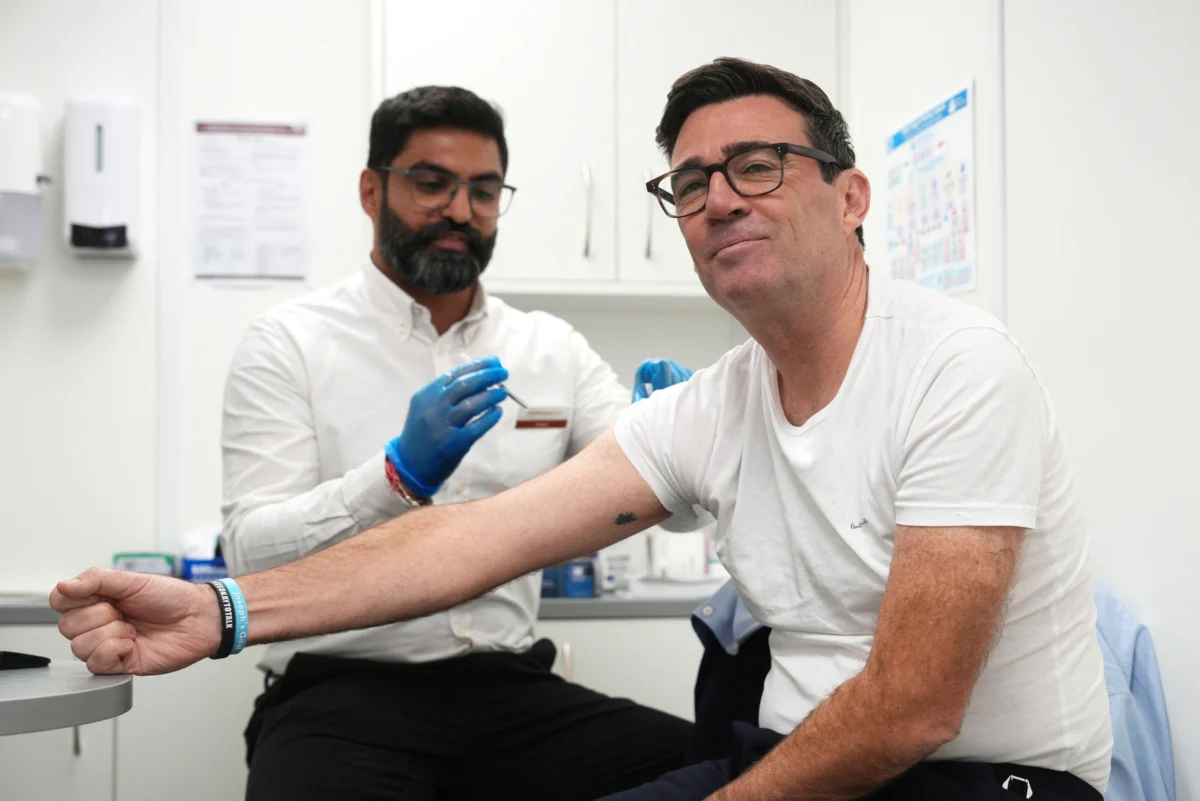
"This year’s flu season has arrived with unprecedented early activity across multiple states, underscoring the urgency for widespread vaccination and heightened public health vigilance before the holiday season."
The 2026-27 influenza season has officially claimed its first victim in Indiana, marking a somber milestone that echoes a broader trend of unusually early and widespread flu activity across the United States. As reported by WBIW, the Indiana Department of Health confirmed the state’s first flu-related death of the season on October 30th, with patient details withheld due to privacy regulations. This development arrives amidst concerning reports from New York, where state health officials indicate that influenza has made an appearance approximately six weeks ahead of its typical schedule. State Health Commissioner Dr. James McDonald emphasized the early and pervasive nature of the current outbreak, stating, "It’s here early, but it’s all over the state this year early." This dual signal from geographically diverse states points to a critical public health challenge: the virus is circulating significantly before many individuals, particularly those in major metropolitan areas like Indianapolis and New York City, have received their annual flu vaccinations. Given that immunity from the flu shot takes about two weeks to develop, this early onset leaves a substantial portion of the population vulnerable, especially as holiday gatherings approach.
Indiana’s Grim Tally and Proactive Measures
Indiana’s confirmation of its first flu-related fatality serves as a stark reminder of the virus’s potential severity, especially when contrasted with the previous season’s toll. During the 2025-26 flu season, over 270 Hoosiers succumbed to influenza, according to state records. The typical flu season in Indiana spans a considerable period, from October through May, a timeframe that is now being compressed by the early arrival of the current season. State Health Commissioner Dr. Lindsay Weaver acknowledged the predictable annual increase in respiratory illnesses, including influenza, stating, "Each year at this time we are preparing to see an increase in respiratory illnesses, including flu." To combat the spread, Indiana officials are actively promoting the "Three Cs" initiative: Clean hands with soap and water, Cover coughs and sneezes, and Contain illness by staying home when sick. The state actively monitors influenza activity through its influenza dashboard, which is updated weekly with granular data broken down by county, region, and age group, providing crucial insights for targeted public health interventions.
New York’s Unprecedented Early Onset
New York’s experience with the current flu season paints a picture of accelerated activity. As of October 27th, the state’s respiratory virus dashboard revealed a significant 19% increase in flu cases and a 17% rise in flu hospitalizations compared to the preceding week, as reported by CBS6. The data for the week ending October 17th was particularly striking, with the dashboard documenting a provisional 3,526 laboratory-confirmed flu cases statewide. This figure stands in sharp contrast to the 596 cases recorded during the same week in the previous season, a nearly sixfold increase. Dr. James McDonald highlighted the emergence of a new flu strain in New York, although specific details were not immediately available. He reassured the public that the current vaccine offers some cross-reactivity and continued protection. However, he also voiced concern over the persistently low statewide vaccination rate, a factor that likely contributes to the amplified spread. In Central New York, Onondaga County alone reported nine flu-associated hospitalizations for the week ending October 17th. Dr. Jana Shaw, a pediatric infectious disease specialist at Upstate Golisano Children’s Hospital, described the early surge as "quite unusual." Dr. McDonald’s advice to New Yorkers was direct: the typical vaccination timing between Halloween and Thanksgiving is insufficient this year. He urged individuals, especially those at higher risk, to consult their physicians about antiviral medications if they contract the flu.
A National Pattern Emerges
The early and aggressive arrival of influenza is not an isolated phenomenon confined to Indiana and New York. Connecticut’s Department of Public Health has reported six flu-related deaths, all occurring in adults aged 55 and older, indicating a vulnerability within older demographics. National data from the Centers for Disease Control and Prevention (CDC) further corroborate this trend, showing the earliest and most substantial flu activity on the West Coast, with notable increases observed in many other regions across the country. Hospitals nationwide reported 6,100 laboratory-confirmed flu admissions for the week ending October 24th, with 7.6% of clinical lab tests coming back positive, according to the CDC’s latest FluView report. The dominant strain identified among subtyped influenza A viruses is H1N1. The CDC has also recorded the first pediatric flu death of the current season, underscoring the broad impact of the virus across age groups. While the CDC currently rates national flu activity as low but rising, it acknowledges that this early surge is higher than typically observed for this time of year.
The Nuance of Early Season and Severity
Crucially, the CDC cautions that an earlier start to the flu season does not automatically equate to a more severe outbreak. The agency’s projections for the 2026-27 season anticipate a pattern similar to the previous year, with comparable peak hospitalizations expected for COVID-19, influenza, and Respiratory Syncytial Virus (RSV). This distinction is vital for public understanding and preparedness. While an early onset means a longer period of potential exposure and a reduced window for vaccination before holiday gatherings, it does not, in itself, guarantee a more virulent or intense season. The key takeaway is that increased vigilance and proactive measures are warranted regardless of the predicted overall severity.
Prioritizing Protection Before the Holidays
The CDC strongly recommends an annual flu vaccine for everyone aged six months and older. These vaccines are readily accessible at pharmacies and clinics, with most insurance plans providing coverage. For families planning Thanksgiving travel or gatherings, particularly those involving older relatives or infants, scheduling flu shots sooner rather than later is advisable to ensure adequate protection before the traditional late-November vaccination rush. Individuals in high-risk groups – including adults aged 65 and older, young children, pregnant individuals, and those with chronic health conditions or compromised immune systems – face a heightened risk of severe complications such as pneumonia and hospitalization. For these individuals, prompt initiation of prescription antiviral medications, upon the onset of flu symptoms, can significantly reduce the duration and severity of illness. Therefore, consulting a clinician soon after experiencing symptoms like fever, cough, or body aches is paramount.
It is important to note that flu, COVID-19, and RSV vaccines can often be administered concurrently for eligible individuals, offering a streamlined approach to protection. Antibiotics are ineffective against the influenza virus itself and are only beneficial if a secondary bacterial infection, such as pneumonia, is diagnosed by a clinician. Common flu symptoms encompass fever or chills, cough, sore throat, headache, fatigue, muscle aches, and a runny or stuffy nose, though not all individuals will experience a fever. Mild illnesses can typically be managed at home with rest and hydration. However, symptoms requiring urgent medical attention include difficulty breathing, chest pain, confusion, dehydration, a child who is difficult to rouse, or symptoms that initially improve but then worsen.
The forthcoming updates to Indiana’s influenza dashboard and the CDC’s FluView report this week will be critical in determining whether the early surge observed in New York and other states is expanding westward and southward. Public health officials advise residents to rely on their state health department dashboards for the most accurate local activity data, rather than unverified information from social media.
Key Questions Answered
What happened in Indiana? The Indiana Department of Health confirmed the state’s first flu-related death of the 2026-27 season. No patient details were released due to privacy laws.
Is flu really early in New York? Yes. The state health commissioner stated that flu arrived approximately six weeks ahead of schedule and is already widespread across the state.
Does an early season mean a worse season? Not necessarily. The CDC indicates that an earlier rise in flu activity does not automatically predict a higher peak or greater overall severity for the season.
Which flu strain is spreading? According to the CDC, nearly all subtyped influenza A viruses identified nationally are H1N1.
Who faces the highest risk? Adults aged 65 and older, young children, pregnant individuals, and people with chronic conditions or weakened immune systems are at the greatest risk of severe flu complications.
Is it too late to get a flu shot? No. The CDC recommends annual flu vaccination for everyone six months and older. Protection from the vaccine typically develops within about two weeks.
