
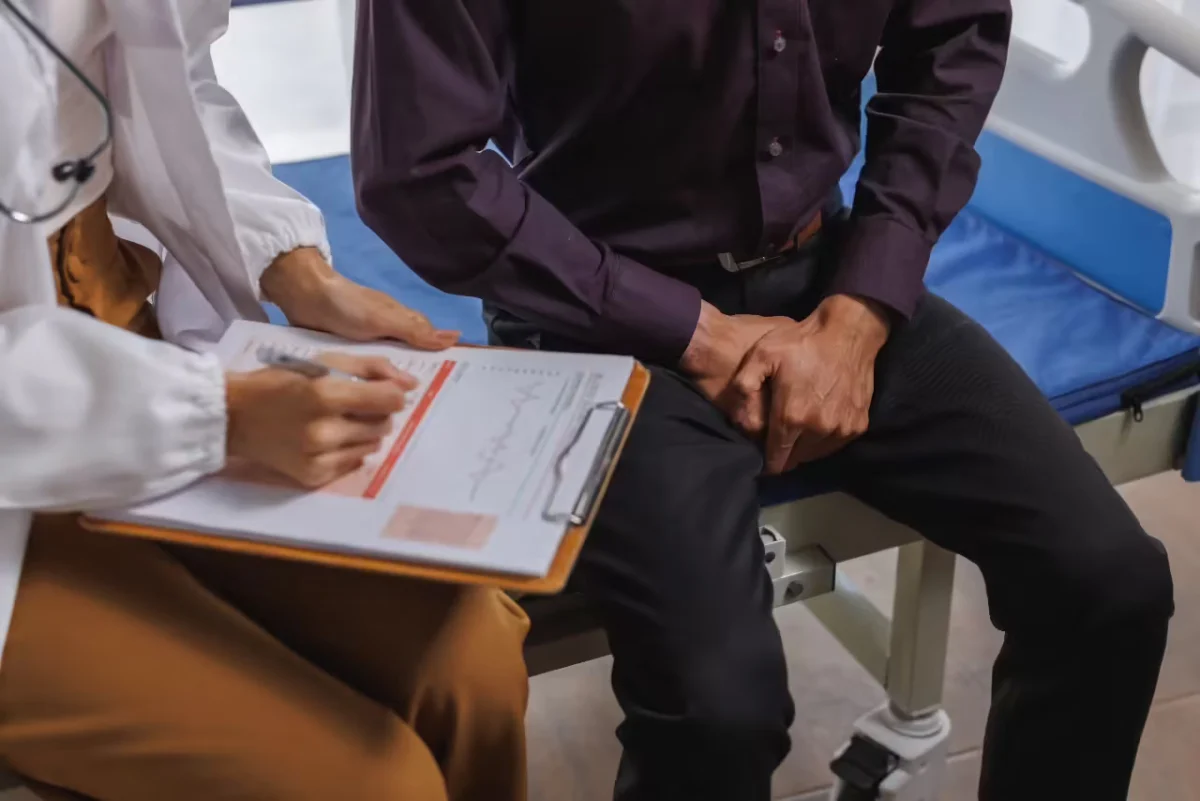
"A second opinion isn’t solely about finding a different answer; it’s about understanding the reasoning behind any recommendation, ensuring alignment between evidence, treatment, and the patient’s individual needs."
In the realm of healthcare, particularly when facing serious diagnoses like prostate cancer, the pursuit of a second opinion is a common and often crucial step for patients. This process, however, is frequently misunderstood. It is not necessarily an adversarial act against the initial clinician’s judgment, nor is its sole purpose to uncover a missed diagnosis or a fundamentally different treatment path. Instead, a well-executed second opinion serves as a vital tool for patient empowerment, offering clarity, reinforcing appropriate decisions, identifying knowledge gaps, and ensuring that the chosen course of action is truly tailored to the individual’s circumstances and understanding. This article delves into the multifaceted value of second opinions, particularly within specialized practices like Santis Health, highlighting how they contribute to informed decision-making and improved patient outcomes.
The landscape of medical decision-making, especially concerning complex conditions like prostate cancer, can be intricate. Patients often grapple with a barrage of information, ranging from diagnostic reports and risk assessments to treatment protocols and potential side effects. In this context, a second opinion serves as a critical mechanism for navigating this complexity, ensuring that patients are not merely passive recipients of medical advice but active participants in their own care. Santis Health, a practice specializing in prostate cancer care and led by Professor Christopher Eden, exemplifies this approach. Their philosophy underscores that a second opinion consultation is not an indictment of prior care but an opportunity to scrutinize the confluence of medical evidence, proposed treatments, and the patient’s comprehension of their situation. This meticulous examination is foundational to ensuring that the patient’s journey is guided by clarity and confidence.
Establishing what is already known is the cornerstone of any robust medical evaluation, and this is particularly true for prostate cancer. A mere diagnosis of "prostate cancer" is insufficient; a comprehensive understanding necessitates a deeper dive into its nuances. The National Institute for Health and Care Excellence (NICE) guidelines, for instance, emphasize the importance of integrating multiple factors into a risk assessment. This includes the Prostate-Specific Antigen (PSA) level, the Gleason grade of the cancer (which denotes its aggressiveness), and its clinical stage (how far it has spread). The interplay of these elements dictates a patient’s risk category, which in turn informs the recommended course of action, whether it be active surveillance or immediate treatment. A valuable second opinion doesn’t simply reconfirm the diagnosis; it unpacks these risk stratification components, translating them into understandable terms. It illuminates why a particular risk category has been assigned and, consequently, why specific surveillance or treatment recommendations are being made. This level of detail transforms a monolithic diagnosis into a nuanced understanding of the disease’s specific characteristics and implications for the patient.
The process at Santis Health for second opinion consultations begins with a thorough review of existing medical records. This initial step is not about assuming that previous clinicians overlooked crucial details. Instead, it’s about comprehensively understanding the patient’s history and the diagnostic journey thus far. This may involve arranging for investigations that have not yet been completed, but crucially, this is done judiciously. The objective is not to duplicate services unnecessarily but to ascertain whether the currently available information is sufficient for making informed decisions. If clinical uncertainties persist, further testing is strategically employed to address those specific questions, rather than initiating a broad, unfocused sequence of investigations. NICE provides clear examples of situations where such reassessment is warranted. For instance, imaging results that appear suspicious despite a biopsy yielding negative results might necessitate a multidisciplinary discussion regarding repeat sampling. Similarly, during active surveillance, if imaging findings are inconsistent with biopsy results, a reassessment becomes prudent. These scenarios highlight the importance of scrutinizing discrepancies and ambiguities, not as evidence of error, but as signals for careful re-evaluation.
The role of experience in a second opinion is not about asserting superiority but about offering a depth of explanation rooted in practice. Professor Christopher Eden’s extensive experience, including over 4,000 robotic and laparoscopic prostatectomies, provides a significant basis for patients seeking a detailed surgical assessment. However, this experience does not automatically imply that he will uncover findings missed by others, nor does it guarantee that his recommendation will invariably differ from an initial opinion. The true value of such experience lies in the specificity and clarity of the explanation it enables. When a patient is contemplating surgery, an experienced surgeon can engage in a nuanced discussion about the most suitable surgical approach, how the specific cancer characteristics might influence the feasibility of nerve preservation, and what realistic outcomes and recovery trajectories can be anticipated. Professor Eden’s ability to integrate factors such as the patient’s age, pre-operative physical condition, and the potential for nerve preservation into his assessment allows for a recommendation that is intrinsically linked to the individual’s unique circumstances, rather than a generalized preference for a particular treatment modality.
Furthermore, there are inherent limitations to what can be definitively determined prior to surgery. Technologies like NeuroSAFE, utilized by Santis Health during surgical procedures, provide real-time intraoperative pathology information to guide nerve-preservation decisions. The very existence of such advanced tools underscores that some critical information becomes available only during the operation itself. A meticulous second opinion therefore serves to clearly delineate what is definitively established by existing records, what the surgeon anticipates based on their expertise and the available data, and what aspects remain conditional and will be clarified during the surgical process. This transparency is crucial for managing patient expectations and fostering a sense of informed collaboration.
The utility of a second opinion is fundamentally measured by its ability to empower a patient with a clear understanding of their next steps, irrespective of whether it leads to a different treatment recommendation. At Santis Health, the consultation process is designed to synthesize the diagnosis, treatment options, and the patient’s specific questions into a cohesive and comprehensive discussion. Professor Eden’s assessment aims to equip patients with the discernment to differentiate between established facts, areas of remaining uncertainty, and prerequisites for making a definitive decision.
When recommendations diverge, the paramount importance lies in articulating the rationale behind the disagreement. This divergence could stem from differing interpretations of diagnostic findings, varying assessments of cancer risk, contrasting views on the likely benefits of a particular treatment, or a different weighting of potential side effects. A valuable second opinion connects the advice directly to the supporting evidence. It clarifies which findings bolster the recommendation, how alternative options compare in terms of efficacy and risk, and whether further investigation could potentially alter the conclusion. This approach transforms the second opinion from a choice between two expert opinions into a process that clarifies the decision-making framework itself.
Moreover, such discussions create an essential space to examine the underlying assumptions that might influence treatment preferences. The objective is not to steer every patient towards a surgical intervention, but rather to ensure that any preference for a particular treatment is grounded in a realistic appreciation of the available approaches, their inherent limitations, and their specific relevance to the patient’s individual health profile and life circumstances. If the existing treatment plan aligns appropriately with both the diagnosis and the patient’s situation, there is no imperative to propose an alternative simply to justify the consultation. In such instances, Professor Eden can instead articulate the reasoning behind the initial plan’s appropriateness, address any lingering questions, and delineate the specific circumstances that would warrant a re-evaluation. Confirmation of an existing plan becomes genuinely useful when the patient comprehends the underlying rationale, rather than merely receiving a perfunctory endorsement.
Finally, a critical outcome of a second opinion consultation is the clear articulation of the timing and nature of the subsequent step. Patients need to know definitively whether the recommendation is to continue with monitoring, pursue additional diagnostic information, or proceed with a specific treatment, and with what degree of urgency. The practical aim of this process is to arrive at a usable conclusion: the patient should fully grasp the implications of their diagnosis, understand which treatment options remain viable, comprehend the rationale for the recommended course of action, and be aware of any pending issues that require further resolution. If uncertainty persists, this should translate into a precisely defined question or a concrete next investigative step, rather than an open-ended and potentially frustrating search for answers.
