
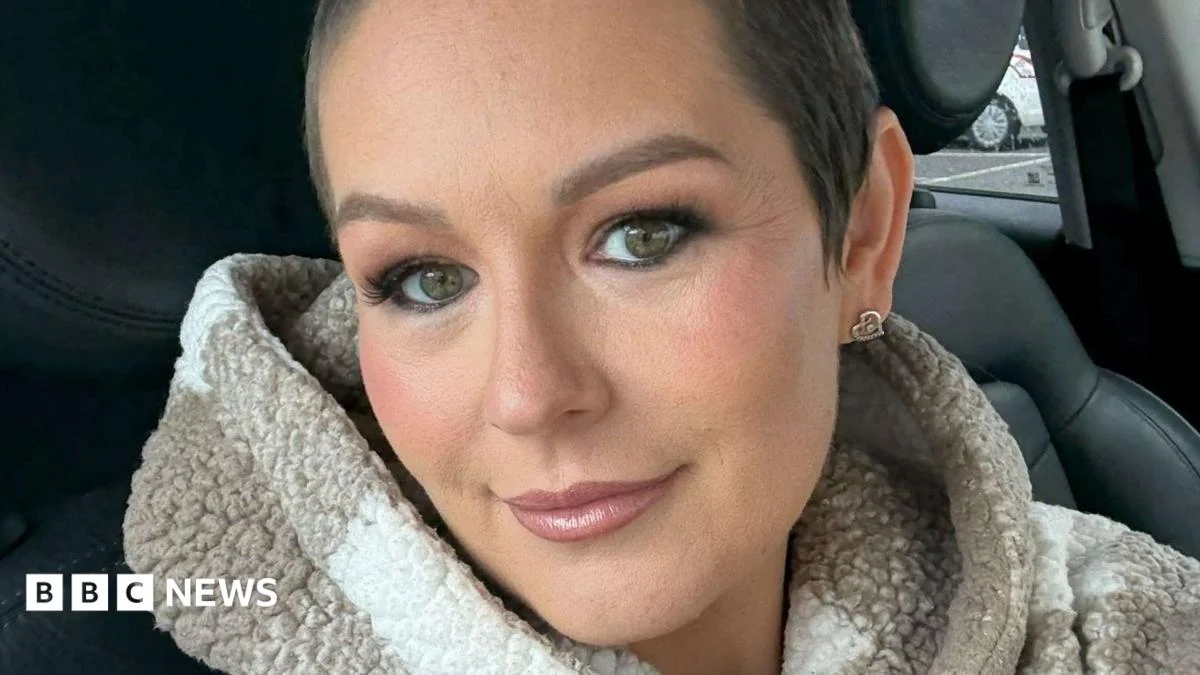
"Beth Jenkins’ harrowing journey from dismissed concerns to a life-threatening cancer diagnosis underscores the critical importance of patient advocacy and the dangers of dismissing symptoms based on age or psychological assumptions. Her story is a powerful reminder that vigilance and a second opinion can be life-saving."
Beth Jenkins, a 42-year-old mother of two from Merthyr Tydfil, endured a distressing diagnostic delay after a locum GP attributed her growing breast lump to "medical anxiety" and her age, despite her persistent concerns. This initial misjudgment, coupled with an earlier missed opportunity for diagnosis, allowed a 5cm lobular breast cancer tumour to develop and spread to three lymph nodes before it was accurately identified. Her experience highlights a critical issue within healthcare: the imperative for thorough investigation of patient-reported symptoms, regardless of demographic factors or perceived psychological states, and the profound impact of diagnostic accuracy on patient outcomes.
Jenkins’ ordeal began subtly in 2018 when she first discovered a "small pea-sized" lump in her right breast. Seeking medical advice, she underwent an ultrasound examination. The results were initially reassuring; medical professionals concluded the lump was likely glandular tissue, a common and benign finding, and consequently, no biopsy was deemed necessary at that time. While such initial assessments are standard practice, hindsight often reveals missed opportunities, particularly when symptoms later escalate. The absence of a biopsy, a definitive diagnostic tool, left the true nature of the lump unconfirmed, setting the stage for future complications.
Several years later, the situation dramatically changed. Following the birth of her daughter, Robyn, Jenkins experienced an accidental, yet pivotal, moment. While changing Robyn’s nappy, her daughter inadvertently kicked the right side of Jenkins’ chest. It was immediately after this incident, in October 2024, that Jenkins noticed the lump had become "massive," significantly larger and more prominent than its previous pea-sized form. This noticeable change prompted her to seek medical attention once again, returning to her GP practice with heightened alarm.
During her consultation with a locum GP, Jenkins, then 40 years old, was met with a series of dismissive remarks that would later prove to be devastatingly inaccurate. She recounted being told she was "too young to have breast cancer," a statement that, while statistically reflective of lower incidence rates in younger women, entirely overlooks the fact that breast cancer can and does affect individuals of all ages. The GP reportedly suggested the lump might be linked to an infection or "medical anxiety," citing Jenkins’ history of postnatal depression as a potential contributing factor. She was subsequently prescribed antibiotics, implying an infectious cause without definitive evidence. Jenkins vehemently rejected the "medical anxiety" suggestion, stating, "I haven’t got medical anxiety, otherwise I’d be up the hospital and doctors’ every week." This assertive stance by Jenkins underscores the critical importance of patients trusting their own bodies and advocating for themselves when their concerns are not adequately addressed. The tendency to attribute physical symptoms to psychological conditions, particularly in women, remains a contentious issue in medicine, often leading to diagnostic delays.
Despite the initial dismissiveness, Jenkins’ persistence led to a referral to a breast clinic. It was there, on 14 November 2024, that the true and devastating diagnosis was made: invasive lobular breast cancer. This particular type of breast cancer, which accounts for about 10-15% of all breast cancers, originates in the milk-producing glands (lobules) of the breast. It often grows in a single-file pattern rather than forming a distinct lump, making it notoriously more challenging to detect through physical examination and even standard mammography compared to the more common invasive ductal carcinoma. By the time of diagnosis, the tumour had grown to a significant 5cm (2in), and alarmingly, the disease had already spread to three lymph nodes, indicating a more advanced stage of cancer and a more complex treatment pathway.
The news was a profound shock. Jenkins recalled the moment with her father: "Me and my dad, we just sat in shock really. I didn’t even cry, I didn’t get upset." This initial numbing reaction is common when faced with such life-altering news. However, amidst the devastation, Jenkins, a police officer by profession, found solace and immense reassurance in the specialist team. She particularly praised her consultant, who provided a much-needed sense of hope and determination with the powerful promise: "I promise you I will get rid of this." This human element of empathy and confidence from medical professionals can be incredibly vital in a patient’s journey through cancer.
Jenkins’ treatment journey was extensive and fraught with challenges. It began with a mastectomy, a surgical procedure to remove the entire breast, aimed at eradicating the primary tumour. Explaining this radical change to her young daughters required immense strength and sensitivity. Initially, she told her eight-year-old daughter, Fallon, that she had a "boob job." Jenkins shared a lighthearted moment from that conversation: "Her remark to me was, ‘why did you just have the one boob done and not the other one’?" This anecdote, while humorous, highlights the complex task of shielding children from the harsh realities of illness. Before commencing chemotherapy and radiotherapy, which would cause hair loss and other visible side effects, Jenkins decided it was time to tell Fallon the truth about her cancer diagnosis, opting for an age-appropriate explanation.
The subsequent chemotherapy and radiotherapy treatments, while crucial for eliminating any remaining cancer cells and preventing recurrence, took a significant toll on Jenkins’ body. She also underwent further preventative treatment, which, despite its necessity, led to serious complications. One of the most life-threatening was neutropenic sepsis, a severe infection that occurs when a patient has an abnormally low number of neutrophils, a type of white blood cell crucial for fighting infection, often a side effect of chemotherapy. Neutropenic sepsis is a medical emergency, and Jenkins’ experience underscored its severity: "They said if I had gone there [to the hospital] 24 hours later, I wouldn’t have survived," she revealed, highlighting the critical importance of immediate medical intervention in such situations.
The case of Beth Jenkins raises several critical points for healthcare professionals and patients alike. The "too young" narrative, often employed in initial assessments, can be a dangerous generalization. While breast cancer is more common in older women, a significant percentage of diagnoses occur in women under 50, and these cancers can often be more aggressive. Dismissing symptoms based on age can lead to critical diagnostic delays, allowing cancer to progress and spread, as tragically happened in Jenkins’ case with the involvement of lymph nodes.
Furthermore, the attribution of physical symptoms to psychological conditions like "medical anxiety" or postnatal depression, without thorough physical investigation, is a concerning practice. While mental health is undeniably crucial, it should never be used as a default explanation for unexplained physical symptoms. A holistic approach demands that both physical and psychological aspects are considered, but not at the expense of comprehensive diagnostic procedures. For patients, Jenkins’ story is a powerful testament to the necessity of self-advocacy. If a patient feels their concerns are not being heard or adequately investigated, seeking a second opinion or pushing for further tests can be a life-saving decision.
Practice 1 Keir Hardie Health Park, in response to the situation, stated that it could not discuss individual cases due to patient confidentiality. However, it encouraged patients to "make a second appointment" if they had concerns about their health or care. While this response maintains privacy, it also subtly reinforces the message that patients must take initiative if they feel their initial consultation was insufficient. This places a significant burden on individuals who are already vulnerable and seeking professional medical guidance.
Beth Jenkins’ journey is a stark reminder of the complexities of cancer diagnosis and the vital role of attentive, unbiased medical assessment. Her resilience through diagnosis, extensive treatment, and life-threatening complications, coupled with her praise for the specialist team who ultimately saved her life, offers a powerful narrative of courage. Her story serves as an urgent call for greater awareness among both medical practitioners and the public about the importance of thorough investigation of symptoms, regardless of age, gender, or perceived psychological state, ensuring that patient voices are heard and acted upon before it is too late. The early and accurate diagnosis of cancer remains paramount to improving patient outcomes and saving lives.
