
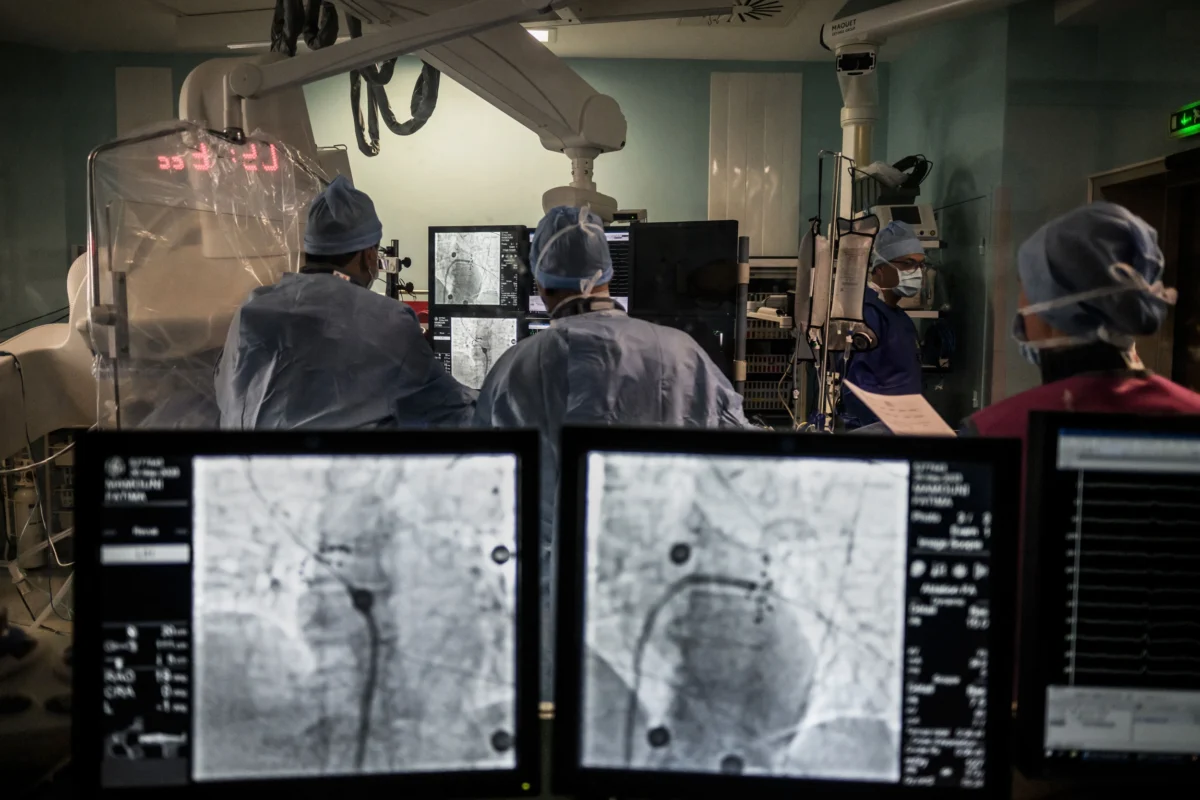
"A persistent case of hiccups, seemingly innocuous, can serve as a critical, albeit rare, indicator of a serious complication following the implantation of a life-saving cardiac device, highlighting the intricate relationship between cardiac hardware and neurological function."
This striking case, detailed in the Journal of Investigative Medicine High Impact Case Reports, underscores how an unexpected symptom like hiccups can point to a significant issue with implanted medical devices. For a 69-year-old woman, the sudden onset of hiccups 12 weeks after receiving a defibrillator led to the discovery that the device’s lead had migrated from its intended position within her heart to a major vein. This unusual presentation emphasizes the importance of considering a broad range of symptoms, even those that appear minor, when evaluating patients with implanted cardiac devices, as these symptoms could signal a problem with the device itself or its interaction with the body’s complex systems.
The patient in question had a history of paroxysmal atrial fibrillation, a condition characterized by intermittent irregular heart rhythms, for which she was being treated with the anticoagulant apixaban and the heart-rate regulating medication metoprolol. Her cardiac health journey took a turn during a nuclear stress test, which revealed an episode of monomorphic ventricular tachycardia. This is a rapid and potentially life-threatening arrhythmia originating in the ventricles, the heart’s lower chambers. Subsequent investigations, including cardiac catheterization, ruled out significant blockages in her coronary arteries. However, a cardiac MRI identified septal hypertrophic cardiomyopathy, a condition involving the thickening of the wall separating the heart’s ventricles.
In response to these findings, a single-chamber implantable cardioverter-defibrillator (ICD) was implanted. ICDs are crucial devices designed to monitor for dangerous heart rhythms and deliver an electrical shock to restore a normal rhythm, thereby preventing sudden cardiac death. The implantation procedure itself is generally safe and effective, but like any medical intervention, it carries potential risks and complications, some of which can manifest in unexpected ways.
Approximately three months post-implantation, the woman presented to the emergency department with a peculiar complaint: the sudden onset of hiccups that had begun the previous night. This symptom, while common and usually benign, raised a red flag given her recent cardiac device surgery. A routine chest X-ray, a standard diagnostic imaging technique, provided the crucial insight. The X-ray revealed that the lead, a thin wire that connects the ICD to the heart muscle to monitor electrical activity and deliver therapy, had dislodged from its optimal placement at the apex of the right ventricle – the bottom-most tip of the heart’s right lower chamber. Instead, the lead had migrated upwards into the superior vena cava, a large vein responsible for returning deoxygenated blood from the upper body to the heart.
The case report, authored by physicians at SUNY Upstate Medical University in Syracuse, New York, and published in the Journal of Investigative Medicine High Impact Case Reports in 2022, meticulously detailed this unusual occurrence. The authors classified hiccups as a "rare complication" stemming from a displaced ICD lead. The exact cause of the lead displacement remained under investigation. The report noted that the hiccups began shortly after an episode of heavy lifting. While the summary mentioned lifting furniture, the detailed case description specified the patient had lifted her husband to assist him into bed. It is important to note that the report did not definitively establish a causal link between the lifting and the lead migration. Nevertheless, upon discharge, the patient was advised to take precautions regarding weight-lifting activities.
The anatomical explanation for the hiccup phenomenon is rooted in the proximity of the displaced lead to a critical nerve. The authors theorized that the lead, now positioned within the superior vena cava, was likely irritating the right phrenic nerve. This nerve plays a vital role in controlling the diaphragm, a dome-shaped muscle essential for breathing. The phrenic nerve’s pathway is closely situated along the anterolateral border of the superior vena cava, making it susceptible to irritation from a misplaced device lead.
Hiccups themselves are characterized by involuntary spasms of the diaphragm, followed by a rapid closure of the vocal cords, producing the distinctive "hic" sound. Irritation of the phrenic nerve or the nerves that supply it is a well-recognized trigger for hiccups. Therefore, the displaced ICD lead, by physically impinging upon or irritating the right phrenic nerve, could have directly caused the diaphragmatic spasms that manifested as persistent hiccups.
The clinical implications of this case are significant. The authors concluded that clinicians should maintain a heightened awareness of lead displacement as a potential cause when patients with recently implanted ICDs develop hiccups. A dislodged lead not only can lead to symptoms like hiccups but also compromises the device’s primary function. A lead that is not securely positioned in the heart may fail to accurately sense arrhythmias or deliver life-saving electrical shocks, potentially leaving the patient vulnerable to sudden cardiac arrest. In this particular instance, the resolution of the hiccups following the repositioning of the lead served as a clear confirmation of the diagnosis and the efficacy of the intervention. The electrophysiology team successfully revised the lead, restoring it to its correct position at the right ventricular apex, and the patient’s hiccups completely subsided.
This case is not an isolated incident; hiccups have previously served as an early warning sign for other cardiac device-related issues. In 2021, a similar scenario unfolded in Spain, where cardiologists at Reina Sofía University Hospital in Córdoba reported on a 71-year-old man who experienced persistent hiccups and upper abdominal discomfort approximately 15 days after receiving a defibrillator. An X-ray revealed that the generator of his device had rotated within its subcutaneous pocket, causing the leads to twist around it. This mechanical tension pulled the lead in his right ventricle towards the superior vena cava, leading to presumed phrenic nerve stimulation. This phenomenon is known as "Twiddler syndrome," a rare complication where the device generator or leads move or twist within their implantation site, often due to patient manipulation or anatomical factors.
Another notable case reported in the Caspian Journal of Internal Medicine in 2018 involved a 66-year-old man in Turkey who presented with six weeks of hiccups and fever. He had a dual-chamber pacemaker and ICD. While his leads were found to be in the correct anatomical positions, investigations revealed an infected growth on his tricuspid valve and pacemaker lead, caused by Staphylococcus aureus bacteria. In this instance, the hiccups were attributed to phrenic nerve irritation stemming from the infection, rather than lead displacement. The patient was successfully treated with antibiotics and underwent lead removal, after which his hiccups and signs of infection resolved. These cases collectively highlight the diverse ways in which cardiac device complications can manifest and the critical role of symptoms like hiccups in prompting timely medical evaluation.
While hiccups as a symptom of lead displacement may be rare, lead problems themselves are a recognized concern in patients with ICDs. Data from large-scale registries provides valuable insights into the frequency and risk factors associated with lead dislodgement. A U.S. national registry analyzing over 226,000 patients who received ICDs between April 2006 and September 2008 found that approximately 1.2% (2,628 patients) experienced lead dislodgement requiring repositioning before hospital discharge. This indicates that lead migration is a not insignificant issue, occurring in a measurable proportion of patients.
Further analysis of this registry identified certain patient characteristics and procedural factors associated with a higher likelihood of lead movement. Older age, female sex, and a history of atrial fibrillation were found to be more common among patients whose leads dislodged. After adjusting for other variables, independent predictors of lead dislodgement included severe heart failure, atrial fibrillation or flutter, implantation of a more complex cardiac resynchronization defibrillator (CRT-D), and having the procedure performed by a physician trained through alternative pathways rather than specialized electrophysiology training. Crucially, patients whose leads dislodged faced increased risks of adverse outcomes, including cardiac arrest, device infection, pneumothorax (collapsed lung), and in-hospital mortality, even after accounting for other contributing factors.
A similar pattern emerged from a French registry involving 5,539 patients who received ICDs for sudden death prevention. A study published in Heart Rhythm in 2016 reported that 707 patients (approximately 12.8%) experienced a complication within 30 days of implantation. Among these complications, lead dislodgement or bleeding within the device pocket accounted for a substantial 57% of the early issues.
It is important to differentiate between early lead dislodgement, which often occurs within days or weeks of implantation due to surgical factors or immediate post-operative stress, and later migration, as seen in the Syracuse patient whose lead moved approximately three months after implantation. While early dislodgement is more frequently documented, later migration can occur due to a variety of factors, including patient activity, changes in cardiac anatomy, or lead material fatigue over time.
For individuals living with implanted cardiac devices, proactive management and regular medical follow-up are paramount. The National Heart, Lung, and Blood Institute (NHLBI) strongly advises patients to attend all scheduled follow-up appointments. These visits allow healthcare providers to thoroughly check the device’s function, battery status, and lead integrity, ensuring optimal performance and early detection of potential issues. Furthermore, patients should engage in open communication with their healthcare team regarding their return to normal activities, particularly strenuous ones, after device implantation. Guidance on safe levels of physical exertion and specific activity restrictions is crucial for preventing complications like lead dislodgement.
Patients are also encouraged to report any concerning symptoms to their provider promptly. These symptoms include, but are not limited to, dizziness, fainting, shortness of breath, fever, and heart palpitations. Any shock delivered by the device warrants immediate medical attention. In cases of multiple strong shocks in a short period or signs suggestive of a heart attack – such as chest pain, radiating pain, nausea, or extreme shortness of breath – emergency medical services should be contacted without delay. Building upon the insights from cases like the one in Syracuse, the emergence of new, persistent hiccups following a recent device implant should also be considered a symptom worthy of discussion with the cardiology team, as it could signal a potentially serious, yet treatable, complication.
In summary, the case of the 69-year-old woman with hiccup-induced lead discovery underscores the interconnectedness of the body’s systems and the sophisticated technology implanted within it. It serves as a powerful reminder that even seemingly minor symptoms can be valuable diagnostic clues, especially in the context of implanted medical devices. Vigilance, open communication with healthcare providers, and adherence to follow-up care are essential for patients managing cardiac conditions with the aid of devices like ICDs, ensuring their safety and maximizing the benefits of these life-saving technologies.
