
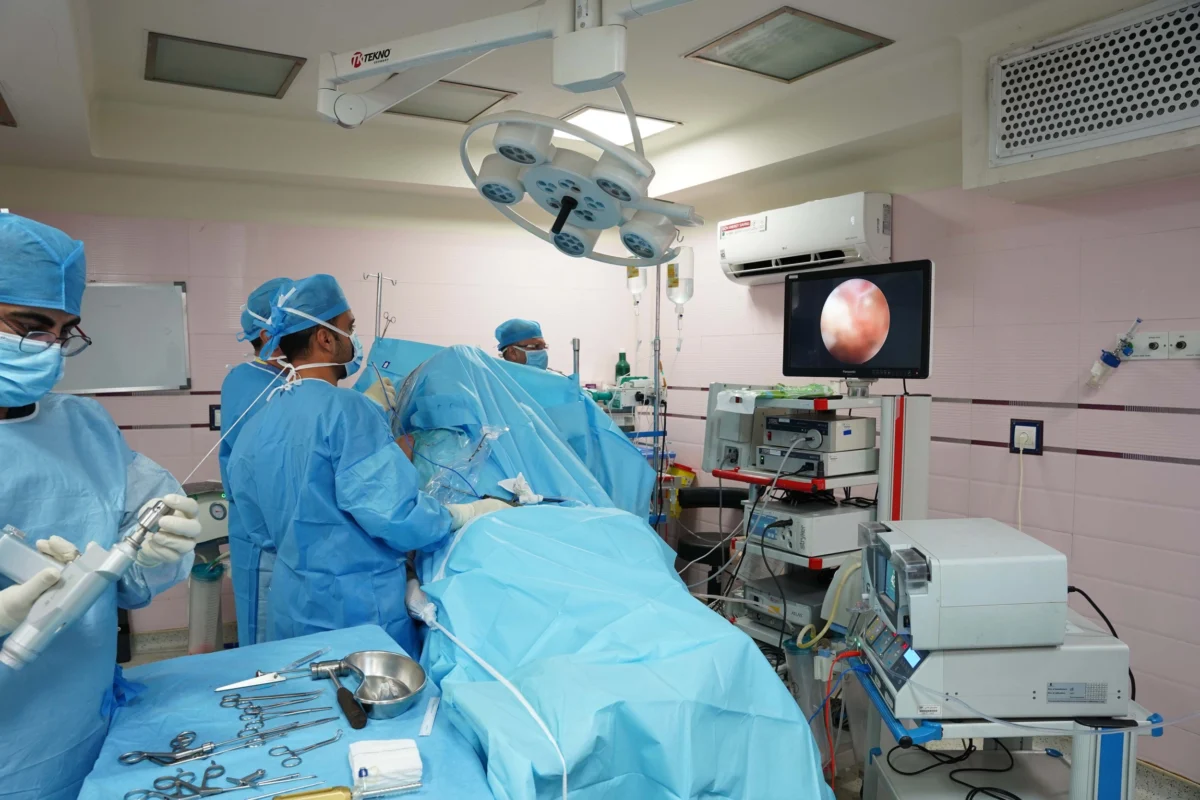
"A young woman’s attempt to induce vomiting after a holiday meal led to a swallowed toothbrush, highlighting the significant risks associated with this practice and the rarity of such objects passing naturally."
A startling medical incident involving a young woman in Spain who accidentally swallowed her toothbrush has brought to light a serious, albeit uncommon, medical complication. The 24-year-old’s attempt to induce vomiting, a habit she had employed multiple times before, took a dangerous turn when the toothbrush was ingested. This event underscores the hidden dangers of self-induced vomiting and the critical need for prompt medical intervention when foreign objects are swallowed. The case, detailed in the International Journal of Environmental Research and Public Health, not only describes the successful endoscopic removal of the toothbrush but also delves into the broader medical literature, revealing a striking absence of documented instances where swallowed toothbrushes have passed through the body unaided.
A Hidden Habit Revealed in the Emergency Room
The incident occurred in Murcia, Spain, following a substantial Christmas meal. The young woman, who had no prior significant medical history and had never been formally diagnosed with an eating disorder like bulimia nervosa, resorted to using her toothbrush to induce vomiting, a practice she reportedly engaged in on numerous occasions, particularly after large meals. Crucially, her family was unaware of this habit, highlighting the often-secretive nature of behaviors associated with disordered eating. She denied using laxatives or other medications to aid in weight control.
Upon experiencing severe abdominal pain, she sought immediate medical attention at Hospital Clínico Universitario Virgen de la Arrixaca. During her examination, which was delayed by approximately three hours from her arrival, she experienced an anxiety attack. Initial chest and abdominal X-rays confirmed the presence of the toothbrush’s bristles within her stomach. However, the plastic handle, likely less dense on the X-ray, was not clearly visible. To manage her symptoms, she was administered intravenous paracetamol (acetaminophen) for pain, omeprazole to reduce gastric acid production, and a small dose of diazepam to alleviate her anxiety.
Due to insufficient fasting time, safe anesthesia could not be administered immediately, necessitating a delay in the removal procedure. Six hours after her arrival, she was taken to the operating room for general anesthesia, with a breathing tube inserted to secure her airway. Gastroenterologists successfully navigated a gastroscope into her stomach and utilized a polypectomy snare—a wire loop typically used for polyp removal—to grasp and extract the toothbrush. Examinations revealed no discernible injuries to her esophagus or stomach lining. Following a three-hour observation period, she was discharged home, having suffered no apparent lasting harm from the ordeal.
The Unique Challenges of Swallowed Toothbrushes
While the ingestion of foreign objects is not an uncommon occurrence in emergency medicine, the nature and potential consequences of swallowing a toothbrush present distinct challenges. Medical literature suggests that the vast majority of swallowed objects, estimated between 80% and 90%, pass through the gastrointestinal tract naturally without intervention. A smaller percentage, between 10% and 20%, may require endoscopic removal, and fewer than 1% necessitate surgical intervention.
However, toothbrushes represent a different category of swallowed items. According to the review conducted by the Murcia medical team, toothbrushes typically measure between 16 to 22 centimeters (approximately 6 to 9 inches) in length. Current medical guidelines recommend endoscopic removal of blunt objects exceeding 5 centimeters in length or 2 centimeters in width within 24 hours. For sharp objects, the recommended timeframe is reduced to 12 hours. The considerable length and rigid structure of a toothbrush pose significant obstacles to its natural passage through the complex curves and narrow passages of the stomach and small intestine.
The rarity of swallowed toothbrush cases is underscored by the literature review, which identified no more than 50 documented instances across 25 case reports. Critically, in none of these reported cases was the toothbrush observed to have passed spontaneously. This consistent finding strongly supports the medical consensus that proactive removal, rather than expectant waiting, is the recommended course of action. The potential for serious complications if left in situ is substantial. The case review cited an instance where a toothbrush lodged in the colon of a 31-year-old man with schizophrenia created an abnormal channel leading to his liver, requiring abdominal surgery for removal. Guidelines further suggest that objects failing to progress beyond the initial segment of the small intestine within a week should be considered for surgical intervention.
A Pattern Intertwined with Eating Disorders
The Murcia medical team’s review identified three primary pathways through which toothbrushes are ingested: accidental swallowing during tongue brushing, psychiatric conditions such as bulimia nervosa, anorexia nervosa, or schizophrenia, and suicide attempts. The authors specifically noted that the use of a toothbrush to induce vomiting is a behavior frequently described among individuals with bulimia nervosa.
Historical cases corroborate this association. A 2005 report in Consultant360 detailed the case of a 16-year-old girl in Buenos Aires undergoing treatment for bulimia nervosa who swallowed a toothbrush while attempting to induce vomiting. Following endoscopic removal under general anesthesia, she was able to resume eating within two hours. This report highlighted that a significant proportion of accidental toothbrush ingestions involved adolescent girls with eating disorders.
Secrecy often surrounds these behaviors. A 1982 study published in the BMJ investigated self-induced vomiting and identified 620 women who engaged in this practice. Of the 499 women who met the diagnostic criteria for bulimia nervosa, a staggering 56.1% reported vomiting at least once daily. The average duration of this habit was 4.5 years, and only 30.1% had ever disclosed their eating issues to a healthcare professional. The authors of this study aptly described bulimia as "an important undetected source of psychiatric morbidity."
Beyond the direct risk of ingesting foreign objects, the act of repeated vomiting inflicts extensive damage. A comprehensive review of bulimia’s medical complications indicates that tooth erosion can manifest as early as six months into the onset of regular vomiting. Other physical signs include calluses on the back of the hand, known as Russell’s sign, and hypokalemia (low potassium levels), which can precipitate life-threatening cardiac arrhythmias. In exceptionally rare instances, forceful vomiting can lead to esophageal rupture, a critical surgical emergency.
Guidance for Swallowing Objects
In the event of swallowing a toothbrush or any other elongated object, immediate presentation to an emergency department is paramount. It is crucial to inform medical staff precisely what has been ingested, irrespective of whether initial imaging, such as an X-ray, appears reassuring. In the case of the woman in Murcia, the plastic handle of the toothbrush was not clearly visible on the X-ray, underscoring the importance of complete disclosure.
However, the broader and perhaps more significant warning lies in identifying and addressing the underlying habit that led to the accident. Subtle indicators such as worn tooth enamel, calluses on the knuckles, and a pattern of post-meal vomiting can be red flags for an undiagnosed eating disorder. It is vital to recognize that eating disorders are treatable conditions. Individuals experiencing difficulties or those concerned about someone else should seek professional help. Consulting a physician is a crucial first step. Additionally, resources like the National Alliance for Eating Disorders offer a free helpline at 1-866-662-1235, providing confidential support during weekdays from 9 a.m. to 7 p.m. Eastern time. Early intervention and open communication are essential for recovery and preventing potentially life-threatening complications.
