
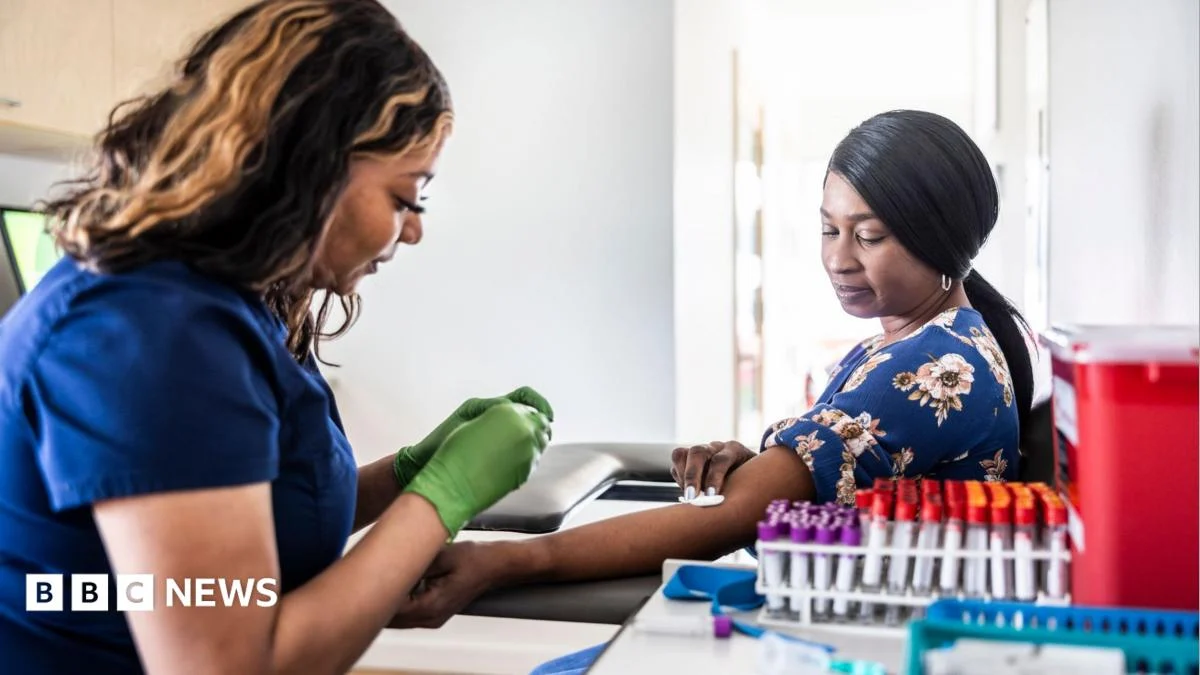
"A new government-funded trial, led by the University of Birmingham, is poised to assess the accuracy and efficacy of innovative blood tests designed to detect multiple cancers early, offering a potential paradigm shift in diagnostic capabilities and significantly improving patient survival rates across the NHS."
The launch of this significant government-funded trial marks a pivotal moment in the ongoing fight against cancer, focusing on the potential of multi-cancer early detection (MCED) blood tests. These groundbreaking tests represent a frontier in medical science, aiming to identify the presence of various cancers from a single blood sample, thereby addressing one of the most persistent challenges in oncology: early diagnosis. By assessing their accuracy for widespread adoption within the NHS, the trial seeks to transform how cancers, particularly those notoriously difficult to detect in their early stages, are identified, ultimately leading to timelier interventions and better patient outcomes.
The University of Birmingham is spearheading this ambitious government-funded trial, which will rigorously evaluate whether advanced blood tests possess the requisite accuracy and reliability for integration into broader NHS clinical pathways. The concept of a singular blood test capable of identifying multiple forms of cancer is not a novel aspiration but rather a long-sought ‘holy grail’ in oncology, promising to revolutionize early detection strategies.
The urgency for such innovation is underscored by the current challenges in diagnosing many cancers, particularly those affecting the abdomen. Professor Peter Johnson, NHS England’s national clinical director for cancer, highlighted that detecting cancers in organs like the pancreas, stomach, and liver early is "notoriously difficult." This difficulty stems from symptoms that are often vague and can easily be misattributed to more benign, less serious conditions, leading to significant diagnostic delays. For instance, abdominal discomfort, nausea, or unexplained weight loss can be indicative of various ailments, making it challenging for GPs to pinpoint a cancerous origin without extensive, often invasive, follow-up investigations.
The profound impact of early diagnosis on a patient’s journey cannot be overstated. When cancer is detected in its initial stages, before it has had the opportunity to spread significantly, treatment options are typically more varied, less aggressive, and crucially, far more effective. This translates directly into a much better chance of successful treatment, prolonged remission, and ultimately, improved survival rates. The current reality is stark: approximately 71,000 individuals in England receive a diagnosis each year for pancreatic, stomach, liver, ovarian, or bowel cancer. Tragically, nearly 35,000 people succumb to these diseases annually, a figure that early detection efforts aim to drastically reduce.
This new initiative, known as the STRIDE-RCT trial (which stands for "STRatified, Investigational, Diagnostic, Early detection Randomised Controlled Trial"), is comprehensive in its scope. It targets a broad spectrum of cancers, including bowel, small bowel, stomach, oesophageal (gullet), pancreatic, liver, bile duct, gallbladder, ovarian, endometrial (womb lining), kidney, bladder, and prostate cancer. The inclusion of such a wide array of cancers, many of which are aggressive and often diagnosed at late stages, signifies the trial’s potential to make a substantial impact across diverse patient populations.
The methodology of the STRIDE-RCT trial is designed to integrate seamlessly into routine primary care. Patients participating in the trial will provide one or two tubes of blood, taken conveniently at their local GP practice, concurrently with any other routine blood tests they might be undergoing. These samples will then be dispatched to specialized laboratories where scientists will employ advanced analytical techniques to scan for molecular signatures indicative of cancer. The promise of these tests lies not only in detecting the presence of cancer but also, in many cases, in their ability to offer clues about the tumour’s location within the body, guiding subsequent diagnostic investigations.
The scientific principles underpinning these multi-cancer blood tests typically involve the detection of circulating tumour DNA (ctDNA) or other cancer-specific biomarkers. Cancerous cells, as they grow and die, release fragments of their DNA, proteins, or other cellular components into the bloodstream. These fragments often carry genetic mutations or unique molecular patterns that distinguish them from healthy cells. Sophisticated laboratory techniques, such as next-generation sequencing or highly sensitive immunoassay platforms, can then identify these minute traces, signaling the potential presence of a tumour. The ability to not only detect these markers but also infer the origin of the cancer is a critical advancement, as it can direct clinicians to the most appropriate follow-up imaging or endoscopic procedures.
It is crucial to understand that while these tests hold immense promise, a positive result from such a blood test does not automatically confirm a cancer diagnosis. Instead, it serves as an early warning signal, indicating a higher probability of cancer and necessitating further, more definitive diagnostic tests, such as biopsies, MRI scans, CT scans, or endoscopies. Conversely, a negative result, while reassuring, is not an absolute guarantee of being cancer-free. No diagnostic test is 100% accurate, and false negatives can occur, particularly if the tumour is very small or not shedding sufficient biomarkers into the bloodstream. These nuances underscore the importance of ongoing clinical evaluation and the need for these blood tests to be used as a screening and risk stratification tool, rather than a standalone diagnostic.
The landscape of multi-cancer early detection is not without its historical context and challenges. A separate NHS trial, utilizing a test known as Galleri, recently garnered significant attention. While the Galleri trial did not meet its primary endpoint of reducing diagnoses of late-stage cancers in the initial assessment, researchers are continuing to evaluate its potential benefits and gather further data. This highlights the complexity of validating such advanced diagnostic tools and the need for rigorous, large-scale trials like STRIDE-RCT to build a robust evidence base before widespread implementation. The STRIDE-RCT trial benefits from this prior experience, aiming to refine the evaluation process and potentially learn from the outcomes of earlier initiatives.
The political will and support for such initiatives are evident. Health Secretary Yvette Cooper expressed her optimism, stating her hope that "simple blood tests such as these would help identify patients needing urgent investigation much sooner." This sentiment reflects a broader governmental ambition to harness technological advancements to improve public health outcomes and alleviate pressures on the healthcare system by facilitating earlier, less complex interventions.
From the perspective of patient advocacy and research organizations, the need for improved diagnostic tools at the primary care level has long been articulated. Michelle Mitchell, Chief Executive of Cancer Research UK, emphasized this point: "GPs have long needed better tools to help them navigate that uncertainty by identifying which patients require further testing and this trial in England is an important step towards addressing that need." General practitioners are often the first point of contact for patients experiencing symptoms, and equipping them with more effective, non-invasive screening tools could significantly streamline the diagnostic pathway, reducing anxiety for patients and optimizing resource allocation within the NHS.
The potential implications of successful validation and subsequent widespread adoption of these multi-cancer blood tests are far-reaching. For patients, it could mean the difference between a treatable early-stage cancer and a much more challenging, often terminal, late-stage diagnosis. For the NHS, it could lead to a significant reduction in the burden of advanced cancer treatments, which are typically more intensive, costly, and resource-heavy. By shifting the diagnostic curve earlier, healthcare systems could reallocate resources more efficiently, focusing on preventive care and early intervention. Furthermore, the development of such technologies could foster new research avenues, leading to even more refined and accurate detection methods in the future.
Ultimately, the STRIDE-RCT trial represents a substantial investment in the future of cancer care. It embodies a collaborative effort between academic excellence, government funding, and the practical needs of the healthcare system. If successful, these multi-cancer blood tests could emerge as a cornerstone of routine health checks, offering a simple yet profoundly impactful way to safeguard lives against a disease that continues to be one of the leading causes of mortality worldwide. The journey from trial to widespread clinical use is long and complex, but the potential rewards—measured in countless lives saved and improved—make it an endeavor of paramount importance.
