
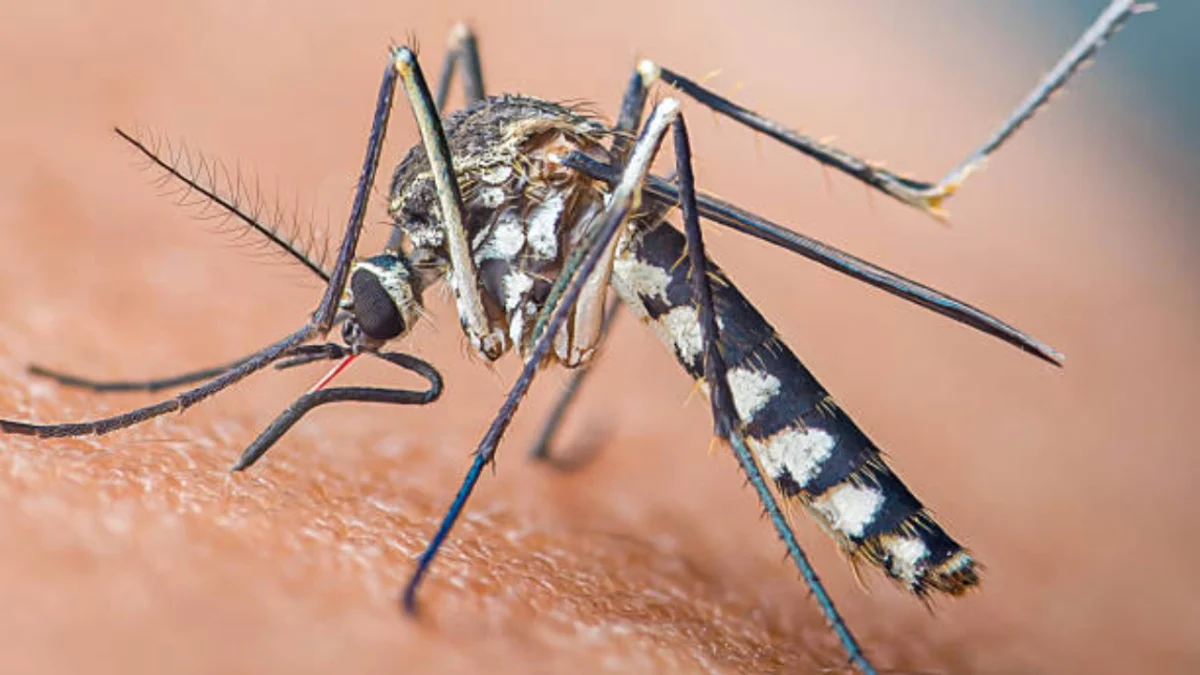
"Florida’s approval of Amendment 3 promises significant property tax relief for homeowners but casts a shadow over the future funding of essential mosquito control services, particularly as the state grapples with its worst dengue outbreak in decades."
Florida voters have overwhelmingly approved Amendment 3, a constitutional amendment designed to provide substantial property tax relief to homeowners. With approximately 62% of the vote on November 3rd, the measure comfortably surpassed the 60% threshold required for constitutional changes. This pivotal vote, however, occurs against the backdrop of Florida’s most severe local dengue fever outbreak in decades, a situation that directly intersects with the funding mechanisms for mosquito control agencies. The approved amendment will incrementally raise the homestead exemption on non-school property taxes, boosting it to $150,000 in 2027 and a significant $250,000 in 2028. This fiscal shift, while welcomed by many homeowners, introduces a critical question about the financial stability of public health services that rely heavily on property tax revenue, including the vital mosquito control districts that work to mitigate vector-borne diseases like dengue.
The timing of Amendment 3’s passage is particularly poignant given the escalating public health crisis posed by dengue fever. As of the Florida Department of Health’s report covering October 18th to October 24th, the state had confirmed an alarming 485 locally acquired dengue cases. This figure represents a substantial surge compared to previous years, with Hillsborough County reporting the highest burden at 385 cases, followed by Pinellas County with 67. This intensified dengue activity underscores the critical role of mosquito control programs. Many of these agencies, tasked with the essential work of mosquito surveillance, disease monitoring, and targeted spraying, are predominantly funded through local property taxes. The anticipated reduction in property tax revenue resulting from Amendment 3 raises immediate concerns about their capacity to maintain and potentially expand their operations during a period of heightened public health risk.
It is important to note that the immediate impact on this season’s mosquito control efforts will be minimal. Local governments and mosquito control districts are not anticipating a significant decrease in their property tax revenues until the fall of 2027, with a more pronounced reduction expected in 2028. This temporal lag provides a crucial window for state and local authorities to strategize and implement solutions. However, for families in the Tampa Bay area and across Florida, the vote effectively defers the complex financial challenges to the upcoming year’s county budgets and the State Legislature. Lawmakers will be tasked with passing enabling legislation to fully implement the provisions of Amendment 3, a process that will likely involve difficult decisions regarding resource allocation and the potential prioritization of public health services.
The passage of Amendment 3 signifies a fundamental shift in Florida’s property tax landscape, aiming to alleviate financial burdens on homeowners. Supporters of the amendment, including Governor Ron DeSantis who championed the measure, argue that it will provide tangible savings for eligible homeowners. Real estate firm the Kincheloe Group estimates that homeowners could see an approximate saving of $1,300 on their property tax bills in 2027 due to the increased homestead exemption. Governor DeSantis has signaled his intent to convene a special legislative session before his term concludes in early January to expedite the implementation of Amendment 3, demonstrating a commitment to realizing these tax benefits for residents. This proactive legislative step highlights the political significance of the amendment and the desire to quickly enact its provisions.
However, this significant property tax relief comes with potential repercussions for vital public services. Critics of Amendment 3 express deep concern over the potential impact on essential services, including mosquito control. Ernest Hooper of United Way Suncoast articulated a common worry: "We can’t make up for the losses that our nonprofit partners are going to suffer." This sentiment reflects a broader apprehension that reduced tax revenues could lead to cuts in services that are critical for community well-being and public health. The Florida Mosquito Control Association, a key advocate for the sector, emphasizes that mosquito control is a fundamental component of public health infrastructure, akin to firefighting and policing. They are actively lobbying for lawmakers to designate mosquito control as a core service, thereby safeguarding its funding and ensuring its operational continuity.
The financial implications for mosquito control districts are substantial. Florida is home to 15 independent mosquito control districts, alongside county-run programs, all of which play a crucial role in managing mosquito populations and preventing the spread of vector-borne diseases. An estimate from the Florida Mosquito Control Association suggests that districts funded entirely by property taxes could face budget reductions of approximately one-third under the provisions of Amendment 3. This significant financial pressure could impact various facets of their operations, from surveillance and public education to larviciding and adulticiding efforts.
Pasco County serves as a pertinent local example illustrating the potential financial strain. The Pasco County Mosquito Control District had projected operating budget reductions of around $4.7 million should the amendment pass. Their estimates indicated that roughly one-fifth of their budget would be affected in the first year of implementation, escalating to one-third by the second year. Adriane Rogers, the district’s executive director, expressed a pragmatic outlook, stating, "We’re certainly planning for the potential worst-case scenario." These projections, made prior to the vote, highlight the tangible operational challenges that could arise from decreased tax revenues. Such reductions could potentially compromise mosquito surveillance, disease monitoring, and the timely application of control treatments, thereby increasing the risk of disease transmission.
While agency estimates provide a glimpse into potential budget shortfalls, the ultimate absorption of lost revenue will be determined by local governments. These entities have the discretion to reallocate funds from other services to compensate for property tax shortfalls. On a statewide level, projections from the state’s Revenue Estimating Conference indicate that local governments could collectively lose nearly $12 billion annually in property tax revenue by the 2031-32 fiscal year. This substantial financial recalibration necessitates a thorough examination of all public services and their funding models.
The current dengue outbreak in Florida is a stark reminder of the importance of robust public health infrastructure. The reported 485 locally acquired cases, as of late October, represent a significant escalation from previous years. Florida reported only 62 local cases in all of 2025, and its previous peak was 199 cases in 2023. The severity of the current outbreak is underscored by the tragic death of an 80-year-old Tampa woman from dengue over the summer. In response to the escalating situation, Hillsborough County has repeatedly extended a local state of emergency, most recently through November 5th, to expedite mosquito spraying and inspection efforts. These measures are critical in interrupting the transmission cycle of the dengue virus.
The geographical spread of the outbreak is also notable, with dengue now reported in 12 Florida counties. The latest weekly report documented 60 new local cases, with Hillsborough adding 39 and Pinellas reporting 16. Other counties, including Pasco, Manatee, Seminole, Orange, and Citrus, have also logged new local infections. The primary circulating strain appears to be dengue virus serotype 2, which can sometimes be associated with more severe disease. Health officials acknowledge that the reported case count likely underestimates the true number of infections, as many individuals experience mild or asymptomatic illness.
Compounding the challenges, mosquito experts have warned of a potentially extended mosquito season due to the anticipated effects of El Niño. A wet winter could sustain elevated mosquito production longer than usual, increasing the window for dengue transmission. The Aedes aegypti mosquito, the primary vector for dengue, is a prolific breeder that thrives in small containers of standing water found around residential areas. This characteristic highlights the critical importance of community-level engagement and individual responsibility in mosquito control efforts.
Public health guidance emphasizes proactive measures that residents can take to mitigate mosquito breeding and prevent bites. These include regularly emptying water from common breeding sites such as flowerpot saucers, buckets, children’s toys, old tires, and pet bowls – at least weekly. Maintaining well-repaired window screens is crucial for preventing mosquitoes from entering homes, and the use of EPA-registered insect repellents is recommended for outdoor protection. It is important to remember that Aedes aegypti mosquitoes are day-biting insects, meaning that protection is needed beyond nighttime hours. Residents are encouraged to report any instances of standing water or request service from their local county mosquito control program.
Understanding the symptoms of dengue fever is crucial for timely diagnosis and treatment. Initial symptoms often include high fever, severe muscle and joint pain, headache, pain behind the eyes, and sometimes a rash. More severe warning signs, such as intense abdominal pain, persistent vomiting, bleeding from the gums or nose, or extreme fatigue, can emerge as the fever subsides and require immediate emergency medical attention. Individuals experiencing suspected dengue symptoms should consult a healthcare professional before self-medicating, as the CDC advises against the use of aspirin and ibuprofen due to the risk of hemorrhagic complications.
Certain populations are at higher risk of developing severe dengue. These include older adults, infants, pregnant individuals, and those who have previously contracted dengue. Previous infection can increase the likelihood of developing severe illness upon subsequent exposure to a different dengue serotype. Travelers returning from dengue-endemic areas should inform their healthcare providers if they develop a fever, as it could be an indicator of infection.
The coming months will be critical for Florida as it navigates the implementation of Amendment 3 and manages the ongoing dengue outbreak. Key developments to monitor include the release of the state’s weekly arbovirus reports to track the spread of dengue and other mosquito-borne illnesses, the outcomes of the special legislative session concerning Amendment 3, and the county budget workshops scheduled for next summer. MedicalDaily will continue to provide updates on the evolving situation, particularly focusing on how mosquito control funding may be affected in heavily impacted counties like Hillsborough, Pinellas, and Pasco. The interplay between fiscal policy and public health will be a central theme as Florida strives to balance property tax relief with the imperative of safeguarding its residents from infectious diseases.
