
"True transformation is not found in the absence of chaos, but in the ability to maintain consistency while navigating the demands of a high-pressure lifestyle."
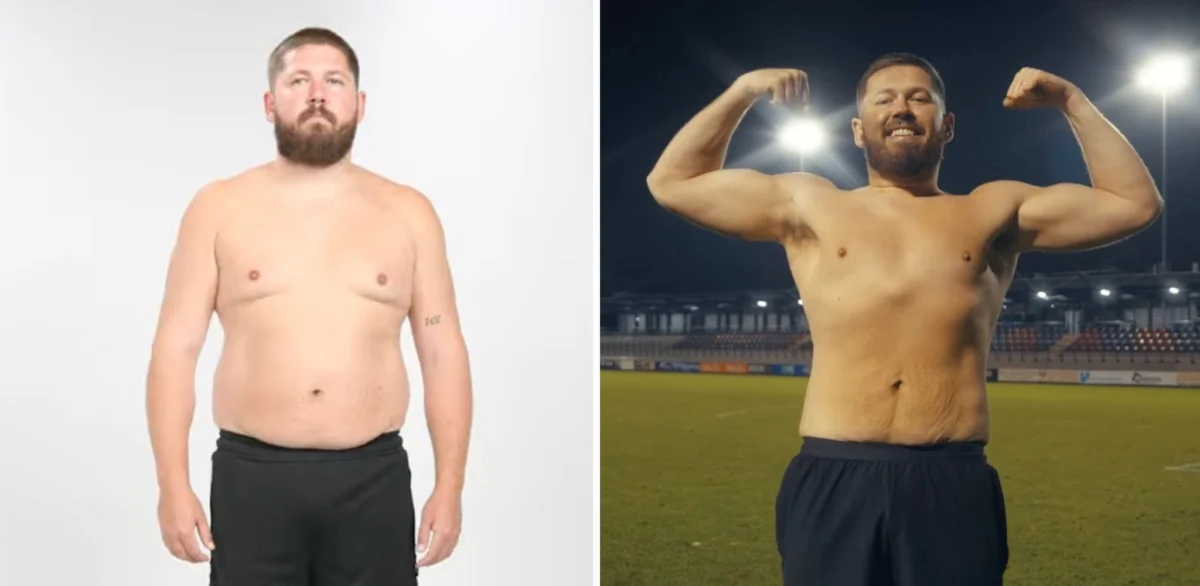
The traditional narrative of weight loss often suggests that success requires a controlled environment—a steady routine, a home-cooked meal prep schedule, and a local gym. However, for content creator John Nellis, the reality of professional life involved three to four international flights per week, hotel buffets, and the high-stress environment of filming with global icons like Cristiano Ronaldo and Lionel Messi. By losing 44 pounds in just 90 days under these volatile conditions, Nellis demonstrated that sustainable health is less about perfect circumstances and more about tactical decision-making and a fundamental shift in personal identity.
The Conflict of the Jet-Setting Lifestyle
For many frequent travelers, the airport is a nutritional graveyard. The options are often limited to high-calorie processed snacks, fast food, and sodium-heavy pre-packaged meals designed for shelf life rather than satiety. John Nellis, a busy father and prominent soccer content creator, lived this reality daily. His professional obligations required him to be in different time zones constantly, making the establishment of a "normal" routine seemingly impossible.
At the start of his journey, Nellis weighed 265 pounds. Beyond the scale, his functional fitness was at a low point; he was unable to perform a single unassisted pull-up. His history with fitness was a familiar cycle of "crash dieting"—intense, unsustainable bursts of restriction that rarely lasted longer than 30 days. This cycle is common among those who view health as a temporary project rather than a permanent lifestyle. Nellis recognized that his primary obstacle was not a lack of effort, but a lack of consistency exacerbated by his nomadic career.
The Science of the "On-the-Go" Deficit
Partnering with fitness expert and YouTuber Stan Browney, Nellis embarked on a 90-day transformation centered on the principle of a manageable calorie deficit. In the world of sports science, a calorie deficit is the only physiological requirement for weight loss, yet the method of achieving it varies wildly in effectiveness. For Nellis, the strategy had to be portable.
One of the most significant hurdles was the airport environment. Browney coached Nellis to adopt a "better, not perfect" mindset. When faced with a limited menu at a terminal, Nellis learned to deconstruct his meals. During one instance, he opted for chicken burgers but removed the buns and high-calorie condiments, focusing instead on the lean protein. This approach prioritizes protein intake, which is essential for muscle preservation and satiety, while stripping away the "empty" calories that contribute to a surplus.
This tactical flexibility extended to hotel buffets and work events. Rather than adopting an "all-or-nothing" mentality—which often leads to total dietary abandonment after one "bad" meal—Nellis learned to navigate social obligations. He attended weddings, birthday parties, and work functions without isolating himself. By remaining mindful of his total daily intake, he proved that one can participate in a social life without compromising physical goals.
Overcoming the Plateau and Physical Adversity
Weight loss is rarely a linear progression. The human body is a survival machine, often adapting to reduced caloric intake by slowing down non-essential processes, a phenomenon known as metabolic adaptation. Nellis experienced several frustrating plateaus where the scale refused to budge for an entire week despite his adherence to the program.

Furthermore, the physical toll of frequent travel and increased training intensity manifested in various injuries. Nellis struggled with gout flare-ups—a painful form of arthritis often exacerbated by dehydration and dietary shifts—as well as shoulder and lower-back pain. In many previous attempts, these setbacks would have served as an excuse to quit. However, the 90-day challenge emphasized resilience. Instead of stopping, Nellis adjusted his movements and focused on what he could do, maintaining the habit of showing up even when the intensity had to be dialed back.
Quantifiable Results and Functional Gains
By the 90-day mark, the cumulative effect of these small, consistent choices was staggering. Nellis dropped from 265 pounds to 220 pounds, marking the first time in years he had seen that number on the scale. However, the transformation was not merely aesthetic.
His functional strength saw exponential growth. He progressed from zero pull-ups to completing six unassisted repetitions. His muscular endurance doubled, with his push-up count rising from 22 to 44. Even his explosive power and cardiovascular efficiency improved, as evidenced by shaving over a second off his 100m sprint time. These metrics are vital because they indicate that the weight lost was primarily body fat, while his lean muscle mass was preserved or enhanced through resistance training and high protein intake.
The Psychology of Identity and Legacy
Perhaps the most profound shift occurred in Nellis’s self-perception. He noted that for most of his life, he identified as "the fat guy"—the person who would always overindulge in food and drink. This self-label acted as a ceiling on his potential. Through this process, he consciously worked to rewrite his identity to that of someone who is "fit, strong, and healthy."
In behavioral psychology, identity-based habits are the most durable. When an individual performs an action because it is who they are rather than what they are trying to do, the likelihood of long-term success increases. Nellis stopped "going on a diet" and started "living as an athlete."
This shift had a ripple effect on his family. Nellis observed his four-year-old son, Eli, mimicking his workouts and making healthier food choices. This realization added a layer of "why" to his journey that went beyond personal health. He recognized that he was not just losing weight; he was modeling a blueprint for his son’s future relationship with health and discipline.
Implications for the Modern Professional
The story of John Nellis serves as a case study for the modern professional. In an era where "hustle culture" often equates success with the sacrifice of health, Nellis’s journey provides a counter-narrative. It suggests that health and professional high-performance are not mutually exclusive, but are in fact symbiotic.
The lessons from his 90-day transformation can be distilled into three core pillars:
- Strategic Flexibility: Perfection is the enemy of progress. Learning to make the "best possible choice" in a sub-optimal environment is more valuable than having a perfect plan that you cannot follow.
- Functional Consistency: Results are the byproduct of what you do repeatedly. Plateaus and injuries are part of the process, not a sign to stop.
- Identity Reinvention: Long-term change requires moving beyond the "temporary fix" mindset. You must become the person who values health, even when no one is watching and when the environment is working against you.
As Nellis concluded at the end of the challenge, this was not the end of a 90-day stint, but the "start of the rest of his life." By successfully navigating the most difficult travel schedule of his career while achieving his best physical condition, he dismantled the excuse that a busy life is a barrier to a healthy one. For the frequent traveler, the parent, and the professional, the message is clear: the environment does not dictate the outcome; the choices within that environment do.
