
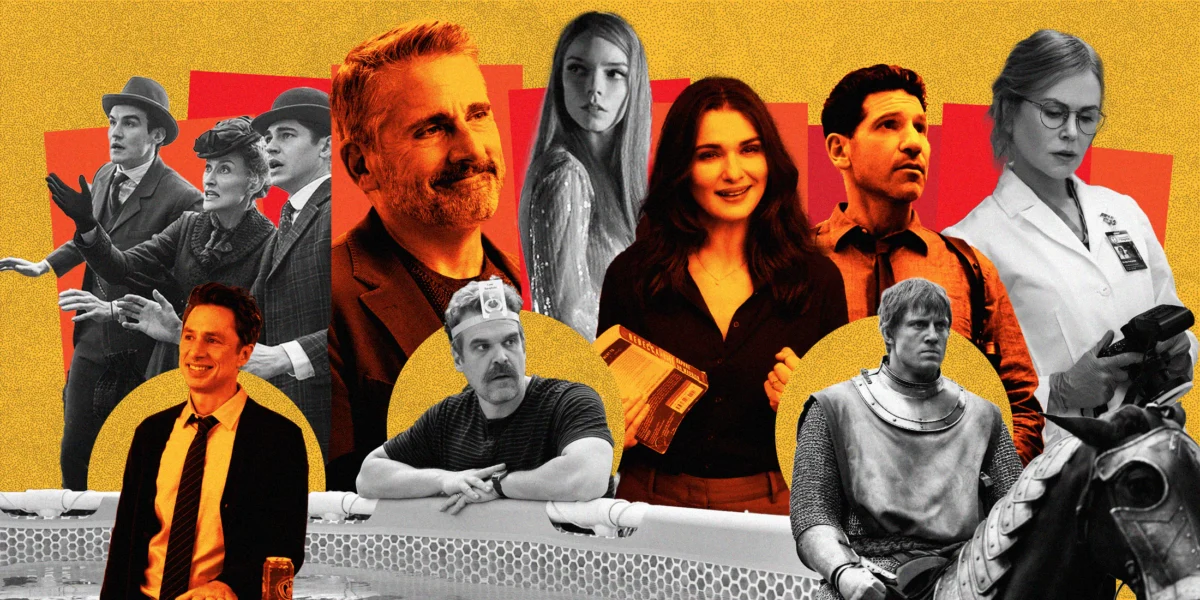
"The upcoming television cycle represents a strategic pivot toward prestige adaptations and high-concept revivals, blending established intellectual property with star-studded ensembles to navigate an increasingly competitive digital landscape."

The modern television industry is currently undergoing a transformative phase, moving away from the "volume-at-all-costs" era of the early 2020s toward a more curated, talent-driven model. As major streaming platforms like Netflix, HBO, and Disney+ compete for a narrowing window of consumer attention, the 2025 and 2026 slates reveal a clear trend: the integration of A-list cinematic talent into serialized storytelling, the expansion of proven literary universes, and the daring revival of legacy sitcoms. From high-stakes espionage in 1970s Moscow to the intimate margins of the Westeros timeline, the upcoming broadcast and streaming calendar promises a sophisticated blend of pulp, prestige, and procedural innovation.

The Rise of the Prestige Literary Adaptation
A significant portion of the upcoming slate draws its DNA from the world of best-selling fiction, a strategy that offers streamers a pre-existing audience and a structured narrative foundation. Netflix’s His & Hers, starring Tessa Thompson and Jon Bernthal, is a prime example of this "winning streak" in the pulpy, limited-series genre. Based on Alice Feeney’s novel, the series leverages the domestic thriller trope—a detective and his estranged journalist wife investigating the same murder—to explore deep-seated personal connections and marital discord. The casting of Thompson and Bernthal signals a commitment to high-caliber performance within a genre often dismissed as mere "potboiler" entertainment.

Similarly, Prime Video is making a massive play for the procedural audience with Scarpetta, an adaptation of Patricia Cornwell’s legendary forensic pathology series. With 29 books to draw from, the series stars Nicole Kidman as Dr. Kay Scarpetta and Jamie Lee Curtis as her sister, Dorothy. This "extra chaotic oomph" distinguishes it from the more stoic Prime procedurals like Reacher or Bosch. By placing two Academy Award-winning actresses at the center of a murder mystery, Prime Video is effectively elevating the "dad-TV" procedural into a prestige event.

Netflix is also venturing into the "erotic character study" with Vladimir, based on the novel by Julia May Jonas. Starring Rachel Weisz as a literature professor navigating a campus scandal involving her husband (John Slattery), the show is being described as a zippy, academic version of Deadpool for its fourth-wall-breaking and "horny" intellectualism. This indicates a willingness by streamers to experiment with tone, moving between dark comedy and sincere drama within a single narrative frame.

Expanding the Cinematic Universe
The expansion of existing franchises remains a cornerstone of the television economy, though the focus has shifted toward more intimate, character-driven sub-stories. HBO’s A Knight of the Seven Kingdoms takes a page from the Andor handbook, shrinking the sprawling geopolitics of Game of Thrones into a more personal narrative. Based on George R.R. Martin’s Dunk and Egg novellas, the series follows a humble hedge knight (Peter Claffey) and his squire (Dexter Sol Ansell). This shift suggests that the future of fantasy television may lie in the "margins" of history rather than the center of major wars.

Marvel Studios is following a similar path with Wonder Man on Disney+. Starring Yahya Abdul-Mateen II as Simon Williams, the series moves away from multiversal threats to focus on the intersection of superheroism and the Hollywood film industry. By featuring Ben Kingsley as the returning Trevor Slattery, the show functions as a meta-commentary on the MCU itself, emphasizing people, movies, and friendship over traditional spectacle.

Even the Western genre is seeing a diversification of its flagship properties. While Taylor Sheridan’s Yellowstone universe continues to dominate, the arrival of Marshals on CBS and Paramount+ marks a "second age" for the franchise. Focusing on Luke Grimes’s Kayce Dutton and a SEAL Team leader played by Logan Marshall-Green, the show bridges the gap between network procedural and prestige cable drama. Meanwhile, Sheridan’s The Madison, starring Michelle Pfeiffer and Kurt Russell, pivots the Montana setting toward a more contemplative, grief-driven narrative, moving away from the "connected universe" plans to stand as its own atmospheric character study.

The Comedy Revival and Experimental Formats
Comedy is experiencing a renaissance through two distinct channels: the long-awaited revival and the experimental mockumentary. The return of The Muppet Show to ABC and Disney+, produced by Seth Rogen and Evan Goldberg, represents a return to the classic variety format. By featuring contemporary guest stars like Sabrina Carpenter, the production seeks to modernize Kermit and company while maintaining the sketch-comedy roots that made the original a cultural institution.

Simultaneously, the 16-year-later revival of Scrubs on ABC brings back the original trio of Zach Braff, Donald Faison, and Sarah Chalke. In an era where audiences crave the comfort of "hangout" television, reviving a beloved aughts sitcom serves as a low-risk, high-reward strategy for legacy networks.

Experimental television is also pushing boundaries, as seen in Prime Video’s Jury Duty: Company Retreat. Following the unexpected success of the first season, the "Truman Show-esque" experiment continues by placing a regular person in a scripted "company bonding" environment. This blend of improv, reality, and scripted drama highlights a growing appetite for television that feels unpredictable. NBC/Peacock’s The Fall and Rise of Reggie Dinkins, starring Tracy Morgan and Daniel Radcliffe, also plays with format, using a documentary-filmmaker lens to tell the story of a disgraced football player.

Dark Mysteries and Tonal Balancing Acts
The 2025–2026 slate is defined by a specific type of "tonal balancing act"—shows that refuse to stay in one lane. HBO’s DTF St. Louis is a standout in this regard. Starring Jason Bateman, Linda Cardellini, and David Harbour, the series navigates a love triangle that ends in death, oscillating between "hilarious dark comedy" and "gutting drama." This sophistication in writing reflects a more mature audience that expects complexity in its mystery narratives.

Peacock’s Ponies, a spy thriller set in 1970s Moscow, utilizes the star power of Emilia Clarke and Haley Lu Richardson to ground a vast conspiracy theory. The premise—two CIA widows investigating their husbands’ deaths—combines historical fiction with the modern demand for female-led thrillers. On FX, Ryan Murphy continues his "American Story" expansion with Love Story, dramatizing the relationship between JFK Jr. and Carolyn Bessette Kennedy. By casting a discovery like Paul Anthony Kelly alongside the established Sarah Pidgeon, Murphy aims to turn a tabloid tragedy into a prestigious, emotional epic.

Genre Innovation: Horror and Documentary
Horror and documentary filmmaking are also evolving. Netflix’s Something Very Bad Is Going to Happen, produced by the Duffer Brothers, is being hailed as a new peak for television horror. Drawing comparisons to Ari Aster’s Midsommar, the show uses a wedding setting to evoke a sense of dread, proving that horror can be just as "prestige" as any period drama when handled with striking cinematography and patient pacing.

In the non-fiction space, HBO’s Neighbors offers a "trippy, absurd lens" into real-life disputes. Produced by the Safdie brothers and Ronald Bronstein, the series eschews dry legal analysis for a look at the "larger-than-life characters" found in suburban conflict. This indicates that even the documentary format is being influenced by the cinematic, often frenetic style of modern indie film.

Conclusion: A Curated Future
The television landscape of 2025 and 2026 is characterized by a "return to the center." While the platforms are diverse—ranging from the traditional broadcast of CBS and ABC to the digital giants of Netflix and Prime Video—the content strategy has unified around high-concept, star-driven vehicles. Whether it is Guy Ritchie’s Young Sherlock or Steve Carell’s academia-focused Rooster, the industry is betting on the idea that viewers will follow specific creators and actors into new, high-quality worlds. As the "streaming wars" enter a more mature phase, the winner will likely be determined not by the sheer amount of content, but by the ability to deliver shows that feel both "juicy" and "essential."
