
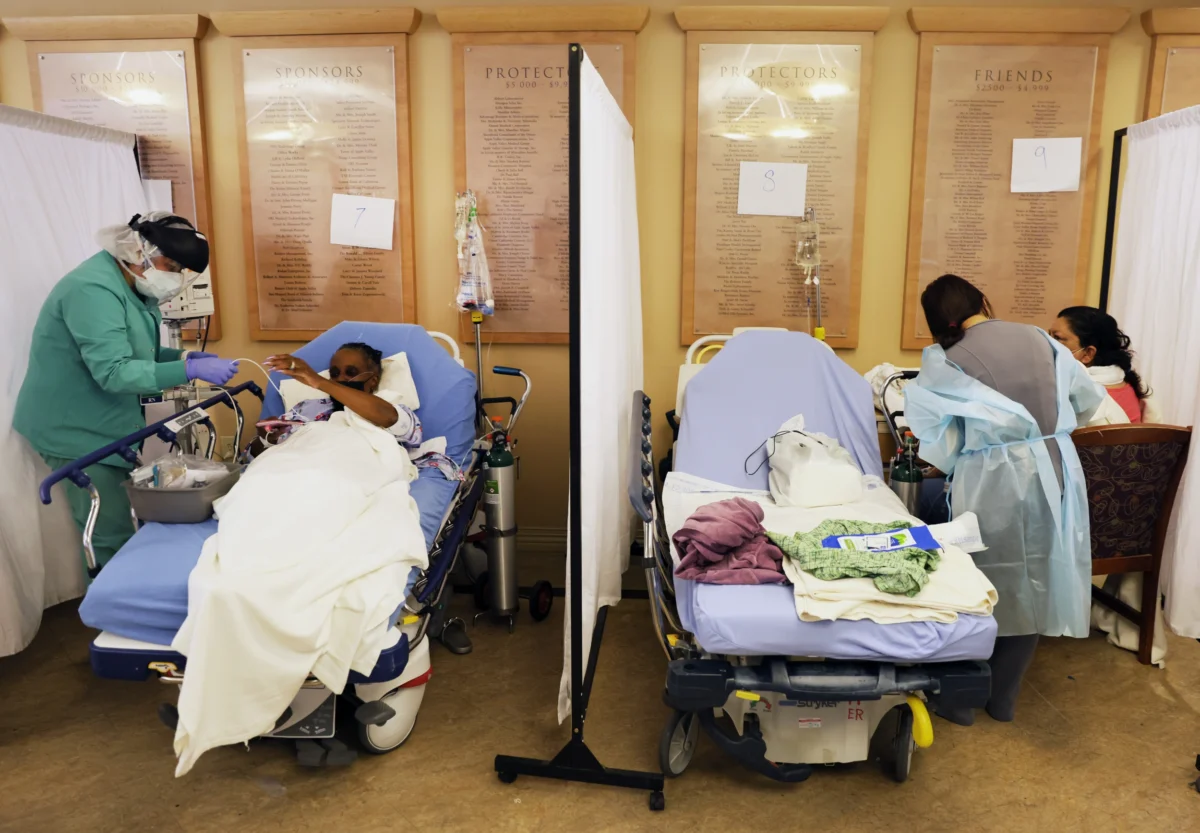
"Adults are increasingly becoming the face of the current measles outbreak, with over a third of hospitalized cases being individuals over 20, signaling a critical need for renewed vaccination vigilance across all age groups."
The United States is experiencing a significant resurgence of measles, a highly contagious viral illness that was once considered largely eradicated. New data released by the Centers for Disease Control and Prevention (CDC) on November 13th reveals a stark reality: adults are disproportionately affected, accounting for a substantial portion of both infections and hospitalizations. This alarming trend, coupled with a continuous rise in weekly case numbers, is pushing the nation towards a critical decision by the Pan American Health Organization (PAHO) regarding its measles elimination status, a distinction it has held since the year 2000. The implications extend beyond a mere statistical recalibration; they underscore a widening gap in immunity, particularly among adult populations, and highlight the potential for widespread community transmission.
The latest figures paint a concerning picture of the ongoing measles epidemic in the United States. As of November 13th, a total of 5,412 measles cases have been reported nationwide. This represents a significant increase, with the CDC documenting 230 new cases in the preceding week alone, marking the fourteenth consecutive week of triple-digit increases. This sustained surge underscores the persistent and widespread nature of the outbreak.
A particularly striking aspect of this resurgence is the dominant role of adult infections. Individuals aged 20 and older now constitute 41% of all reported cases, equating to 2,240 people. This demographic shift is a departure from historical trends where measles was primarily viewed as a childhood illness. The severity of these adult cases is also a cause for significant concern, with at least 332 adults requiring hospitalization. This translates to approximately 15% of adult measles patients needing hospital care, a rate that is second only to children under the age of five (17%) and significantly higher than the 4% observed in the 5-19 age bracket. In total, 591 individuals with measles have been hospitalized this year, representing about 11% of all confirmed cases nationwide.
The impact of measles extends beyond individual illness, encompassing broader societal and economic consequences. The Centers for Disease Control and Prevention (CDC) has identified a significant number of adult hospitalizations, with 332 individuals over the age of 20 requiring inpatient care. This figure represents a substantial portion of the total 5,412 cases reported by November 13th. The hospitalization rate for adults with measles this year stands at approximately 15%, a figure that is concerningly high, trailing only children younger than five years old, who have a hospitalization rate of 17%. In contrast, individuals between the ages of 5 and 19 have a significantly lower hospitalization rate of 4%. This disparity highlights the vulnerability of the adult population to severe outcomes from measles.
The growing number of adult cases has also unfortunately led to an increase in measles-associated deaths. While state health departments report 10 such fatalities in 2026, the CDC’s official count stands at six, with the acknowledgment that this figure is subject to change. Tragically, at least four of the reported deaths this year have been among children, underscoring the severity of the virus across all age demographics.
The current outbreak is not uniformly distributed across the nation but is concentrated in specific geographic areas, with several states experiencing particularly high case counts. Pennsylvania leads the nation with 1,542 reported cases. Wisconsin follows with 651 cases, while Ohio has reported 372 cases, Indiana 171, and Minnesota 160. Nationally, a total of 43 distinct outbreaks have been documented in 2026, with an additional 18 cases linked to international travelers. This concentration in specific states suggests that localized factors, potentially including lower vaccination rates or delayed responses, may be contributing to the spread.
A critical underlying factor contributing to the widespread transmission of measles is the status of vaccination among those infected. Approximately 96% of individuals diagnosed with measles in 2026 were either unvaccinated or had an unknown vaccination status. Furthermore, the vast majority of these cases, also around 96%, are directly linked to ongoing outbreaks. This statistic strongly suggests that the current surge is driven by pockets of under-vaccinated populations, including adults who may have never received the measles, mumps, and rubella (MMR) vaccine, received only a single dose, or whose vaccination records are incomplete or inaccessible.
The economic ramifications of these widespread outbreaks are also significant, impacting household budgets and the broader economy. For individuals contracting measles, the direct costs of medical care can be substantial. However, the indirect costs associated with missed work and the need for childcare while ill or caring for exposed family members can place a considerable financial strain on households. For employers, each case can trigger a cascade of public health interventions. Health departments must engage in contact tracing, notify potentially exposed individuals at workplaces and public venues, and arrange for preventive measures, such as post-exposure prophylaxis. This can lead to significant disruptions and increased administrative burdens.
The severity of measles is not confined to childhood. The CDC explicitly identifies adults over the age of 20 as being at a higher risk for developing serious complications. These complications can include pneumonia, a serious lung infection, and encephalitis, which is swelling of the brain. Pregnant individuals and those with weakened immune systems are also at an elevated risk of severe illness, and for pregnant individuals, there is an added risk of adverse outcomes for the fetus. Dr. Noel T. Brewer, PhD, has expressed grave concern, stating, "The United States is no longer a safe place for children in regards to measles." This sentiment extends to adults, as they are not only vulnerable themselves but also act as potential vectors for transmitting the virus to children and other susceptible individuals within their care and communities.
The resurgence of measles underscores a critical need for adults to reassess their own immunity and vaccination status. Protecting adults is not only about safeguarding their individual health but also about creating a protective barrier for the most vulnerable members of society, particularly infants who are too young to receive their first routine MMR vaccination, typically administered at 12 months of age. Vaccinated parents, grandparents, and caregivers play a vital role in shielding these infants from exposure in their immediate environments.
For most adults, confirming immunity is a matter of reviewing existing documentation. Childhood vaccine records may be accessible through parents, pediatricians’ offices, state immunization registries, school or college records, or military archives. For individuals born before 1957, it is generally assumed that they have been infected with wild measles virus and therefore possess natural immunity, as measles was endemic in the United States for decades before the widespread implementation of the MMR vaccine.
Adults who lack definitive proof of immunity are strongly encouraged to take proactive steps. According to CDC guidance on adult MMR vaccination, individuals without evidence of immunity should receive at least one dose of the MMR vaccine. Certain groups, including healthcare workers, college students, and international travelers, are recommended to receive two doses of the vaccine to ensure robust protection. Two doses of the MMR vaccine are approximately 97% effective in preventing measles.
For adults who are unable to locate their vaccination records, several options exist. Consulting with a healthcare provider can facilitate the process. A clinician can discuss the possibility of a blood test to determine immunity levels. Alternatively, for the vast majority of individuals, receiving an additional MMR dose is safe and poses no harm, even if they are already immune. It is important to note that the MMR vaccine is not administered during pregnancy. Therefore, pregnant individuals who require vaccination should consult with their obstetrician to determine the safest timing for immunization, typically after childbirth.
Recognizing the symptoms of measles is crucial for prompt identification and management. Initial symptoms often include a high fever, followed by a cough, runny nose, and the characteristic red, watery eyes. A distinctive rash typically appears a few days after the onset of these symptoms. Individuals who suspect they have been exposed to measles and develop these symptoms should contact their healthcare provider before visiting a clinic to prevent potential transmission within the medical setting. Severe symptoms such as difficulty breathing, confusion, or profound weakness warrant immediate emergency medical attention.
The United States’ status as a measles-eliminated nation hangs in the balance. On November 17th, a commission from the Pan American Health Organization (PAHO) is scheduled to convene to decide whether the U.S. and Mexico have indeed lost their measles elimination status. The U.S. has proudly maintained this designation since the year 2000. While a formal declaration of losing elimination status would not alter the fundamental medical advice for individual adults—which remains focused on vaccination and seeking prompt medical attention—it would serve as a stark official acknowledgment that measles is actively circulating within the country. MedicalDaily will continue to monitor and report on the PAHO decision and subsequent updates from the CDC.
Key Questions Answered
- How many U.S. measles cases have been reported in 2026? As of the CDC’s November 13th update, 5,412 cases have been reported, with 230 new cases in the preceding week.
- What share of cases are adults? Adults aged 20 and older account for 41% of all cases, totaling 2,240 individuals.
- How many adults have been hospitalized? A total of 332 adults have been hospitalized with measles, representing approximately 15% of adult cases.
- Am I immune if I was born before 1957? Individuals born before 1957 are generally considered to have natural immunity to measles.
- What should adults without vaccine records do? Adults without proof of immunity should consult a clinician about a blood test for immunity or receive an MMR vaccination. An additional dose is generally safe for most individuals.
- Can pregnant people get the MMR vaccine? No, the MMR vaccine is not administered during pregnancy. Pregnant individuals should discuss appropriate timing with their obstetrician.
- What is the PAHO decision? A PAHO commission is expected to rule on November 17th regarding whether the U.S. has lost its measles elimination status, a status it has held since 2000.
