
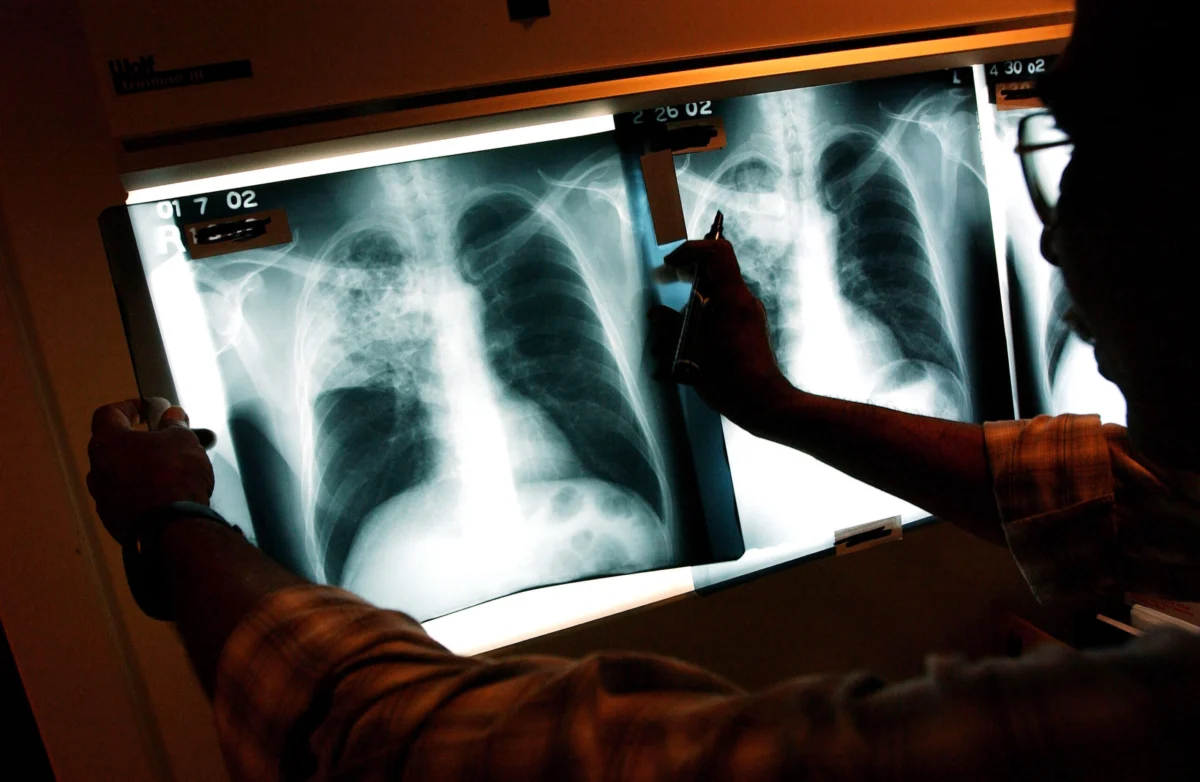
"While the immediate risk appears limited, the confirmed active tuberculosis case at UNLV’s School of Nursing underscores the importance of understanding TB transmission and the meticulous process of public health contact tracing."
The University of Nevada, Las Vegas (UNLV) School of Nursing, located on its Shadow Lane Campus, has confirmed an active tuberculosis (TB) case involving an employee. The Southern Nevada Health District, acting as the local health authority, has initiated a comprehensive contact investigation to identify and evaluate individuals who may have been exposed. This situation highlights the critical role of public health agencies in managing infectious disease outbreaks within educational institutions and reassures the wider campus community about the protocols in place.
The announcement, made jointly by UNLV and the Southern Nevada Health District, was first reported by FOX5 Las Vegas on November 13, 2026. The affected employee reportedly worked in a non-clinical classroom setting, a detail that helps public health officials narrow the scope of potential exposure. UNLV has emphasized that the risk is likely confined to individuals who had prolonged or repeated close contact with the employee on the Shadow Lane Campus. Crucially, the university stated that anyone who has not been in the School of Nursing building within the past six months is not considered at risk, and to their knowledge, no patients within the school’s clinical practices have been exposed.
For the nursing students, faculty, and their families, the practical concern revolves around the level of risk and the necessity of testing. Based on the information provided by officials, the majority of individuals on campus face minimal to no risk. The health district will directly contact those identified as needing evaluation and testing, ensuring a targeted and efficient response.
The Health District’s Proactive Contact Investigation
The Southern Nevada Health District is spearheading the contact investigation, leveraging its expertise in managing public health threats. This week, district staff visited the School of Nursing building to collaborate with the school’s administration and UNLV’s public health response team. Their primary objective is to meticulously identify all individuals who may have had close and prolonged contact with the infected employee.
The investigation process involves detailed interviews with potentially exposed individuals to ascertain the frequency and duration of their shared space with the employee. This information is crucial for prioritizing testing, beginning with those who had the closest and most sustained contact, and then expanding the circle of investigation only if deemed necessary. The health district will be responsible for notifying all identified contacts, including students, faculty, and staff, and will arrange for the necessary medical evaluations and testing. UNLV has indicated that this comprehensive review and testing process is expected to unfold over the coming weeks. While the exact number of potentially exposed individuals has not been disclosed, the university has assured that the affected population represents a small fraction of the overall UNLV student and staff body.
In a sensitive matter concerning employee health, UNLV has also appealed to the campus community for discretion, urging individuals not to share any information that could compromise the privacy of the affected employee. To support students and staff during this period, the university is providing access to both physical and mental wellness resources.
Understanding Tuberculosis Transmission: Prolonged Contact is Key
Tuberculosis is a bacterial infection primarily affecting the lungs, caused by Mycobacterium tuberculosis. It spreads through the air when an individual with active pulmonary TB coughs, speaks, sneezes, or sings. The health district clarifies that transmission typically requires close, prolonged, or repeated exposure, such as sharing the same enclosed space for an extended period. Importantly, TB is not spread through casual contact, touching contaminated surfaces, sharing personal items, or through brief encounters in hallways or outdoor areas.
This distinction is vital for understanding why brief interactions are unlikely to pose a significant risk. The focus of the investigation will naturally be on classmates or colleagues who regularly shared the same room with the employee for substantial periods.
A significant aspect of TB infection is that most individuals exposed to the bacteria do not develop active disease. Their immune systems effectively contain the bacteria, a condition known as latent TB infection. People with latent TB are asymptomatic and cannot transmit the infection. However, without appropriate treatment, a portion of these individuals may develop active TB disease at a later stage, according to the Centers for Disease Control and Prevention (CDC).
Diagnosis and the "Window Period"
Diagnosing TB infection typically involves a skin test or a blood test. Given that it can take several weeks for an infection to become detectable through these tests, public health officials often recommend retesting contacts approximately eight to ten weeks after their last potential exposure. This waiting period is referred to by the CDC as the "window period," acknowledging that a negative initial test result may not definitively rule out infection for individuals with close contact.
Tuberculosis is not a widespread concern in Southern Nevada. Clark County typically reports around 70 active TB cases annually. The nature of TB transmission, which necessitates sustained close contact, often results in contact investigations identifying few or no additional active cases.
Recognizing Symptoms and Identifying High-Risk Individuals
Active TB in the lungs can manifest with a persistent cough lasting three weeks or longer, potentially accompanied by blood. Other common symptoms include fever, night sweats, unexplained weight loss, and fatigue. Any individual experiencing these symptoms, especially if they suspect potential exposure, is strongly advised to contact a healthcare provider immediately and disclose their possible exposure history, even if they have not yet been contacted by the health district.
Certain populations are at a higher risk of progressing from latent infection to active disease. These include young children, individuals with HIV, those undergoing immunosuppressive therapy, and individuals with underlying health conditions such as diabetes or kidney disease. Students or staff who live with vulnerable individuals, such as infants, elderly relatives, or individuals undergoing cancer treatment, should inform the health district if they are contacted, as this information can be relevant to their risk assessment and care.
Both latent and active TB are treatable conditions. The CDC recommends specific treatment regimens for latent TB infection that typically last three to four months and significantly reduce the likelihood of developing active disease in the future. Active TB disease requires a more extended course of antibiotic treatment, usually spanning several months. Importantly, individuals undergoing effective treatment typically cease to be contagious within weeks of starting their medication.
For the broader UNLV community, individuals who have not been contacted by the health district and have not been in the School of Nursing building within the past six months do not need to take any action. Self-testing is generally unnecessary for most of the campus population, as the health district’s systematic approach ensures that anyone requiring evaluation will be identified and contacted.
It is worth noting that nursing students typically undergo routine TB screening as part of their clinical placement requirements. Many will likely have baseline TB test results on file, which can be valuable for clinicians in interpreting any new test results. Individuals with a history of a previous positive TB test or those who have received the BCG vaccine abroad should inform their healthcare provider, as this information can influence the choice of diagnostic test.
MedicalDaily will continue to monitor this developing situation and provide updates on testing results and any expansion of the contact investigation as new information is released by the Southern Nevada Health District.
