
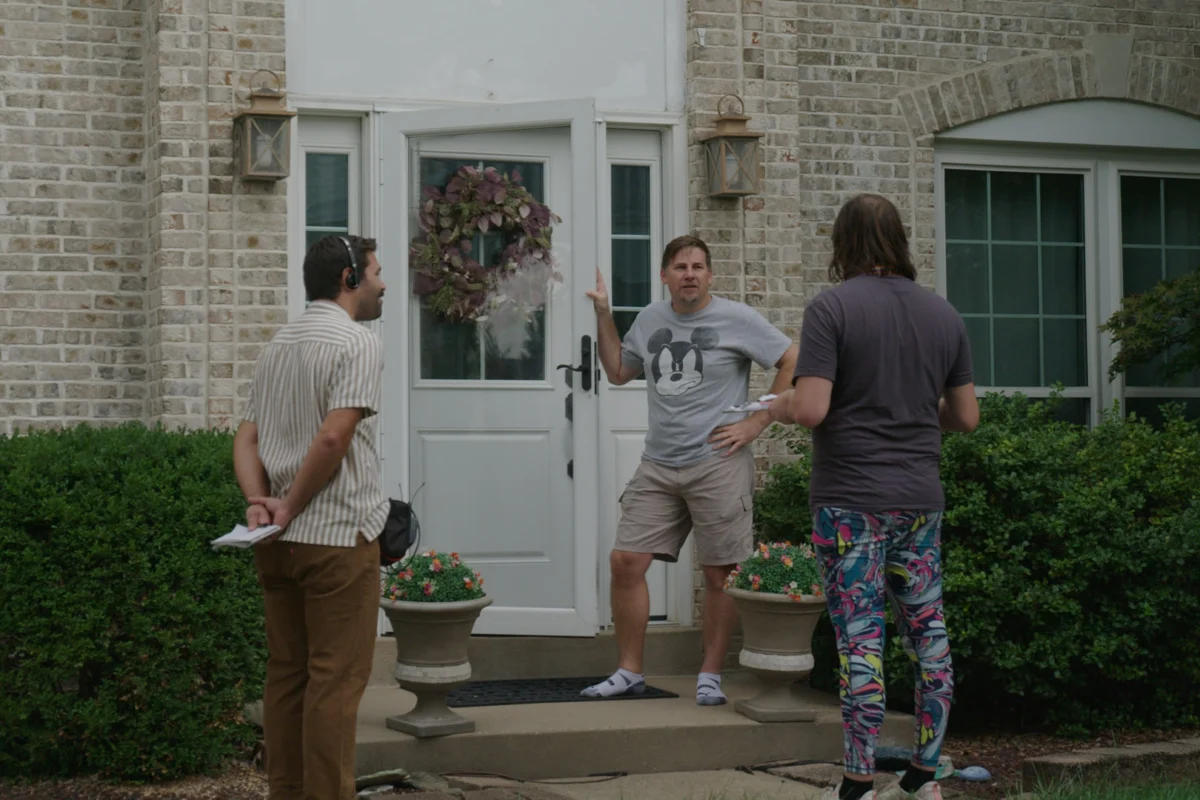
"It’s not something that I’m entirely comfortable with… And it’s not fair that we have to do this work." — Reneé Luckfield, a transgender woman and canvasser, reflects on the personal toll of advocating for transgender rights, highlighting the challenging but crucial nature of direct voter engagement.
In the heart of Missouri, a grassroots movement is employing a sophisticated and deeply personal strategy to counter legislative efforts targeting transgender healthcare. Reneé Luckfield, a 29-year-old transgender woman, exemplifies the human face of this advocacy, venturing into affluent St. Louis suburbs to engage residents directly on a contentious ballot measure. Her deliberate, non-confrontational knock—a "tap… tap-tap-tap"—is a conscious effort to disarm and invite conversation, even as she acknowledges her own vulnerability. This "deep canvassing" approach, a tactic with a proven track record of influencing public opinion on complex social issues, is being deployed by PROMO Missouri with the ambitious goal of educating 100,000 households before the upcoming election. The initiative targets a proposed constitutional amendment that seeks to ban gender-transition surgeries, hormone therapies, and puberty blockers for minors, a measure intricately linked with a broader effort to reinstate a near-total ban on abortion in the state.
The political landscape of Missouri, much like several other states, has become a battleground for issues surrounding transgender rights. This year, voters in at least five states will grapple with measures that could significantly restrict or define the scope of transgender healthcare and participation in youth sports. In Missouri, the proposed amendment is particularly significant as it aims to codify prohibitions on gender-affirming care for minors, a move that follows legislative action in 2023 that already restricted access to these treatments. This proposed amendment is part of a larger constitutional amendment that also seeks to reinstate a near-total ban on abortion, creating a complex ballot question that intertwines two highly debated social issues.
The deep canvassing strategy employed by PROMO Missouri is rooted in extensive research and a history of success in shifting public perspectives. This method involves sustained, one-on-one conversations that move beyond superficial talking points to explore personal values and lived experiences. The organization aims to foster "transformative" dialogues, where canvassers like Luckfield aim for approximately 10,000 such conversations before Election Day, having already celebrated reaching 6,000 in early October. While the pace is intentionally slow, the focus is on quality over quantity, fostering an environment where voters feel heard and understood. This approach has been instrumental in past advocacy efforts, including a 2012 campaign that successfully overturned a ban on gay marriage in Maine and a 2021 campaign for police reform in Minnesota, demonstrating its potential to influence deeply held beliefs on sensitive topics.
The current legislative climate in Missouri is a direct consequence of a Republican-dominated legislature that has increasingly focused on restricting access to gender-affirming care for minors. In 2023, state lawmakers permanently blocked minors’ access to gender-transition surgeries and implemented a four-year moratorium on new prescriptions for puberty blockers and cross-sex hormones. This action places Missouri among a growing number of states—currently 27—that have enacted restrictions on gender-affirming care for minors within the past five years. The national political discourse has also amplified these issues, with transgender healthcare becoming a focal point in recent election cycles. For instance, during the 2024 election, President Donald Trump’s campaign and allied groups reportedly invested millions of dollars in advertising that targeted Democratic presidential nominee Kamala Harris on transgender issues, framing the debate in stark, often polarizing terms.
The interconnectedness of abortion rights and transgender healthcare is evident in Missouri’s political history. In 2023, a ballot measure to add abortion protections to the state constitution narrowly passed, with opponents arguing that its passage could potentially lead to the overturning of the state’s ban on gender-affirming care for minors. Signs at the time, such as "NO TAX PAID CHILD SEX CHANGE SURGERY," underscored the campaign’s strategy to link these issues in the minds of voters. The current proposed amendment, aiming to reinstate the abortion ban and codify restrictions on transgender healthcare for minors, is polling at a near dead heat. Recent polling indicates 43% support for the bans, 44% opposition, and 13% undecided, with a margin of error of 4.09%. While this specific poll does not differentiate between support for abortion bans and gender-affirming care bans, earlier polling from February suggested stronger public support for abortion access. This nuance is critical for deep canvassers, who are strategically targeting voters who may oppose abortion bans but are more ambivalent or open to persuasion on issues related to transgender care for minors, while avoiding those with deeply entrenched, unwavering positions on either side.
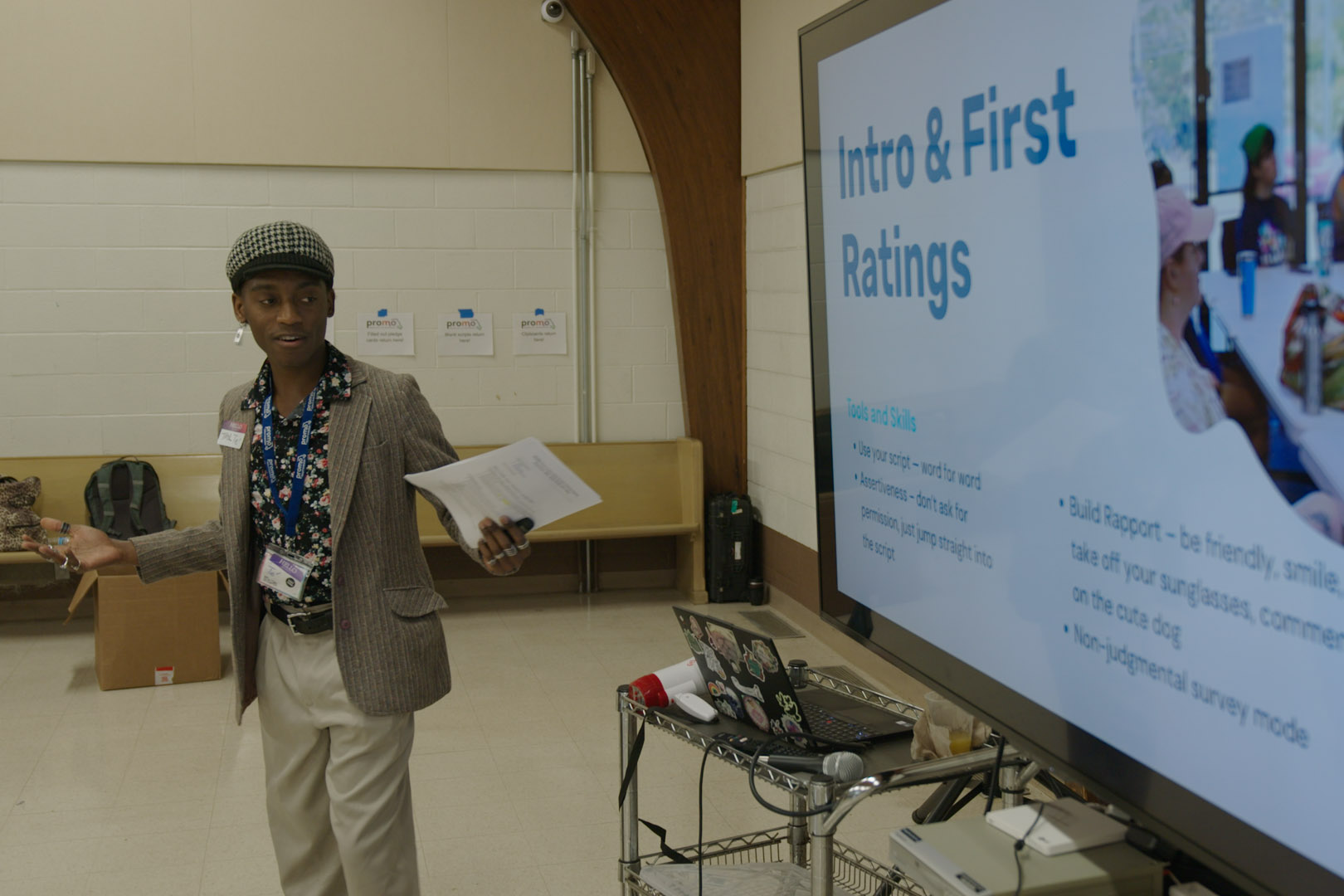
The methodology of deep canvassing involves a structured yet empathetic approach to understanding voter sentiment. Canvassers are trained to ask individuals to rate their stance on banning abortion and banning "gender-transition procedures for trans minors" on a scale of 0 to 10, with 0 representing total opposition and 10 representing total support. This language mirrors the ballot initiatives, aiming to gauge voters’ immediate reactions to the specific phrasing. Crucially, after eliciting a numerical rating, canvassers probe for the reasoning behind the chosen number, encouraging voters to articulate their values and concerns. This qualitative data is paramount, as it allows canvassers to identify common ground and address specific anxieties or misconceptions.
During an overcast Saturday in late September, in a neighborhood west of St. Louis, Reneé Luckfield initiated her door-to-door outreach. The ambient sounds of suburban life—lawnmowers and leaf blowers—accompanied her efforts. Her first encounter was with a resident who rated a 10/10 in favor of banning abortion due to her Christian faith, and also strongly supported banning gender-transition procedures for minors, citing concerns about minors’ capacity to make such life-altering decisions and questioning parental authority in these matters. Luckfield responded with empathetic validation: "I hear you. That’s everything I need from you today. Thank you very much for your time." This brief, respectful disengagement is a hallmark of deep canvassing, prioritizing the acknowledgment of the voter’s perspective over an attempt to immediately change their mind in a single interaction.
Later that morning, Luckfield engaged in a more extended conversation with Carol Parsons, who expressed opposition to both the abortion ban and the ban on gender-transition procedures for minors, rating a 0/0. Luckfield acknowledged Parsons’ supportive stance and then gently inquired about her understanding of the process minors undergo to access gender-affirming care. Parsons conveyed reservations, particularly concerning surgery, stating, "I do feel that they need to be old enough to realize that that is life-changing." Luckfield acknowledged the complexity of the issue, noting that "The phrase ‘transgender procedures’ — that’s, I think, very deliberately chosen language to stoke that fear of surgeries in particular."
This statement directly addresses a key concern often amplified in public discourse. Research indicates that gender-affirming surgeries for minors are exceedingly rare. A 2019 study analyzing insurance claims for nearly 23 million children revealed that surgeries were performed at a rate of 2.1 per 100,000 for adolescents aged 15-17, and significantly less for younger age groups, with no surgeries reported for those 12 and under. Similarly, prescription treatments like puberty blockers and hormone therapies are also uncommon, affecting fewer than 1 in 1,000 adolescents with commercial insurance, according to another study. Luckfield further elaborated to Parsons that the proposed Missouri amendment would also ban puberty blockers, explaining their reversible nature and their role as a tool, used in conjunction with counseling and social transition, to provide young people with time to mature and make informed decisions about their identities. Parsons responded positively to this explanation, stating, "Well, I definitely agree with that. I think that would be a good solution." This interaction exemplifies the potential for nuanced understanding to emerge from a guided conversation.
The final door Luckfield approached belonged to Louis Meyer, who had previously spoken with another deep canvasser and expressed some ambivalence about transgender care for minors. This time, Meyer declared his full opposition to both bans, rating a 0/0. When Luckfield inquired about the shift in his perspective, Meyer explained, "The original question was about where my morals sit and what I would do, which is a different statement than what I want the government to dictate." This insight highlights a critical distinction voters often make: the difference between personal moral beliefs and the extent to which they believe the government should legislate those beliefs for others.
In the course of an hour and a half, Luckfield knocked on 12 doors and engaged in substantive conversations with five individuals, four of whom ultimately opposed both proposed bans. While Luckfield noted that St. Louis County tends to lean more liberal than the state as a whole, she also referenced research from the Transgender Law Center, which suggests a broader societal trend: when individuals are asked about their opinions on transgender issues, they tend to respond favorably. However, when asked about their perception of their neighbors’ opinions, their responses become less certain. Luckfield summarized this phenomenon, stating, "People are more accepting than they think the people around them are." This observation underscores the power of direct engagement in challenging perceived social norms and fostering a more inclusive understanding of transgender rights and healthcare. The deep canvassing effort in Missouri, therefore, is not merely about persuading individual voters, but about reshaping the collective understanding and fostering a more informed and empathetic electorate.
