

"Instead of asking every doctor to figure out which patient will die by suicide and locking that patient up, it might be that we need to make sure there aren’t loaded guns available."
This quote from Dr. Paul Nestadt, a leading psychiatrist and researcher in suicide prevention, encapsulates a paradigm shift in how experts are approaching the complex issue of saving lives. While traditional methods focus on identifying and treating individuals at immediate risk, a growing body of evidence suggests that making lethal means less accessible is a more effective, albeit politically challenging, strategy. This approach shifts the focus from predicting individual behavior to modifying environmental factors that can turn a fleeting suicidal impulse into a tragic, irreversible act.
Dr. Paul Nestadt, a psychiatrist specializing in suicide prevention, embodies a deep and comprehensive understanding of the issue. His work spans direct patient care, extensive research into the mechanisms and drivers of suicide, and advanced graduate-level instruction on the subject. Despite this profound expertise, Nestadt openly admits a critical limitation: the inability to accurately predict which of his patients will die by suicide within a specific, short timeframe. This candid acknowledgment highlights a fundamental challenge in the field – current predictive models, with accuracy little better than chance, have seen no significant improvement over five decades. This diagnostic uncertainty, however, does not lead to despair but rather fuels Nestadt’s dedication to exploring interventions that bypass the need for precise risk prediction.
Central to this alternative strategy is the principle of restricting access to lethal means. Nestadt articulates this by suggesting a move away from the intensive, and often unreliable, task of identifying and isolating individuals at risk. Instead, he proposes a more systemic approach: "Instead of asking every doctor to figure out which patient will die by suicide and locking that patient up, it might be that we need to make sure there aren’t loaded guns available." This perspective aligns with an ongoing series by KFF Health News, which delves into suicide prevention methods that extend beyond the conventional provision of medication and therapy. While these treatments are undeniably vital, many clinicians, researchers, and bereaved individuals concur that a broader scope of interventions is necessary. However, when the discussion turns to firearms, policy solutions quickly encounter significant constitutional hurdles and ignite intense political polarization.
Research consistently underscores the efficacy of limiting access to lethal means as a highly promising avenue for suicide prevention. This can manifest in various forms, such as erecting physical barriers on buildings and bridges to prevent falls, or by regulating the quantity of medications an individual can acquire or be prescribed. Yet, among these interventions, reducing access to firearms emerges as potentially the most impactful. Dr. Nestadt, who also serves as the medical director at the Johns Hopkins Center for Suicide Prevention, asserts, "That’s the one that will save the most lives." Achieving this, however, presents the most formidable challenges.
In the United States, firearms are tragically implicated in a significant majority of suicide deaths. Preliminary federal data reveals that over 28,000 individuals died by firearm suicide in the preceding year, constituting more than half of all suicide fatalities. Even as overall suicide rates have seen a recent decline, firearm suicides have reached unprecedented highs for five consecutive years. While historically, middle-aged white men and veterans have represented the demographic most affected by high suicide rates, recent trends indicate an alarming rise in gun suicides among women and among certain segments of the Black and Latino male populations. The surge in first-time gun buyers during the COVID-19 pandemic, as highlighted by researchers, underscores the urgent need for prevention efforts that can be broadly applied.
A common misconception is that restricting access to specific lethal means is futile, based on the assumption that determined individuals will simply find an alternative method. However, empirical research refutes this notion. Studies indicate that creating barriers to one method does not typically lead to the substitution of another. Suicidal crises can arise with astonishing speed, with individuals sometimes transitioning from deciding to die to acting on that impulse in less than an hour, or even within five minutes. Any intervention that can introduce a delay, such as requiring a gun safe to be unlocked, provides a critical window for reconsideration or for external intervention.

Despite the evidence supporting lethal means restriction, the discourse surrounding firearms in the U.S. remains a deeply divisive political issue, even within the traditionally bipartisan context of suicide prevention. Proposals like background checks, waiting periods, and red flag laws often trigger entrenched opposition from opposing political factions. Gun owners and the firearms industry contend that many proposed policies infringe upon Second Amendment rights, while numerous policymakers view the issue as politically unviable.
The Trump administration, for instance, has been a strong proponent of gun owner rights. His administration implemented policies that rolled back numerous firearms regulations and rescinded a previous Surgeon General’s advisory that characterized gun violence as a public health crisis. Furthermore, grants aimed at addressing community gun violence were revoked, and federal staff working on this issue were reduced. While the White House did not directly address questions regarding the impact of these actions on gun suicide rates, a spokesperson stated President Trump’s commitment to improving national health, including mental health, and pointed to the administration’s support for developing psychedelic treatments for mental illness and its allocation of $52.5 million in grants for veteran suicide prevention.
The Nuances of Red Flag Laws
Extreme Risk Protection Orders (ERPOs), commonly known as red flag laws, have gained some legislative traction, despite facing considerable opposition. These laws, enacted in 22 states and the District of Columbia, empower judges to temporarily remove firearms from individuals when there is compelling evidence that they pose a danger to themselves or others. Although often enacted in response to mass shootings, research suggests that ERPOs are more effective in preventing suicides.
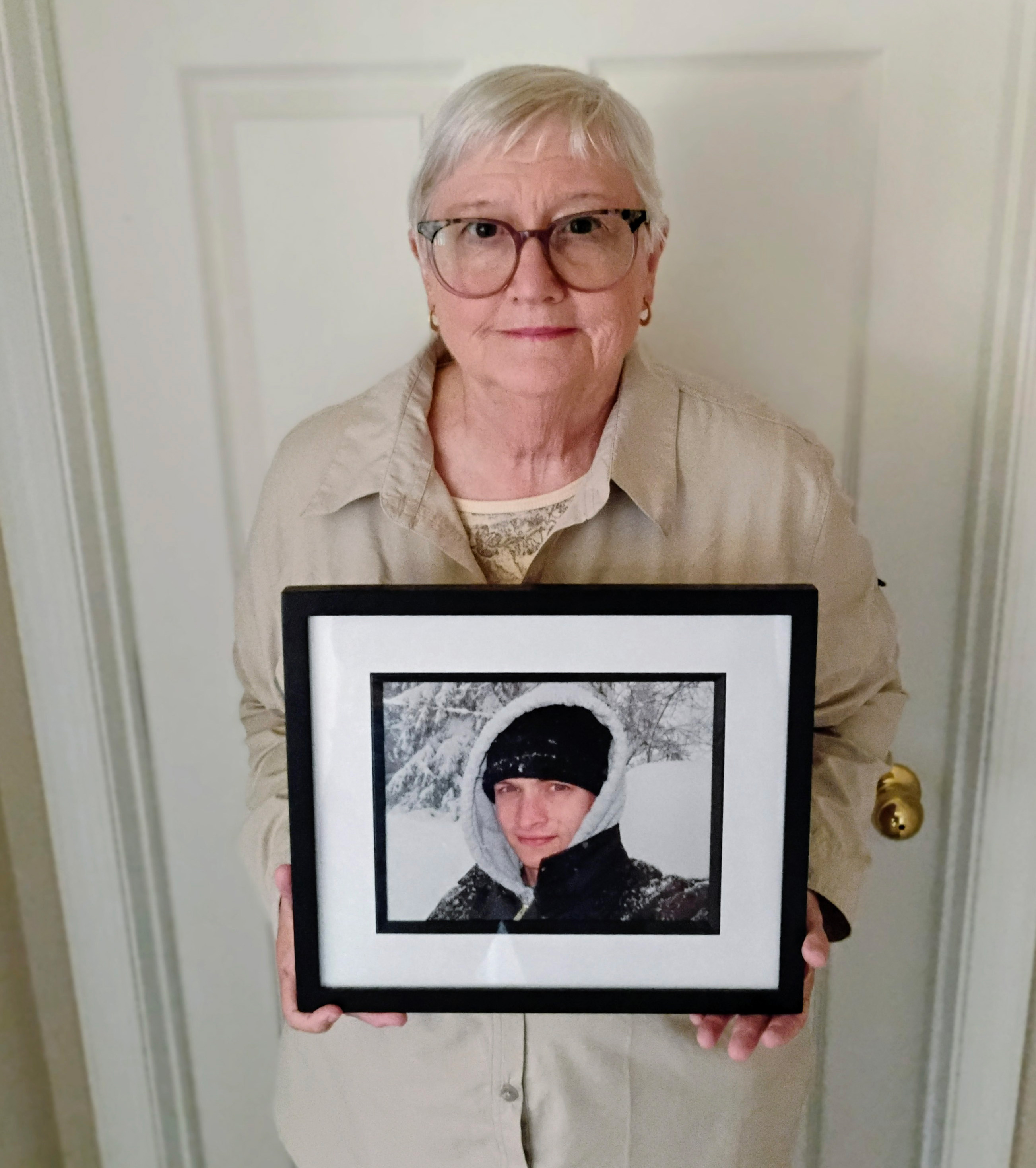
However, the efficacy of red flag laws hinges on the ability to identify individuals at risk. Dorothy Paugh’s personal history tragically illustrates this limitation. In 1965, her father, facing job loss and financial distress, died by suicide. Paugh believes that if her mother had been able to obtain an extreme risk protection order, or if her father’s friend had held onto his handgun, her father might have lived. Decades later, Paugh became a vocal advocate for a red flag law in Maryland, witnessing its passage and believing it has saved lives. Studies in other states indicate that for every 10 to 20 firearms removed under red flag laws, one suicide is averted.
Despite their potential, Paugh also recognizes the inherent limitations of red flag laws, stating, "It wouldn’t have saved my son." Her 25-year-old son, Peter, died by suicide in 2012. Unlike her father’s situation, Paugh did not perceive any warning signs for Peter, who had recently made significant life plans and purchased thoughtful gifts. She emphasizes, "I did not know that my son was suicidal. I didn’t have a clue." Even if a red flag law had been in place at the time, she would not have had a basis to utilize it.
Michael Anestis, a clinical psychologist and executive director of the New Jersey Gun Violence Research Center, notes that individuals most vulnerable to firearm suicide are often not identified as such by family members or clinicians. Research indicates that individuals who die by suicide using firearms are less likely to have sought mental health care in the past. Moreover, a significant portion of veterans and service members who die by gun suicide do not communicate their suicidal ideations to anyone in the months preceding their death. Consequently, Anestis posits that red flag laws, while a valuable first step and politically more palatable due to their focus on specific high-risk individuals, do not address the broader population of those who are silently struggling with suicidal thoughts.
Lessons Learned from Road Safety
Dr. Nestadt draws an analogy between suicide prevention and road safety, suggesting a similar systemic approach is needed. He argues, "You’re not trying to figure out who’s at risk of an accident" by testing individual reactions or cataloging minor collisions. Instead, governments have implemented measures like speed limits, mandatory seat belt laws, and safety features in vehicles. These broad public health interventions have demonstrably led to a significant decline in traffic-related fatalities.
Applying this framework to suicide prevention could involve implementing policies such as requiring permits and background checks for firearm purchases, along with mandated waiting periods before completing a transaction. One study found that the introduction of a permit-to-purchase law in Connecticut was associated with a roughly 15% decrease in gun suicide rates, whereas the repeal of such a law in Missouri coincided with a 16% increase in firearm suicide rates.
Furthermore, approximately three dozen states have enacted laws mandating the secure storage of firearms in homes where children reside. This practice has been shown to reduce youth suicides, a particularly critical concern given the alarming increases in gun suicide rates among Black youths (245%) and Latino youths (98%) since 2014. Anestis points out that laws requiring permits and safe storage can also contribute to a reduction in homicides and other gun-related injuries. These forms of violence, beyond their immediate impact, can also elevate an individual’s risk of suicide, creating a "double whammy" effect where exposure to community violence can lead to trauma and habituation to the idea of injury or death, thereby increasing the likelihood of self-harm.
Balancing Responsibility, Rights, and Life-Saving Measures
Gun owners and firearm industry associations generally express opposition to universal measures like permit requirements and waiting periods. Their preferred approach tends to favor educational campaigns focused on recognizing warning signs, fostering open conversations about mental health, and promoting safe gun storage – initiatives that place responsibility primarily on individuals. The National Shooting Sports Foundation, representing the firearms industry, has collaborated with the American Foundation for Suicide Prevention to develop informational materials for distribution in gun shops, aiming to educate firearm owners on suicide prevention.
The National Rifle Association (NRA) argues that policies focusing on firearms overlook deeper issues contributing to suicidal behavior, such as mental illness. An NRA spokesperson stated, "Suicide is a serious issue that deserves serious solutions focused on the underlying causes, not on political efforts to restrict the rights of law-abiding Americans." They contend that individuals posing a significant danger should be incapacitated rather than merely deprived of a specific means of harm.
Despite these differing viewpoints, some initiatives have successfully fostered collaboration among diverse stakeholders, including gun store owners, public health experts, and even libraries. These collaborations have led to the provision of free gun locks for secure storage, the identification of facilities for temporary firearm storage during crises, and educational programs for gun purchasers on how to identify and avoid selling firearms to individuals who may be suicidal.
These efforts offer a measure of hope and strengthen the resolve of advocates like Dorothy Paugh, who champion improved mental healthcare, open dialogue about suicide, and policies that restrict access to lethal means. While acknowledging that these policies are not a panacea, Paugh firmly believes that "it does save lives." Having experienced the profound loss of both a parent and a child to suicide, she understands the immeasurable value of even a single life saved. "If you’re that one person or that person’s family, it’s all the difference in the world," she concludes.
