
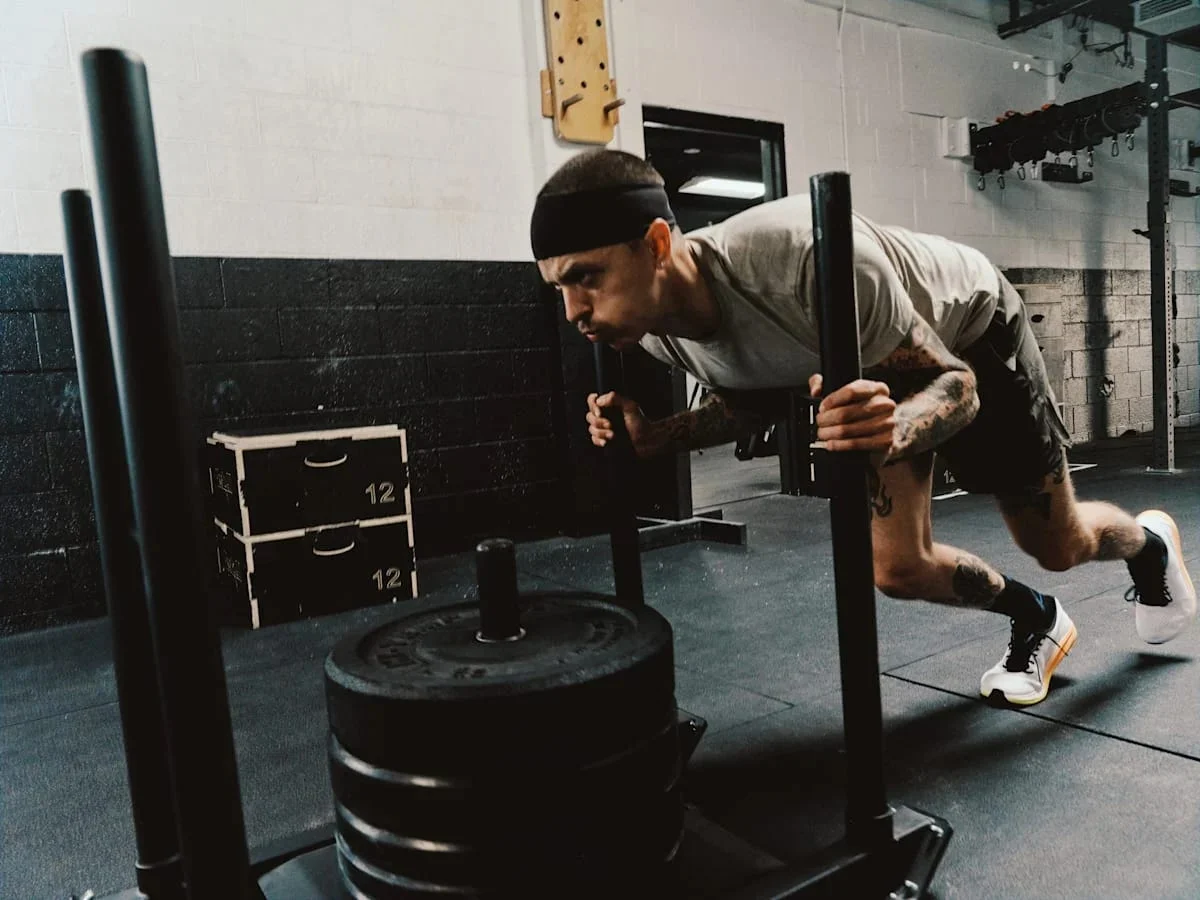
"Integrating aerobic endurance with resistance training does not compromise muscular gains; rather, it fosters a ‘hybrid’ athleticism that enhances explosive power and movement efficiency when supported by foundational foot strength."
The long-standing architectural divide between the weight room and the running track is rapidly collapsing as modern sports science embraces "concurrent training"—the practice of performing both strength and endurance exercises in a single program. While traditional "bro-science" once suggested that cardiovascular work would "burn off" hard-earned muscle, contemporary research and clinical expertise suggest that these two modalities are actually complementary. By understanding the biomechanics of the foot, the importance of explosive plyometrics, and the necessity of strategic scheduling, athletes can build a body that is as capable of a heavy deadlift as it is a high-mileage trail run.
The End of the Interference Effect
For decades, the fitness community was haunted by the "interference effect," a hypothesis suggesting that the molecular pathways for building muscle (mTOR) and those for improving aerobic capacity (AMPK) were mutually exclusive. The fear was that running would signal the body to stay lean and catabolic, effectively neutralizing the anabolic signals sent by heavy lifting. However, a comprehensive review study has challenged this dogma, finding that combining aerobic exercise with resistance training produces gains in muscle size and maximal strength nearly identical to those achieved by lifting alone.
The benefits of this dual approach are symbiotic. For the lifter, improved cardiovascular health translates to better recovery between sets and the ability to handle higher training volumes. For the runner, a stronger posterior chain and core create a more "economical" stride, meaning they use less oxygen at a given pace and are significantly less prone to overuse injuries. The goal of the modern athlete is no longer just to be "big" or "fast," but to be "robust"—capable of moving serious weight and covering significant ground with equal proficiency.
Strategic Periodization: The Art of Scheduling
The primary challenge of concurrent training is not the physiological incompatibility of the exercises, but the management of systemic fatigue. Courtney Conley, DC, a chiropractic physician specializing in foot mechanics, emphasizes that a training schedule must reflect an individual’s primary goals.
If the objective is maximal strength, the most demanding gym sessions should be prioritized when the central nervous system is fresh. Easy-paced runs should be scheduled around these lifts, ideally on separate days or at least several hours apart. Conversely, for those training for a marathon or a trail race, the "key" runs—intervals, tempos, or long runs—take precedence, with strength work serving as a supportive tool. "If your goal is strength, you can’t show up tired," Conley notes. She recommends hitting the weights two to three times a week, focusing on quality over sheer exhaustion to avoid overtraining.

Training the "Spring": The Role of Plyometrics
To truly bridge the gap between lifting and running, athletes must move beyond slow, controlled movements and "train the spring." This refers to the development of reactive quickness and the ability of the tendons and muscles to store and release elastic energy. This is achieved through plyometrics—exercises like box jumps, single-leg hops, and depth jumps.
Plyometrics improve the rate of force development (RFD), which is the speed at which an athlete can recruit muscle fibers. In the weight room, this translates to more explosive squats and snatches. On the road, it results in a more responsive gait. "You have to train the spring, train that reactive quickness," says Conley. These movements improve neuromuscular coordination, allowing the body to stabilize heavy loads faster and absorb the impact of each running stride more efficiently.
However, the timing of these explosive movements is critical. Because plyometrics place a high demand on the nervous system and require precise form to prevent injury, they should be performed early in a workout. Attempting high-impact jumps while fatigued can lead to compromised mechanics, reducing the effectiveness of the drill and increasing the risk of acute injury to the ankles and knees.
The Foot: The Body’s Secret Power Source
The most overlooked component of both a heavy squat and a fast mile is the foot. The human foot is a complex architectural marvel consisting of 26 bones and dozens of muscles, tendons, and ligaments. In the gym, the feet provide the "tripod" base—the heel, the base of the small toe, and the base of the big toe—that allows for the transfer of force from the ground through the hips. Conley describes deadlifting as a "foot action," noting that an athlete must actively press their midfoot into the ground to create a stable anchor.
In running, the demands are even more rhythmic and intense. Every stride is essentially a single-leg plyometric hop. If the intrinsic muscles of the foot are weak, the arch collapses, and the "spring" mechanism fails. Conley observes that clients with weak feet or Achilles issues often "sink" into the ground rather than rebounding off it. This energy leak not only slows the runner down but also places undue stress on the shins, knees, and lower back. To combat this, single-leg strength exercises and balance work are essential to wake up the stabilizers below the ankle.
Footwear: Function Over Fashion
The final piece of the hybrid training puzzle is equipment selection. The footwear required for a heavy back squat is diametrically opposed to what is needed for a recovery run. Many modern running shoes feature "maximalist" designs—thick stack heights of 40mm or more and aggressive "toe springs" (a curved front of the shoe). While these may feel comfortable on a long road run, they are dangerous in the weight room.
"When you’re in the gym and you want to lift heavy things, you cannot be wearing your 45-millimeter stack height cushion shoe," Conley warns. High stack heights create instability, much like trying to lift weights while standing on a mattress. For strength training, a firm, flat sole is required to allow the athlete to "feel" the ground and maintain a stable center of gravity.

A crucial element of foot health is the "toe box"—the front portion of the shoe. Most traditional athletic shoes are tapered, squeezing the toes together. This deactivates the big toe, which is the primary stabilizer of the foot. A wide toe box allows for "toe splay," which broadens the base of support and allows the foot to function naturally. This is a core philosophy behind the Altra Fit design, which prioritizes a roomy toe box and a balanced, zero-drop platform. By keeping the heel and forefoot at the same height, these shoes encourage a more natural posture and strengthen the calves and Achilles over time.
Choosing the Right Tool for the Task
For the athlete who transitions frequently between the weight room and the track, shoe selection must be intentional.
The Altra Escalante 5 is a prime example of a versatile "hybrid" shoe. With a 24mm stack height, it is lean enough to provide a stable platform for heavy lifts while offering enough responsive "EGO" cushioning for speedwork or short runs. Its zero-drop design ensures that the foot remains level, preventing the forward-leaning shift that can compromise squat mechanics in high-heeled running shoes.
For those who take their training into the wild, the Lone Peak 9 offers a different set of advantages. Trail running requires lateral stability and grip, provided here by a MaxTrac outsole. However, it maintains the "Original FootShape" fit, ensuring that even on uneven terrain, the toes can splay and the foot can react dynamically to the ground.
A Gradual Transition to Resilience
While the move toward minimalist or zero-drop footwear offers significant long-term benefits for foot strength, Conley cautions against a "zero to 100" approach. The muscles of the feet and the tissues of the Achilles tendon need time to adapt to the increased demand of a lower-drop shoe.
The integration of running and lifting is not just a trend; it is a return to a more natural, versatile form of human movement. By respecting the anatomy of the foot, scheduling workouts with intent, and choosing footwear that allows the body to function as it was designed, athletes can move past the limitations of specialization. The result is a body that is not just aesthetically muscular or cardiovascularly fit, but one that is truly capable of handling whatever challenge it encounters.
