
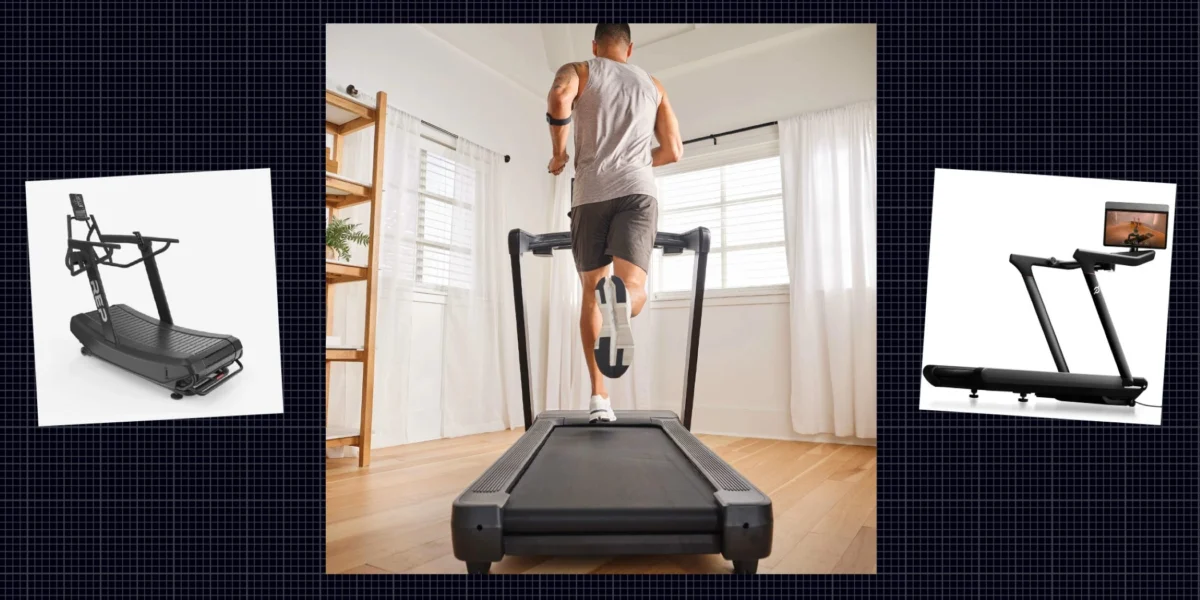
"As the home fitness landscape shifts toward integrated digital ecosystems, the choice of a treadmill has evolved from a simple hardware purchase into a long-term investment in personalized health and biometric tracking."

The contemporary treadmill market is no longer defined by simple motorized belts; it is a sophisticated arena where mechanical engineering meets immersive software. For the modern consumer, selecting a machine requires a nuanced understanding of how motor power, deck cushioning, and digital connectivity align with specific training goals—whether those involve high-intensity interval training, marathon preparation, or low-impact recovery. As home gym equipment becomes increasingly specialized, the distinction between "budget," "commercial-grade," and "manual-athletic" machines has become the primary framework for making an informed investment in long-term cardiovascular health.
The Evolution of the All-Rounder: The NordicTrack Commercial 1750
For years, the NordicTrack Commercial 1750 has served as the benchmark for the mid-range home treadmill market. Its enduring popularity among fitness professionals and enthusiasts is rooted in its ability to balance high-end features with a price point that remains accessible for serious home users. The latest iteration of the 1750 emphasizes the importance of versatility, offering both incline and decline capabilities—a feature often reserved for significantly more expensive commercial units.

The inclusion of a -3% decline to 12% incline range allows runners to simulate real-world topography, which is essential for eccentric muscle loading and preparing for outdoor races. Mechanically, the 1750 is powered by a 3.5 Continuous Horsepower (CHP) motor. In the world of treadmill engineering, CHP is a critical metric; unlike peak horsepower, CHP indicates the motor’s ability to maintain a consistent output over long durations without overheating. This makes the 1750 particularly suitable for household environments where multiple users may be utilizing the machine back-to-back.
Furthermore, the integration of the iFIT platform through a 14-inch Tilt & Pivot HD touchscreen represents the industry’s shift toward "automated coaching." The software can automatically adjust the treadmill’s speed and incline in real-time based on the trainer’s instructions or the terrain of a filmed global route. While the machine is a "tank" in terms of durability, users must consider the spatial trade-off, as its 310-pound frame and 80-inch length require a dedicated footprint.

Challenging the Budget Paradigm: The XTERRA TR75 Sport Series
Historically, the "budget" treadmill category was synonymous with flimsy frames and underpowered motors. However, machines like the XTERRA TR75 Sport Series are redefining the value proposition. Priced near the $1,000 mark, the TR75 manages to offer a 350-pound user weight capacity—a figure that actually surpasses many premium models. This high weight capacity is often a silent indicator of frame rigidity and the quality of the internal bearings.
The TR75 is designed for the "space-conscious" athlete. Its "Lift Assist and Slow Deploy" mechanism utilizes hydraulic shocks to make folding and unfolding the machine a safe, one-person task. While it lacks the massive, high-definition touchscreens of its competitors, it provides a 6.5-inch LCD for basic metrics and Bluetooth connectivity for third-party apps. This "BYOD" (Bring Your Own Device) approach allows users to access premium content on a tablet without being locked into a specific manufacturer’s subscription ecosystem. For the runner who prioritizes mechanical reliability and quiet operation over integrated entertainment, the TR75 represents a high-efficiency choice.

The Rise of the Manual Curve: REP Fitness Strive Series
One of the most significant shifts in professional athletic training has been the adoption of the curved, manual treadmill. The REP Fitness Strive Curved Treadmill represents this category’s entry into the high-end home market. Unlike motorized treadmills, curved machines are powered entirely by the user’s kinetic energy. This design forces the runner to utilize a more ergonomic, mid-foot or forefoot strike, which can reduce joint impact and increase caloric burn by up to 30% compared to flat-belt running.
The Strive Series is a study in industrial durability. With a 400-pound weight capacity and no motor to burn out or electronics to glitch, it is built for a lifetime of use. However, the manual nature of the machine means there are no preset speeds or "easy" modes; the machine only moves when the runner moves. This makes it an exceptional tool for sprint intervals and metabolic conditioning. The trade-off for this "bombproof" construction is its 418-pound weight and lack of folding capability. It is a piece of equipment that demands a permanent station in a garage or basement gym, but it offers a level of raw performance that motorized units cannot replicate.

Immersive Ecosystems: The Peloton Tread and NordicTrack T10
For many users, the primary barrier to treadmill consistency is boredom. This has led to the rise of the "connected fitness" category, led by the Peloton Tread. The Peloton experience is built around its 24-inch HD touchscreen and its world-class live studio content. The hardware itself is impressive—featuring a 12.5 MPH max speed and a swivel screen for "off-tread" strength training—but the real product is the community. The "Tread Lock" safety feature and the intuitive control knobs on the side rails demonstrate a focus on user experience (UX) that mimics high-end automotive design.
In a similar vein, the NordicTrack T10 offers a gateway into the iFIT ecosystem at a more aggressive price point than the Commercial 1750. By utilizing a slightly smaller 10-inch screen and a 3.0 CHP motor, the T10 provides the same interactive "auto-adjust" technology in a more compact frame. It retains the 60-inch belt length—the gold standard for tall runners with long strides—ensuring that the "budget-friendly" price does not result in a cramped running experience.

The Powerhouse Interval Machine: Bowflex Treadmill 10
Serious interval training requires a machine that can transition between speeds and inclines rapidly and safely. The Bowflex Treadmill 10 is engineered specifically for this high-intensity use. Its standout feature is a 15% incline range, which is significantly steeper than the 12% industry standard. Walking or running at a 15% grade targets the glutes and hamstrings with an intensity that mimics mountain hiking, providing a high-output workout even at lower speeds.
The Treadmill 10 is a heavy-duty contender, weighing 323 pounds and featuring a 22-inch wide deck. This extra width is crucial for safety during high-speed sprints, where lateral movement is more likely. Bowflex also addresses a common industry criticism by offering a 15-year frame warranty, signaling a high level of confidence in their welding and steel quality. While it is a "spatially demanding" machine, its ease of assembly and robust build make it a favorite for those who view their treadmill as the centerpiece of their training regimen.

Technical Implications and Maintenance
When investing in home cardio equipment, the consumer must look beyond the initial purchase price to the "Total Cost of Ownership." This includes the cost of monthly software subscriptions (like iFIT or Peloton), which are often required to unlock the machine’s full potential. Furthermore, maintenance is a critical factor in longevity. High-performance treadmills require regular deck lubrication and belt tension adjustments to prevent motor strain.
The industry trend toward higher weight capacities (300lbs to 400lbs) is a positive development for equipment lifespan. A higher capacity generally indicates larger rollers; larger rollers have more surface area, which reduces belt tension and extends the life of both the belt and the motor. As home treadmills continue to integrate more complex electronics, the quality of the warranty—specifically on the motor and frame—remains the most reliable indicator of a manufacturer’s commitment to quality.
In conclusion, the current treadmill market offers a solution for every demographic, from the space-saving minimalist to the data-driven marathoner. By understanding the mechanical nuances of CHP, deck geometry, and software ecosystems, fitness enthusiasts can select a machine that not only meets their current physical needs but also supports their long-term health trajectory.
