
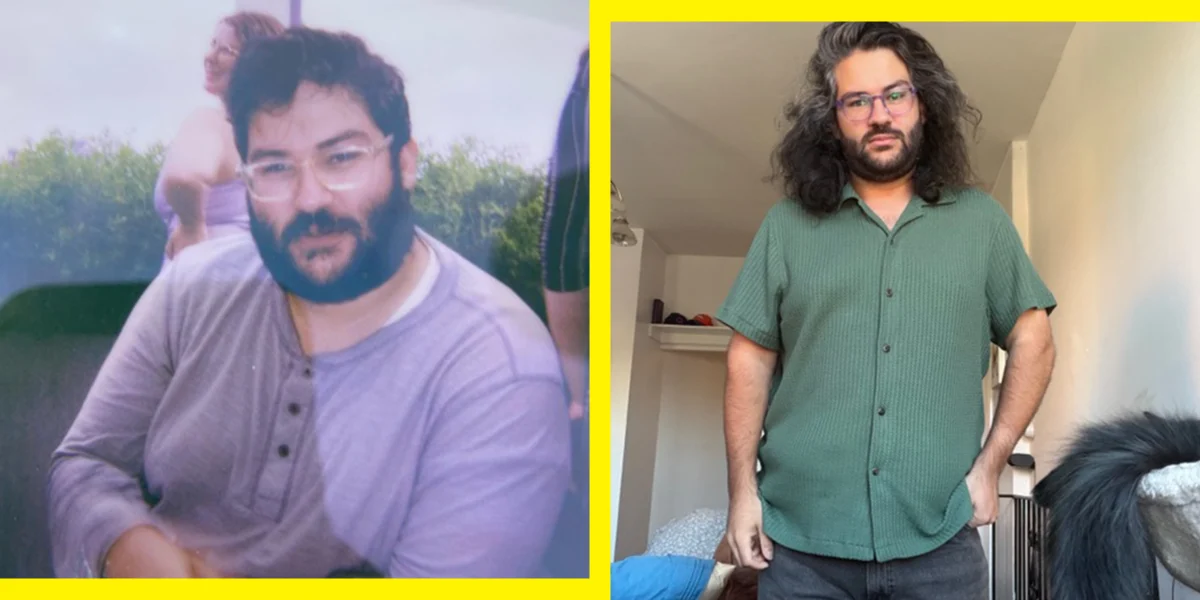
"True transformation occurs when we stop viewing weight loss as a temporary restriction and start treating it as a profound evolution of self, rooted in accountability and emotional honesty."
Mike Armory’s journey from a sedentary, 321-pound therapist to a dedicated cyclist and health advocate is a powerful testament to the necessity of aligning mental health with physical action. For years, Armory navigated the professional paradox of guiding others through psychological growth while remaining trapped in a cycle of emotional eating and physical decline. His story underscores a critical health reality: that sustainable weight loss is rarely about a specific diet, but rather about dismantling lifelong coping mechanisms and replacing them with a structured, "budgeted" approach to nutrition and a community-driven commitment to movement.
The Psychological Foundations of Obesity
For many, the struggle with weight does not begin in the kitchen, but in the complex emotional landscapes of childhood. Mike Armory, now 34, traces the origins of his weight gain to a period of significant domestic upheaval. Following his mother’s remarriage and a move to New Jersey, Armory found himself caught in the crosscurrents of family tension between his mother and his biological father. As a child, these stressors manifested as depressive symptoms—a diagnosis he can now recognize with the clarity of his professional training as a therapist.
In the absence of formal guidance on nutrition or fitness, food became an easily accessible emotional salve. The dopamine response triggered by high-calorie snacks and second helpings at dinner provided a temporary reprieve from the anxieties of a new school and a fractured family life. This habit was further reinforced by a sedentary lifestyle dominated by video games, which offered both an escape and a sense of identity. By the time Armory reached adulthood, the link between emotional distress and caloric consumption was deeply entrenched. He notes that while he occasionally participated in sports, he fell victim to the common misconception that physical activity can compensate for a poor diet. In reality, the physiological impact of "mindless munching" and high-volume fast-food consumption—often fueled by boredom or low mood—created a caloric surplus that no amount of casual exercise could erase.
The Hypocrisy of the Healer
As Armory transitioned into his career as a therapist, a profound sense of cognitive dissonance began to take hold. Professionally, he was tasked with holding patients accountable, encouraging them to confront their shadows and make difficult changes for the sake of their well-being. Personally, however, he was avoiding his own health crisis. This sense of being a "hypocrite" created a secondary layer of psychological burden.
By age 31, the physical consequences of his lifestyle became impossible to ignore. At a peak weight of 321.6 pounds, Armory’s body began to fail in systemic ways. He suffered from chronic foot injuries that left him bedbound for weeks, a devastating blow to both his physical autonomy and his mental state. Furthermore, he was diagnosed with sleep apnea, a condition where the airway becomes repeatedly blocked during sleep, necessitating the use of a CPAP (Continuous Positive Airway Pressure) machine. Facing the reality of a deteriorating quality of life at an age when he should have been at his physical prime, Armory realized that his "emotional salve" was now a life-threatening liability.
From Fad Diets to Caloric Budgeting
Armory’s path to success was paved by the lessons learned from previous failures. Like many, he had once found short-term success with the ketogenic diet, losing 50 pounds before inevitably regaining the weight. This "yo-yo" effect is common with restrictive diets that do not address the underlying behavior or provide a sustainable framework for long-term living.
To ensure this attempt was different, Armory adopted a "calorie budgeting" mindset. He moved away from the binary of "good" and "bad" foods, focusing instead on the quantitative reality of energy balance. By using a calorie calculator, he determined his Total Daily Energy Expenditure (TDEE) and set a realistic goal of losing one pound per week. This mathematical approach removed the emotional weight of eating; he viewed his daily caloric intake much like a financial ledger. If he "overspent" on one day, he would adjust his "spending" the next.

Crucially, Armory began to educate himself on macronutrients—proteins, carbohydrates, and fats—and how they affected his satiety and energy levels. He transitioned from a diet of processed delivery meals, which often exceeded 4,000 calories a day, to a regimen of nutrient-dense whole foods like grilled chicken, rice, and vegetables. To manage his sweet tooth without breaking his "budget," he utilized low-calorie alternatives, zero-calorie sodas, and sugar-free sports drinks. This shift was not about deprivation, but about optimization—choosing foods that made his body feel functional rather than sluggish.
The Power of Incremental Movement and Community
While nutrition was the cornerstone of his weight loss, movement became the catalyst for his mental recovery. Armory began with a simple, low-impact goal: walking. When his foot injuries healed sufficiently, he started with 4,000 steps a day, gradually increasing that figure over two and a half years to consistently exceed 10,000 steps.
To maintain motivation, he turned his walks into a form of local exploration. Living in Greenpoint, Brooklyn, for nearly a decade, he realized he had remained largely disconnected from his own neighborhood. Walking allowed him to engage with his community, turning a solitary exercise into a social and geographical discovery. This habit did more than burn calories; it provided the mental "headspace" necessary to maintain his commitment to his goals.
In an age of digital connection, Armory also leveraged social media as a tool for accountability. He began posting weekly updates on Instagram, but rather than curate a "perfect" image of success, he chose radical honesty. He shared his plateaus, his setbacks, and the days when the "budget" went out the window. This transparency fostered a supportive digital community. The feedback he received—knowing that others were rooting for him—provided a powerful psychological incentive to persist during the difficult middle phases of his journey.
Results and the Road Ahead
The results of Armory’s disciplined approach are stark. Between October 2023 and February 2026, he successfully lost 72.7 pounds, bringing his weight down to 248.9 pounds. While he experienced a minor setback in late 2024 due to stressful life events—an occupational hazard for someone prone to emotional eating—his new framework allowed him to course-correct rather than spiral.
Today, Armory describes his life as fundamentally transformed. His energy levels have surged, his mood has stabilized, and the "hypocrisy" he once felt has been replaced by a sense of hard-won integrity. He is no longer just a therapist who talks about change; he is a therapist who has lived it.
His goals have now shifted from weight loss to athletic performance. He has developed a passion for cycling and has set an ambitious target for 2026: a 100-mile ride from New York City to Philadelphia to attend a Phillies game. He also plans to incorporate weightlifting to improve his body composition and functional strength. His ultimate target is to reach 221.6 pounds, marking a total loss of 100 pounds, though he maintains a level of contentment with his current progress that prevents the goal from becoming an obsession.
Conclusion: A Blueprint for Sustainable Change
Mike Armory’s advice to others is rooted in the empathy of someone who has been in the "fight of his life." He emphasizes three pillars for success:
- Incorporate Accountability: Whether through social media, a friend, or a professional, involve others in the process. Isolation is the enemy of consistency.
- Focus on Evolution, Not Erasure: Weight loss should be viewed as evolving into a new version of oneself, not a temporary punishment for the old version.
- Self-Compassion: The journey is inherently difficult. Treating oneself with kindness during setbacks is the only way to ensure those setbacks don’t become permanent stops.
By treating weight loss as a long-term lifestyle adjustment rather than a quick fix, and by addressing the psychological roots of his habits, Armory has secured more than just a lower number on the scale—he has reclaimed his health, his career, and his future.
