
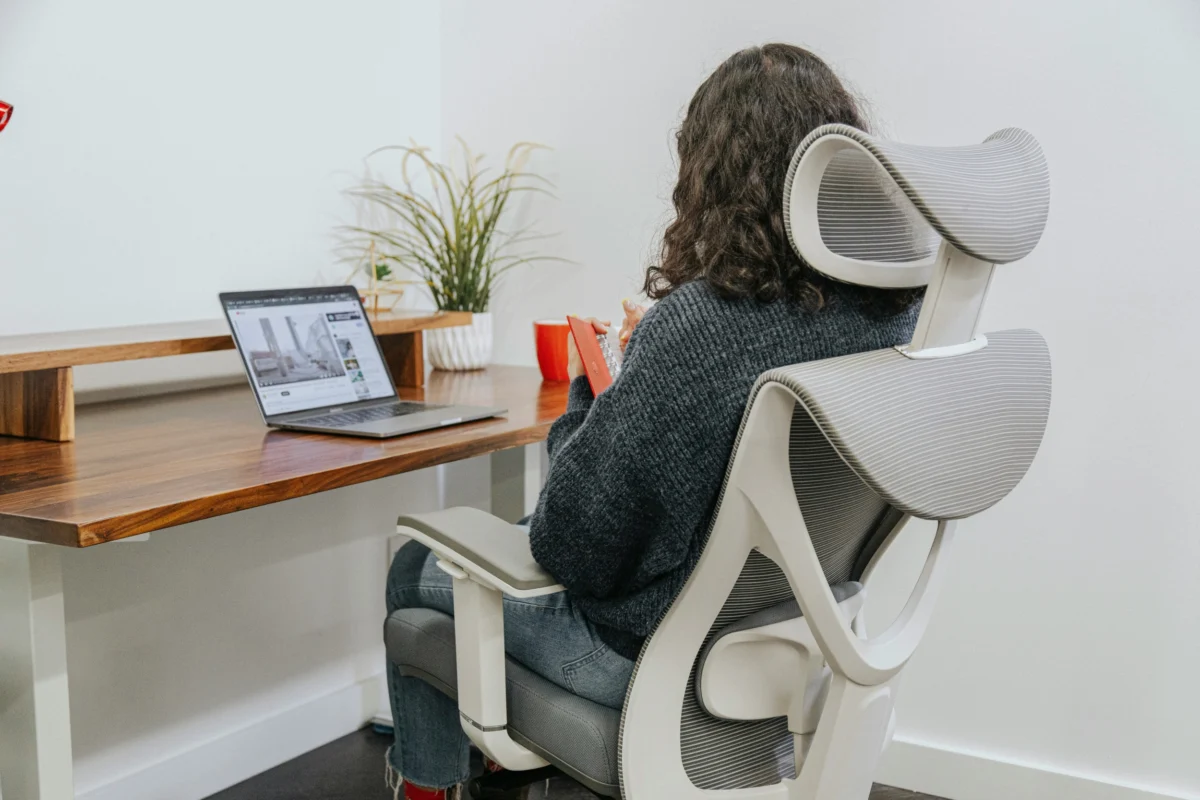
"A critical flaw in approximately 16,000 Branch ergonomic chairs could lead to unexpected falls, prompting a widespread recall and a call for immediate user verification."
Approximately 16,000 height-adjustable ergonomic office chairs, widely available through major online retailers, have been subject to a recall due to a potentially dangerous manufacturing defect. The backrest of these chairs, imported by Bureau Office, Inc. (doing business as Branch), has been reported to detach unexpectedly while a user is seated. While no injuries have been reported to date, the company has received 11 distinct reports of this critical failure, underscoring the urgent need for consumers to verify their chair’s eligibility for the recall and to take immediate precautionary measures. The remedy offered is a free repair kit, rather than a refund, which includes a replacement backrest, necessary hardware, and installation instructions. Branch is actively contacting known purchasers, but the company stresses that the recall is more narrowly defined than the sales window might suggest, requiring a two-step verification process to identify affected units.
Identifying Affected Chairs: A Detailed Examination
The recall specifically targets Branch ergonomic chairs manufactured between September 10, 2025, and April 22, 2026. This seven-month production window is crucial because it encompasses chairs where the backrest anchors were incorrectly installed during the manufacturing process in Thailand. Units produced outside this period or those with correctly manufactured anchors are not included in the recall. The affected chairs fall under sixteen distinct Stock Keeping Units (SKUs), representing eight different color combinations, each available in both a standard and a knock-down base configuration. The color palettes include black on black, pebble on white, black on white, sand on white, graphite on white, light blue on white, poppy on white, and baltic on white. The SKUs themselves are not sequential but are found within the 11-01-00 series, specifically numbers 40, 43, 50, 51, 53, 54, 55, and 56. These SKUs are further distinguished by a V5 suffix for standard bases and a V6 suffix for knock-down bases, and are typically located on the side of the product packaging.
The chairs were available for purchase online from approximately December 2025 through July 2026, with prices ranging from $320 to $350. Consumers could find them on BranchFurniture.com, Amazon.com, WestElm.com, ContainerStore.com, OfficeDepot.com, and other online platforms. Beyond the United States, an additional 180 units were sold in Canada, where Health Canada has also issued a corresponding recall notice for the same fall hazard.
The Crucial Label: Verifying Your Chair’s Status
Distinguishing an affected chair from a safe one requires more than just the SKU found on the packaging. The definitive factor lies in the manufacturing date, which is printed on a label located directly underneath the seat cushion. Given that most consumers may no longer retain the original product packaging months after purchase, a quick inspection of this label is the most reliable method for verification. This process involves simply tipping the chair to access the underside of the seat, a task that takes approximately one minute.
The U.S. Consumer Product Safety Commission (CPSC) is providing consumers with detailed instructions on how to determine if their specific chair is part of the recall. Once identified, owners will be prompted to submit photographic evidence of the manufacturer’s label and the detached backrest to qualify for the free repair kit. Claims can be initiated through Branch’s dedicated recall webpage or by contacting their customer support via email. This two-step verification process, while thorough, means the resolution may take longer than a simple product return. It is therefore imperative that owners do not wait for direct communication from the company before checking their chair’s label, especially as Branch’s ability to contact all purchasers is limited to records held, and chairs purchased through third-party retailers or received as gifts might not be accounted for.
The Mechanics of the Hazard: Understanding the Fall Risk
A backrest that detaches while a person is leaning against it can result in a sudden and unexpected backward fall from a seated height. This type of incident typically occurs without warning, leaving the individual with little to no time to react or brace themselves. The consequences of such a fall can be significant and are well-documented in emergency department settings. Common injuries include fractures of the wrist and forearm, often sustained when attempting to break the fall with outstretched arms. Falls can also lead to trauma to the tailbone and lower back upon impact with the floor. Furthermore, head injuries are a serious concern, particularly if the fall causes the individual to strike their head against furniture edges, walls, or other hard surfaces.
The severity of these injuries can be exacerbated by pre-existing health conditions. Older adults, individuals with osteoporosis or diminished bone density, those taking anticoagulant medications, and individuals with impaired balance or a history of falls are at a considerably higher risk of suffering more serious outcomes from the same fall. Pregnancy also introduces additional risk factors, potentially increasing the severity of consequences for both the mother and the fetus.
Post-Fall Protocols: When to Seek Medical Attention
Immediate medical evaluation is strongly recommended for anyone who falls and strikes their head, especially if they are taking blood-thinning medication. Signs that warrant urgent medical attention include any loss of consciousness, confusion, repeated episodes of vomiting, a progressively worsening headache, or difficulty using a limb. These symptoms should not be dismissed or monitored at home; prompt assessment by a healthcare professional is crucial to rule out serious internal injuries, such as a concussion or intracranial bleeding.
Home Office Safety: A Gap in Traditional Workplace Oversight
While an office chair recall might initially seem like a minor consumer news item, the distribution pattern of these recalled chairs suggests a broader implication for home offices. The direct-to-consumer and general merchandise channels through which these chairs were sold indicate their widespread use not only in traditional workplaces but also in home offices and personal study spaces. This distinction is significant because the safety protocols that govern corporate environments do not typically extend to private residences.
In a corporate setting, a chair failure would trigger an incident report, leading to a safety review and likely the immediate removal of all identical units from use within the building. However, a similar failure in a home office lacks this formal structure. There is no dedicated facilities team, no established reporting channel, and no mechanism for colleagues to observe and identify a potentially hazardous product being used elsewhere in the organization. Consequently, the individual user becomes the sole proprietor of their safety, responsible for identifying the defect, reporting it, and taking the necessary steps to mitigate risk.
The practical implication is that consumers must be proactive in ensuring their safety. This includes diligently checking for recall information, filing claims promptly, and temporarily ceasing the use of recalled products. Households that rely on a functional chair while awaiting a repair kit should consider temporary substitutions, such as dining chairs. While less comfortable and adjustable than ergonomic office chairs, their backrests are not subject to the same recall mechanism, offering a safer alternative during the interim period.
Reporting Suspected Hazards: Empowering Consumer Safety
Any user whose Branch chair exhibits symptoms of a potential defect, such as a wobbly, shifting, or noisy backrest under load, should immediately discontinue use, irrespective of the chair’s manufacture date. Such issues should be promptly reported through the SaferProducts.gov portal. Consumer reports are a vital input for the CPSC, often serving as the catalyst for investigations that lead to product recalls and enhanced safety standards. The 11 reports received by Branch were sufficient to trigger this recall, highlighting the impact of individual consumer vigilance. Consumers can find information on other ongoing recalls and safety alerts by visiting the CPSC’s dedicated recalls index.
Frequently Asked Questions
Which chairs are subject to recall?
The recall applies to Branch height-adjustable ergonomic chairs manufactured between September 10, 2025, and April 22, 2026. This encompasses 16 specific SKUs across eight color variations, provided their backrest anchors were installed incorrectly during manufacturing.
How can I determine if my chair is affected?
Verify the manufacturing date printed on the label located underneath the seat cushion. The SKU, which is also a key identifier, can be found on the side of the original product packaging.
Where were these chairs sold, and during what period?
The chairs were sold online through BranchFurniture.com, Amazon.com, WestElm.com, ContainerStore.com, OfficeDepot.com, and other websites, from approximately December 2025 through July 2026. They retailed for between $320 and $350.
Is a refund offered as part of the recall?
No, a refund is not offered. The remedy consists of a free repair kit that includes a replacement backrest, three bolts, an Allen key, and assembly instructions.
Have any injuries been reported as a result of this defect?
While the company has received 11 reports of backrests detaching, no injuries have been reported to date.
What should I do while waiting for the repair kit?
It is strongly advised to stop using the recalled chair and use an alternative seating option. If the backrest already exhibits signs of instability, such as wobbling or shifting under pressure, discontinue use immediately.
When should medical attention be sought following a fall from a chair?
Urgent medical evaluation is necessary for anyone who experiences loss of consciousness, confusion, persistent vomiting, a worsening headache, or difficulty using a limb after a fall, particularly if they are on anticoagulant medication.
