
"The most unexpected number in the first detailed clinical account of a Bundibugyo virus patient is not the survival. It is where the virus was concentrated, with throat swabs revealing significantly higher viral RNA loads than plasma."
This groundbreaking clinical report details the case of a healthcare worker infected with the Bundibugyo virus, a less common but dangerous species of ebolavirus. The study’s most striking finding is the unexpectedly high concentration of viral RNA detected in the patient’s throat on day five of illness, a pattern that diverges from previous observations in Ebola virus disease. This discovery has significant implications for understanding transmission routes and underscores the need for enhanced protective measures, particularly during procedures involving the upper respiratory tract. The findings, published in Nature Medicine by a multinational research team, offer crucial insights into this enigmatic virus and its behavior within the human body.
The first comprehensive clinical account of a Bundibugyo virus patient has unveiled a surprising characteristic: the virus’s concentration within the body. Far from the expected high levels in the bloodstream, the most unexpected finding was the significantly higher viral RNA load detected in an oropharyngeal swab compared to plasma on day five of illness. This American healthcare worker, who had been serving in the Democratic Republic of the Congo, exhibited approximately 9 x 10^9 copies of viral RNA per milliliter in his throat, starkly contrasting with the roughly 7 x 10^7 copies per milliliter found in his plasma. This more than tenfold difference points towards the oropharynx, rather than the bloodstream, as a potentially critical reservoir for the virus during the acute phase of infection.
The authors of the study, a collaborative effort involving researchers from Charité Universitätsmedizin Berlin, the CDC, the U.S. Department of State, the Robert Koch Institute, Emory University, and Congo’s Institut National de Recherche Biomédicale, explicitly highlight this divergence from established knowledge. They note that these viral concentrations across different body compartments differ from previous reports in patients with Ebola virus disease, with the "comparatively high concentrations in oropharyngeal swabs" being a particularly significant observation. This finding challenges existing paradigms and prompts a re-evaluation of how Bundibugyo virus is transmitted and managed.
The patient’s exposure history paints a picture of how insidious and difficult-to-trace viral transmission can be. Nine days prior to the onset of symptoms, the healthcare worker performed an ultrasound examination. A day later, he operated on a 14-week pregnant woman experiencing a threatened miscarriage and suspected cholecystitis. Tragically, this patient later developed severe hemorrhagic manifestations and succumbed to the illness. On the same day, he conducted a colonoscopy on a man presenting with rectal bleeding, who also died shortly thereafter. Despite adhering to standard personal protective equipment protocols for both procedures, the patient could not recall any specific high-risk exposure event. This lack of a clear transmission incident is compounded by the fact that several other healthcare workers and family caregivers subsequently developed similar hemorrhagic illnesses and also died.
The clinical presentation began with severe muscle pain and malaise. The patient, recognizing the potential for contagion, promptly entered voluntary self-isolation. The following day, he developed a fever of 38.9 degrees Celsius, even after administering acetaminophen. A pan-Ebola PCR test performed on his plasma on day two confirmed the presence of the virus. By day three, his condition had worsened to include abdominal pain, vomiting, confusion, and orthostatic symptoms, indicative of significant physiological distress.
Currently, there are no approved vaccines or specific antiviral drugs licensed for Bundibugyo virus. The two existing licensed Ebola vaccines are designed to target the Zaire species of ebolavirus. Notably, this patient had received a single dose of the rVSV-ZEBOV vaccine approximately 41 months prior to his infection, a vaccine that targets an antigenically distinct virus and thus offered no protection against Bundibugyo.
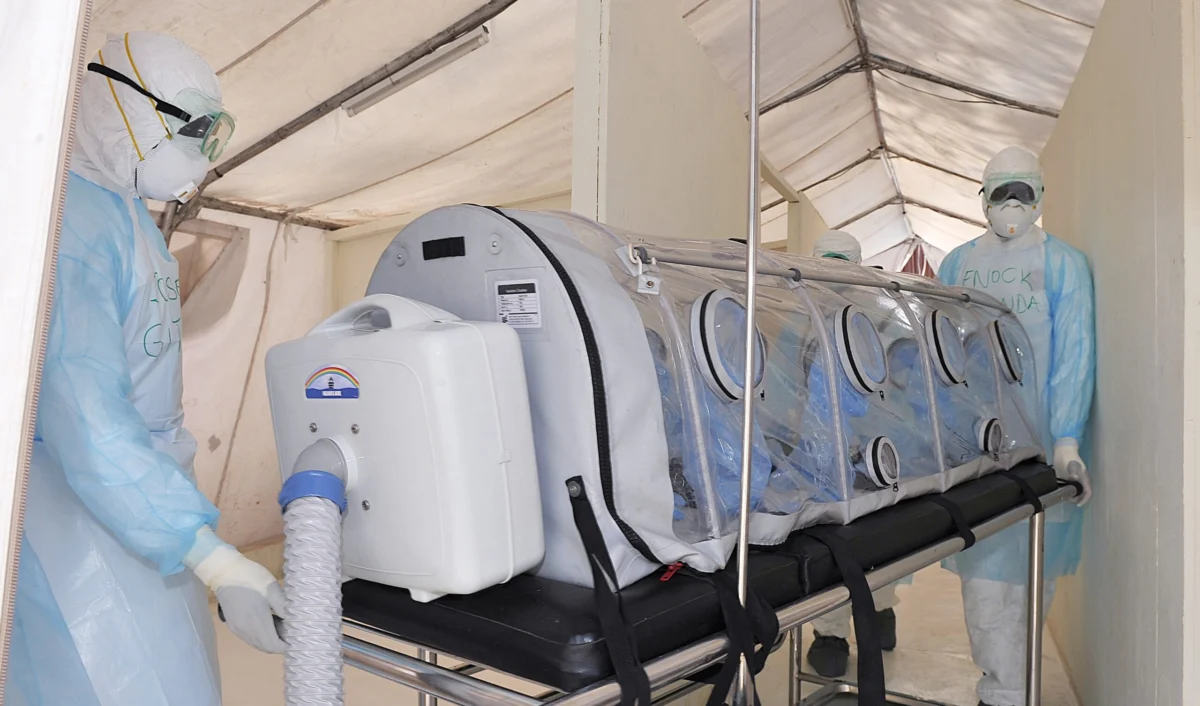
In a critical intervention, emergency access to MBP134, an investigational cocktail of two broadly neutralizing monoclonal antibodies, was initiated on day three of his illness. This access was facilitated through Mapp Biopharmaceutical, the FDA, and the Administration for Strategic Preparedness and Response. Authorization for its use under an emergency investigational new drug application was officially granted at 00:45 Central Africa Time on day four. The prescribed dosage of 50 mg per kilogram was administered that evening during a layover and crew change on the medical evacuation flight. This flight, en route to Germany, was rerouted through Bunia and Entebbe and utilized a modified Gulfstream aircraft equipped with a negative-pressure containment system to prevent airborne transmission. In addition to the experimental antibody therapy, a 200 mg loading dose of remdesivir was also administered off-label, despite the patient continuing to experience vomiting throughout the infusion.
Upon arrival at Berlin’s high-level isolation unit on day five, the patient presented with significant laboratory abnormalities, including thrombocytopenia (low platelet count), lymphopenia (low lymphocyte count), and elevated liver enzymes. The care team implemented stringent infection control measures, working in three-hour bedside shifts while clad in fully enclosed protective suits. Five of the patient’s family members, identified as high-risk contacts, were quarantined in a separate section of the isolation unit. Their management and post-exposure prophylaxis are detailed in a companion paper published concurrently, offering further insights into the broader containment efforts.
The patient’s transaminase levels continued to rise until day eight, reaching peak values of 635 and 773 units per liter, respectively. This elevation prompted a one-day pause in the administration of remdesivir before the levels began to decline. Fortunately, his bilirubin levels remained within the normal range throughout his illness. From day seven onwards, the patient became afebrile without the need for antipyretic medication, signaling a positive turn in his clinical condition.
A crucial aspect of viral clearance was observed by day 13, when viral RNA levels fell below the limit of detection in plasma, throat swabs, urine, and stool. However, the virus demonstrated remarkable persistence in semen, which still contained approximately 2.5 x 10^3 copies per milliliter on day 20. It was not until day 25 that semen samples tested negative for viral RNA. While three specialized laboratories attempted to culture live virus from throat swabs, plasma, and semen, all attempts were unsuccessful. The authors caution that the failure to culture live virus cannot be definitively attributed to the antibody treatment without pre-treatment culture data for comparison.
The patient was discharged on day 22 after symptom onset, having shown significant clinical improvement. Genetic sequencing of the virus confirmed its close genetic relationship to the current outbreak lineage, exhibiting 99.96 percent nucleotide identity. This sequencing also clearly separated it from the 2007 Ugandan and 2012 Congolese outbreaks, suggesting a novel introduction of the virus into the human population.
An encouraging finding was the patient’s own immune system’s robust response. Because the antibodies in MBP134 do not target the secreted glycoprotein, the research team was able to measure antibodies against this specific viral component. They observed rising levels of these antibodies between days five and six, alongside the emergence of virus-specific IgM and IgA. This preservation of endogenous antibody production is particularly noteworthy, as monoclonal antibody therapy in Ebola survivors has sometimes been associated with reduced humoral immune responses.
It is imperative to acknowledge the inherent limitations of this case study. As a single patient’s experience, treated with two investigational agents and intensive supportive care within a highly specialized European isolation unit, the findings cannot definitively establish the efficacy of MBP134, remdesivir, or their combination. The authors emphasize that larger clinical studies are essential to ascertain the therapeutic benefits of MBP134, the clinical benefit of which remains unknown.
The broader context of this case is crucial. It occurred against the backdrop of a massive and devastating outbreak. The Ministry of Health in the Democratic Republic of Congo declared the outbreak in Ituri Province on May 15, 2026, and the World Health Organization (WHO) designated it a public health emergency of international concern just two days later. As of August 22, 2026, the European Centre for Disease Prevention and Control (ECDC) reported 5,514 confirmed cases and 2,642 deaths in Congo, with Ituri Province bearing the brunt of the epidemic, accounting for 4,607 cases and 2,065 deaths. The WHO has characterized this as the largest Ebola outbreak ever reported in the country, and one that is expanding at an unprecedented pace, having spread across six provinces. Uganda, which experienced a small number of travel-linked cases, declared its outbreak over in late July.
The Centers for Disease Control and Prevention (CDC) has assessed the risk to the American public as low, and no cases have been confirmed on U.S. soil. Nevertheless, the CDC has issued a health advisory urging clinicians to consider Ebola virus disease in patients presenting with compatible symptoms and a recent travel history to affected areas.
Should the finding of high viral concentrations in throat swabs be corroborated in larger patient cohorts, it could have significant practical implications for the protection of healthcare workers, particularly during airway manipulations and endoscopic procedures. While this single case cannot definitively prove causation or efficacy, it powerfully directs researchers towards critical questions about viral shedding and transmission dynamics, paving the way for more targeted and effective public health strategies.
Key Questions Answered
What is Bundibugyo virus?
Bundibugyo virus is one of the orthobunyavirus species responsible for Ebola disease. It has historically caused only two previous outbreaks: one in Uganda in 2007 and another in Congo in 2012, resulting in a total of 206 confirmed cases. Currently, there are no approved vaccines or treatments specifically for Bundibugyo virus.
What was surprising about this case?
The most unexpected observation in this case was the significantly higher concentration of viral RNA found in the patient’s throat swabs compared to their plasma on day five of illness, a pattern that deviates from previously documented findings in Ebola virus disease patients.
Does this prove the treatment worked?
No, this case does not prove the efficacy of the treatments used. It involves a single patient who received two investigational or off-label agents alongside intensive supportive care. The authors stress that the clinical benefit of MBP134 remains undetermined and requires further investigation.
What is MBP134?
MBP134 is an experimental combination therapy comprising two broadly neutralizing monoclonal antibodies developed by Mapp Biopharmaceutical. In this case, it was administered at a dosage of 50 mg per kilogram under an emergency authorization granted by the FDA.
How long did the virus persist?
Viral RNA became undetectable in the patient’s blood, throat, urine, and stool by day 13. However, semen samples continued to test positive at low levels until day 20, with negative results recorded by day 25.
How large is the current outbreak?
As of data through August 22, 2026, the ECDC reported 5,514 confirmed cases and 2,642 deaths in Congo. Given the dynamic nature of outbreaks, it is advisable to consult the latest updates from the WHO and CDC for the most current figures.
