
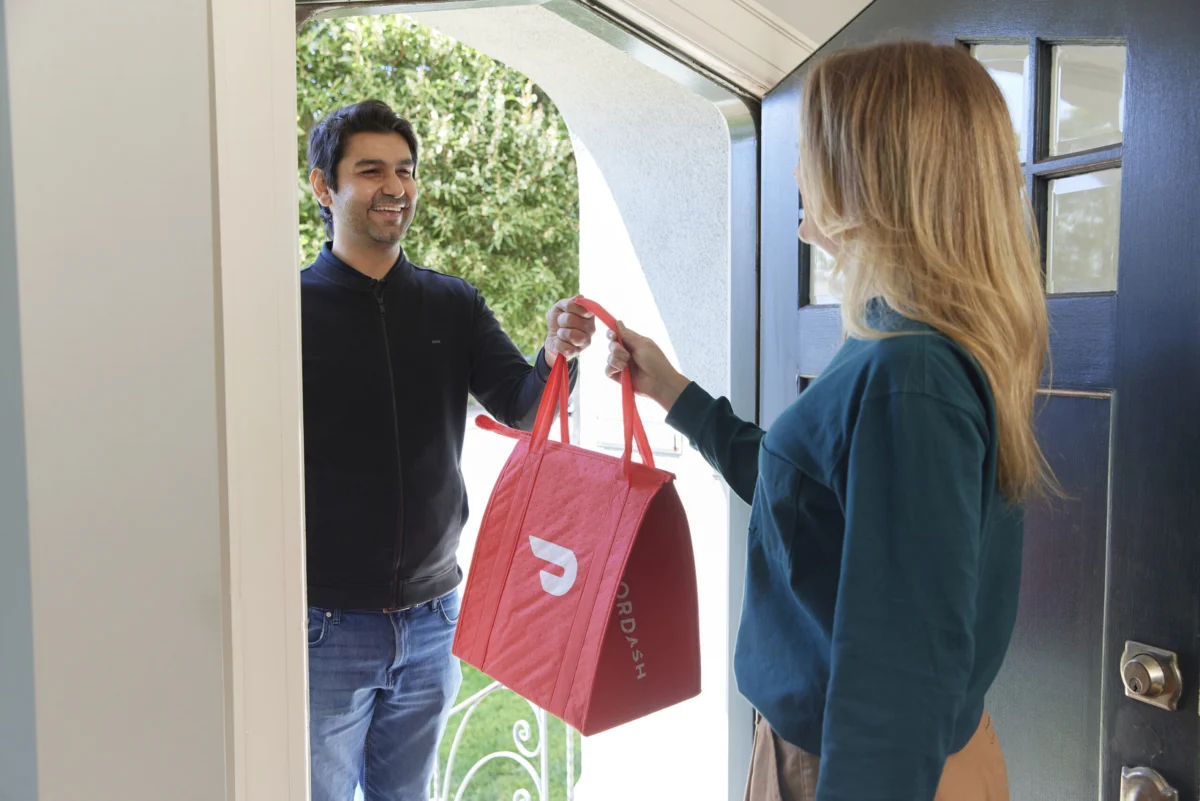
"Reports of DoorDash’s potential $17 billion acquisition of Instacart signal a significant consolidation in the grocery delivery landscape, raising questions for consumers about membership benefits, service fees, and the future of competition."
The potential acquisition of Instacart by DoorDash, reportedly valued at approximately $17 billion, represents a major development in the rapidly evolving on-demand delivery market. This move, if finalized, would bring together two of the most prominent players in the food and grocery delivery sectors, creating a significantly larger entity with a broad reach across both restaurant and retail offerings. While the deal is not yet confirmed and faces regulatory scrutiny, its implications for consumers, competitors, and the broader gig economy are substantial, prompting immediate consideration of how such a merger could reshape service offerings, pricing, and consumer choices.
DoorDash Nears $17 Billion Deal to Acquire Grocery Delivery Giant Instacart
In a move that could reshape the digital convenience landscape, DoorDash is reportedly in advanced negotiations to acquire Instacart, the leading grocery delivery platform. According to a report initially published by The Wall Street Journal and corroborated by a source speaking with Reuters, the potential deal could value Instacart at around $17 billion. As of the morning of October 28, 2026, neither company had officially announced an agreement, and sources cautioned that the transaction is not guaranteed. An agreement, however, could be imminent, with some reports suggesting it might be finalized as early as Wednesday, October 28.
For the millions of households that rely on both DoorDash and Instacart for their daily needs, the immediate impact on their current subscriptions and service usage remains unchanged. DashPass and Instacart+ memberships, along with associated fees and app functionalities, are expected to continue operating as they do today, with no specific terms disclosed regarding how the two services might eventually integrate. However, a transaction of this magnitude would invariably be subject to rigorous federal premerger review before it could be formally completed, a process that typically involves scrutiny from regulatory bodies like the Federal Trade Commission and the Department of Justice under the Hart-Scott-Rodino Act.
The ongoing discussions, however, inevitably raise practical considerations for consumers who subscribe to one or both services. Questions about whether to retain, cancel, or switch memberships are naturally surfacing. For now, the prudent course of action for consumers is to await further details. An official announcement would merely be the initial step in a process that could unfold over several months, with the final terms and regulatory approvals dictating any future changes.
Market Dynamics and Financial Implications
The reported valuation of Instacart at approximately $17 billion places it significantly above its market value of about $13 billion as of the close of trading on Friday, October 23. This valuation surge is reflected in market reactions, with Instacart’s shares reportedly rising around 8% on Monday, while DoorDash shares experienced a slight dip of approximately 6%. Earlier reports indicated that Instacart’s discussions with Uber regarding a potential acquisition are no longer active.
Neither Instacart nor DoorDash have formally commented on the acquisition rumors. Instacart’s spokesperson declined to provide a statement, and DoorDash had not responded to requests for comment at the time of reporting. Financial data highlights the scale of DoorDash’s operations, with the company posting $13.72 billion in revenue in the previous year, a substantial figure compared to Instacart’s $3.75 billion in revenue during the same period.
The potential merger is particularly significant given the substantial overlap in the grocery delivery sector. DoorDash boasts a marketplace featuring over 200,000 grocery and retail stores, including major chains like Albertsons and Kroger. Instacart, on the other hand, partners with more than 2,200 grocery store brands and approximately 100,000 individual stores on its platform. This overlap suggests that a combined entity would possess an unparalleled footprint in the grocery delivery market.
Navigating Membership Changes: DashPass and Instacart+ Users
For loyal subscribers of DashPass and Instacart+, the most pressing questions revolve around the future of their memberships. Currently, Instacart+ offers benefits such as $0 delivery fees on orders exceeding $35, reduced service fees, a 5% credit on eligible pickup orders, and a streaming benefit through Peacock. DoorDash’s DashPass provides similar perks, including $0 delivery fees and lower service fees on eligible orders that meet specific merchant subtotal minimums, applicable across a wide range of categories including restaurants, groceries, and convenience items.
If a deal is announced, consumers will be keenly interested in whether these membership programs will remain distinct, be integrated into a unified offering, or potentially lead to new combined pricing structures. None of these potential outcomes have been definitively reported, and any changes would be contingent upon the final terms of the acquisition and the outcome of regulatory reviews. While shoppers who subscribe to both services might eventually benefit from a single, streamlined membership, there is also a possibility of reduced promotional diversity if competition diminishes.
It is important to note that delivery costs extend beyond the membership fee. Service fees, potential item markups compared to in-store prices, customer tips, and order minimums all contribute to the final cost of an order, and these variables can fluctuate significantly depending on the store. A thorough comparison of recent receipts from both apps, detailing the total cost per order, offers a more comprehensive understanding of actual expenses than monthly subscription fees alone.
Competitive Landscape and the Future of Grocery Pricing
A DoorDash acquisition of Instacart would represent a significant consolidation in a market already dominated by a few major players. Data from Consumer Edge, which tracks credit and debit card spending, indicates a shift in market share across major delivery apps. DoorDash’s share of spending increased from 44% in the second quarter of 2021 to 59% in the third quarter of 2026. During the same period, Instacart’s share declined from 26% to 18%, while Uber Eats saw a modest increase from 16% to 18%. These figures encompass all delivery categories, not exclusively groceries.
Michael Gunther, senior vice president of research and market intelligence at Consumer Edge, noted that this trend is partly attributed to DoorDash and Uber Eats expanding their services into grocery and other retail sectors, thereby "increasingly competing in areas historically associated with Instacart." A merged DoorDash-Instacart entity would likely emerge as a formidable competitor to retail giants like Walmart and Amazon in the grocery delivery space.
This potential consolidation is not an isolated event in the delivery industry. For DoorDash, this would mark its third major acquisition within a two-year span, following its previous purchases of the UK-based Deliveroo and the restaurant reservation platform SevenRooms. Similarly, Uber is pursuing its own strategic acquisitions, including a pending deal for European delivery company Delivery Hero and a recently announced plan to acquire catering marketplace ezCater for $2.3 billion in cash.
The prospect of fewer independent delivery platforms could potentially reduce the competitive pressure to offer lower fees or increased discounts. However, the combined scale of a DoorDash-Instacart enterprise might also present opportunities for cost efficiencies that could be passed on to consumers. The ultimate impact on pricing will depend on the operational strategies of the merged company and any conditions imposed by regulatory authorities. Under the Hart-Scott-Rodino Act, such significant transactions require notification to the Federal Trade Commission and the Justice Department, initiating a mandatory waiting period before closing.
Strategic Recommendations for Consumers
In the current climate of uncertainty, consumers are advised against making hasty decisions regarding their delivery service memberships. For those on annual plans, checking the renewal date within the respective apps is a practical first step, allowing for informed decisions once definitive terms are publicly disclosed. Monthly subscribers, who generally possess greater flexibility, can assess their usage patterns and decide whether to cancel before their next billing cycle.
Households that utilize both DoorDash and Instacart can benefit from a period of reflection on their usage frequency over a typical month. If one membership consistently fails to justify its cost, reconsidering that subscription might be a sensible move, irrespective of any potential merger. For families managing tight budgets, a direct comparison of total delivery costs against store pickup options, which often eliminate delivery fees altogether, can reveal significant savings opportunities.
The most critical action for consumers is to remain attentive to an official announcement from either DoorDash or Instacart. Such an announcement would provide crucial details regarding the acquisition price, the structure of the deal, and the projected timeline. Food World News will continue to provide comprehensive coverage of confirmed terms, any changes to membership benefits, and updates on regulatory filings, enabling readers to make informed decisions based on factual information rather than speculation.
Related Coverage:
- Olo Launches Commission-Free Ordering App Promising No Menu Markups as It Takes On DoorDash and Uber Eats
- Kroger Promises Lower Prices on Thousands of Items and 110 New Stores as Closures Top 50
- USDA Forecasts Grocery Prices Rising Just 1% in 2027, but Its Range Runs From Deflation to 7.5%
Frequently Asked Questions:
-
Has DoorDash acquired Instacart?
No, as of the morning of October 28, 2026, an agreement has not been announced. Reports indicate that the companies are in advanced talks for a deal that could value Instacart at approximately $17 billion. -
Will my DashPass or Instacart+ membership be affected?
Currently, there have been no changes to either membership program. No terms have been released detailing potential alterations to these services. -
Should I cancel one of my memberships?
It is advisable to wait for confirmed details. Reviewing your usage of each service and checking your renewal dates will help inform your decision when official information becomes available. -
What benefits does Instacart+ currently offer?
Instacart+ provides $0 delivery fees on orders of $35 or more, reduced service fees, a 5% credit on eligible pickup orders, and a Peacock streaming benefit. -
What are the current benefits of DashPass?
DashPass offers $0 delivery fees and reduced service fees on eligible orders that meet the minimum subtotal set by each merchant, applicable across various store types. -
Will regulators review this potential deal?
Yes, under the Hart-Scott-Rodino Act, large transactions like this require notification to the FTC and the Justice Department, and a waiting period must pass before the deal can close. -
Could delivery prices increase as a result of this acquisition?
The impact on delivery prices remains uncertain. While reduced competition could potentially lead to higher fees, the final outcome will depend on the terms of the deal and any regulatory conditions.
