
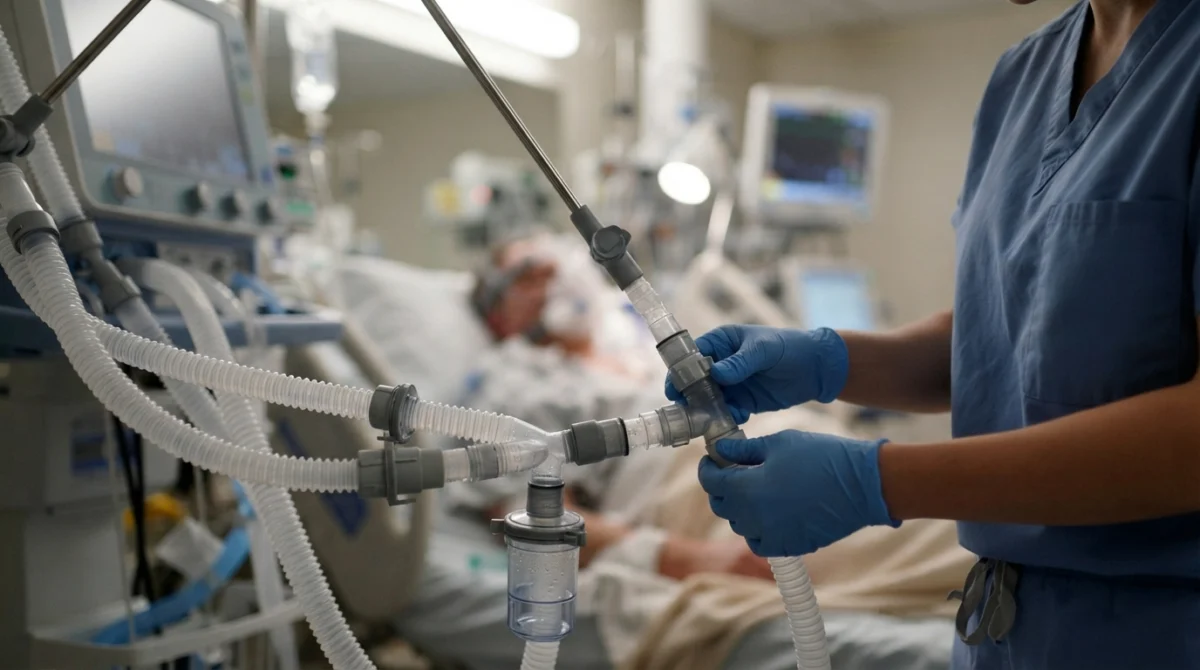
"A manufacturing defect in Intersurgical’s breathing tubes, where connectors can detach due to insufficient bonding solvent, has led the FDA to issue a Class I recall, its most severe classification, highlighting the critical risk of interrupted patient ventilation and potential for serious injury or death."
The U.S. Food and Drug Administration (FDA) has escalated its safety alert concerning specific Intersurgical 22mm Smoothbore breathing tubes and associated systems to a Class I recall, signifying the highest level of urgency. This action stems from a critical manufacturing flaw where soft connectors may detach from the smooth inner tube. Such a disconnection poses a grave threat to patients reliant on mechanical ventilation, as it can lead to an immediate interruption or significant reduction in airflow, potentially causing a dangerous drop in blood oxygen levels. While no serious injuries or deaths had been reported as of November 3rd, the FDA unequivocally warns that continued use of these affected devices could result in severe harm or fatality. This recall underscores the paramount importance of vigilance in medical device safety and the potential consequences of even seemingly minor manufacturing deviations in life-support equipment.
The gravity of this recall is amplified by the fact that it concerns devices fundamental to patient respiration. Intersurgical, with its U.S. operations based in East Syracuse, New York, has initiated the recall of 11 distinct product codes encompassing 38 specific lots. The root cause of the problem has been identified as a manufacturing process where an insufficient quantity of tetrahydrofuran, a crucial solvent used to bond the soft connectors to the smooth inner tube, was applied. This inadequate bonding means the connection may not withstand the stresses of normal use, leading to premature detachment.
The investigation into this issue was prompted by reports from international markets where connectors were observed to loosen or detach during patient use. This real-world evidence triggered a thorough review, culminating in the FDA’s classification of the recall. The affected product line is extensive, including single and dual heated-wire systems, bilevel systems equipped with carbon dioxide leak ports, and systems incorporating monitoring lines and exhalation valves. These diverse configurations highlight the widespread potential impact of this defect across various patient care scenarios.
The consequences of a detached connector can be immediate and devastating. A complete loss or significant reduction in ventilation means a patient’s body receives inadequate oxygen. This can rapidly lead to a cascade of physiological problems, including organ failure and irreversible brain damage, ultimately posing a fatal risk from hypoxia, or oxygen deprivation. The FDA’s explicit warning emphasizes that using an affected device carries a significant and unacceptable risk.
The FDA’s involvement began with an early alert issued on November 10th, which was subsequently upgraded to a Class I recall on November 20th, reflecting the agency’s assessment of the severity of the potential harm. While the exact number of units distributed remains undisclosed in the FDA’s notice, the scope of the recall, covering multiple product codes and numerous lots, suggests a substantial volume of devices may be in circulation.
This is not the first time Intersurgical has encountered regulatory scrutiny regarding its breathing systems. FDA records indicate that the company previously managed a Class II recall in 2020 for a Smoothbore breathing system featuring an exhalation port. Class II recalls are designated for situations where a device may cause temporary or medically reversible adverse health consequences, or where the probability of serious adverse health consequences is remote. The closure of that previous recall indicates that the issue was addressed and resolved. However, the current Class I recall signifies a far more immediate and severe threat to patient safety.
The specific product codes and lots subject to this Class I recall are: 5018000, 5025000, 5025310, 5026000, 5183000, 5191000, 5191850, 5194850, 5804000, 5805000, and 5805030. It is important for healthcare facilities to note that the number of affected lots varies significantly among these product codes. For instance, bilevel systems appear to be particularly affected, with product code 5804000 listing seven lots and product code 5805030, which includes a Clear-Guard Midi filter, specifying 18 lots.
The recalled products are characterized by a length of at least 1.6 meters. The variability in lot numbers necessitates a thorough review of the complete lot list provided in the FDA notice, rather than relying solely on product names. Facilities must meticulously cross-reference their inventory against the recall details to ensure all affected units are identified and removed from service.
Intersurgical has instructed its customers to immediately cease using any affected products, quarantine the existing stock, and arrange for its return to the company. Healthcare facilities are further directed to disseminate this recall notice to all departments and personnel who utilize this breathing tube equipment. This includes informing any external entities or customers to whom these products may have been distributed. The proactive communication and prompt action are critical to mitigating the risks associated with this recall.
It is crucial to understand the FDA’s classification system. A Class I designation does not imply that every single device within the recalled categories is defective. Instead, it signifies that a failure of the device has the potential to cause serious adverse health consequences or death. This classification elevates the recall to a top priority for hospitals, suppliers, and regulatory bodies, demanding swift and comprehensive action.
The individuals most vulnerable to the risks posed by these faulty breathing tubes are patients who depend on mechanical ventilation or bilevel breathing support. This includes individuals who are unable to maintain adequate respiration independently, a category encompassing patients in intensive care units (ICUs), those recovering from surgical procedures, and individuals suffering from severe respiratory or neuromuscular diseases. These patients have a critically narrow margin for error, making any interruption in breathing support profoundly dangerous.
Bilevel systems, which deliver two distinct air pressure levels – one for inhalation and another for exhalation – are often employed for noninvasive respiratory support, typically delivered via a mask. Heated-wire circuits, on the other hand, are utilized to warm and humidify the air supplied to patients requiring extended periods of respiratory support. Hospitals typically maintain robust recall management systems, often spearheaded by their supply chain and biomedical engineering departments, which are responsible for matching recalled lot numbers against existing inventory.
Clinical staff, including respiratory therapists and nurses, are often the first line of defense in detecting a disconnection. They may be alerted by ventilator alarms, sudden drops in oxygen saturation readings, or visual confirmation of a detached connection. For patients who are entirely dependent on mechanical ventilation, even a brief period without breathing support can have severe consequences. Therefore, healthcare facilities are advised to reinforce routine circuit checks and ensure staff are vigilant in inspecting connections while replacement equipment is being sourced.
For families with a loved one receiving breathing support, whether in a hospital or at home, proactive engagement with healthcare providers is encouraged. Families can inquire with the care team about the specific type of breathing tubes being used and whether any Intersurgical Smoothbore tubing from affected lots has been identified and removed. For patients receiving breathing support at home, contacting their medical equipment supplier to ascertain if any tubing originated from the recalled lots is a prudent precautionary measure, as the FDA notice does not specify whether products reached home-use markets.
In situations where replacement circuits may become scarce due to the recall, hospitals can proactively engage with their suppliers to explore alternative substitute circuits. It is imperative that no patient experiences an interruption in essential breathing support during the process of equipment replacement.
Healthcare providers and patients with questions regarding the recall can directly contact Intersurgical Customer Service via email at [email protected] or by phone at 800-828-9633. The FDA’s MedWatch program provides a vital channel for healthcare professionals and patients to report adverse events and product malfunctions. This program aids the agency in identifying trends and potential systemic issues across various healthcare facilities. In most instances, direct contact with the company by patients and their families is not necessary, as the healthcare facility or medical equipment supplier that provided the device typically manages the return and replacement process.
Individuals experiencing sudden breathing difficulties, chest pain, confusion, or observing a bluish discoloration of the lips or skin while using breathing support equipment should seek immediate emergency medical attention by calling 911. In such critical situations, caregivers are urged to prioritize calling emergency services rather than attempting to reattach a separated tube, as the patient’s life may be at immediate risk.
The FDA maintains a dynamic process of updating recall notices as companies undertake corrective actions, such as expanding the scope of a recall or confirming its completion. MedicalDaily will continue to monitor and report on any further developments, including expansions of this recall or any confirmed instances of patient harm.
Key Questions Answered:
What is being recalled?
Certain Intersurgical 22mm Smoothbore breathing tubes and systems across 11 product codes and 38 lots are subject to this recall.
What is the underlying problem?
The core issue involves soft connectors that may detach from the breathing tube due to insufficient use of bonding solvent during the manufacturing process.
Why has it been classified as Class I?
The recall is classified as Class I because a detached connector can interrupt patient ventilation, leading to a reduction in oxygen levels, which carries a significant risk of serious injury or death.
Have there been any reported patient injuries or fatalities?
As of November 3rd, Intersurgical had reported no serious injuries or deaths associated with this issue.
What actions should healthcare facilities take?
Facilities are instructed to immediately stop using affected lots, quarantine the inventory, return the products to Intersurgical, and ensure that all users of the tubing are informed of the recall.
Who should be contacted for inquiries?
Questions can be directed to Intersurgical Customer Service at [email protected] or by calling 800-828-9633.
