
"People are more accepting than they think the people around them are," says one canvasser, highlighting a core challenge and hope in the battle over transgender healthcare policies.
This sentiment encapsulates the delicate dance of persuasion and understanding occurring on the doorsteps of Missouri communities. As the state grapples with a contentious ballot measure that could ban gender-affirming care for minors alongside a near-total abortion ban, a dedicated group of LGBTQ+ advocates is employing a nuanced strategy: "deep canvassing." This approach, which prioritizes in-depth, personal conversations over quick pitches, aims to bridge divides and shift perspectives on issues that have become highly politicized, particularly within the context of upcoming midterm elections. The effort is a testament to the personal stakes involved, as transgender individuals themselves are on the front lines, navigating potential discomfort to foster empathy and inform voters.
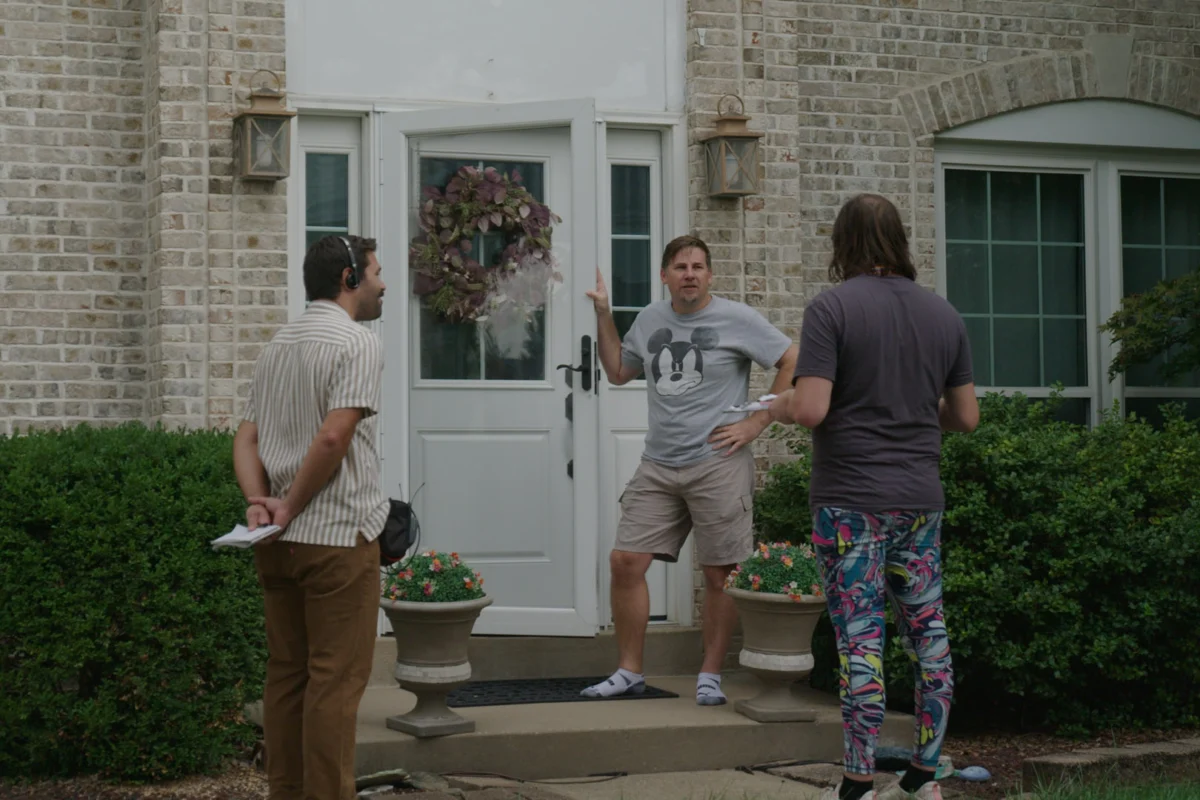
In the affluent St. Louis suburb of Creve Coeur, Missouri, 29-year-old Renéé Luckfield approaches each doorstep with a practiced, non-confrontational knock—a syncopated "tap—tap-tap-tap." Her efforts are part of a broader campaign by PROMO Missouri, an LGBTQ+ advocacy organization, to counter a proposed constitutional amendment that seeks to prohibit minors from accessing gender-transition surgeries, cross-sex hormone therapy, and puberty blockers. This measure is intricately linked to a broader effort to reinstate a near-total ban on abortion in the state, creating a potent political package for voters.
Luckfield, a transgender woman, candidly admits to the personal toll of this work. "Honestly, it’s not something that I’m entirely comfortable with," she shared while canvassing. "And it’s not fair that we have to do this work." Her sentiment underscores the reality that for many in the LGBTQ+ community, these policy debates are not abstract political issues but deeply personal battles for rights and access to care.
The proposed Missouri amendment is not an isolated event. Transgender issues have become a significant focal point in this year’s midterm elections, with voters in at least four other states—Colorado, Arizona, Nebraska, and Washington—also facing ballot measures related to transgender healthcare for minors or restrictions on transgender athletes in youth sports. This widespread legislative and electoral focus reflects a national trend where transgender rights, particularly concerning minors, have been thrust into the political spotlight.
PROMO Missouri’s ambitious goal is to knock on 100,000 doors across five of the state’s largest metropolitan areas before Election Day. They are leveraging a combination of full-time canvassers like Luckfield, who serves as the St. Louis lead, and weekend volunteers. The strategy hinges on achieving meaningful engagement: for every ten doors knocked, approximately one results in a conversation. The ultimate aim is to foster 10,000 such conversations, a target they recently celebrated reaching 6,000 in early October. The deliberate pace is crucial, as the canvassers are trained to facilitate open-ended, "transformative" discussions designed to genuinely alter voters’ perspectives.
This "deep canvassing" methodology is a proven, albeit labor-intensive, tactic. It has a history of influencing public opinion on complex and often contentious issues. Notable successes include a 2012 campaign in Maine that helped overturn a ban on gay marriage and a 2021 effort in Minnesota focused on police reform. Organizers in Missouri are now hoping this approach can be instrumental in preventing the proposed ban on gender-affirming care for minors.
Missouri’s legislative landscape has already seen significant shifts. In 2023, the state’s Republican-dominated legislature enacted permanent restrictions on gender-affirming surgeries for minors and imposed a four-year moratorium on new prescriptions for puberty blockers and cross-sex hormones. This action placed Missouri among a growing cohort of 27 states that have introduced restrictions on gender-affirming care for minors within the last five years.
The deep canvass initiative in Missouri began in earnest in 2024, a period marked by the escalating prominence of transgender healthcare in state and national political discourse. Former President Donald Trump’s campaign and associated groups invested millions in attacking then-Democratic presidential nominee Kamala Harris on transgender issues, employing messaging that framed the debate as a choice between progressive ideals and traditional values.
The political climate in Missouri has been particularly charged. In 2022, an amendment aimed at protecting abortion access narrowly passed, with opponents arguing that it could potentially lead to the overturning of the state’s ban on gender-affirming care for minors. Campaign materials at the time explicitly linked the two issues, with signs declaring, "NO TAX PAID CHILD SEX CHANGE SURGERY."
Current polling for the combined measure—reinstating the abortion ban and codifying the ban on transgender healthcare for minors—indicates a closely contested race. A recent poll showed 43% in favor, 44% opposed, and 13% undecided, within a margin of error of 4.09%. While this poll does not differentiate between abortion and gender-affirming care, earlier polling from February suggested stronger public support for abortion access. This dynamic presents an opportunity for deep canvassers to engage voters who may oppose abortion bans but hold more ambivalent views on transgender healthcare for minors, focusing their efforts on those not firmly entrenched in either extreme.
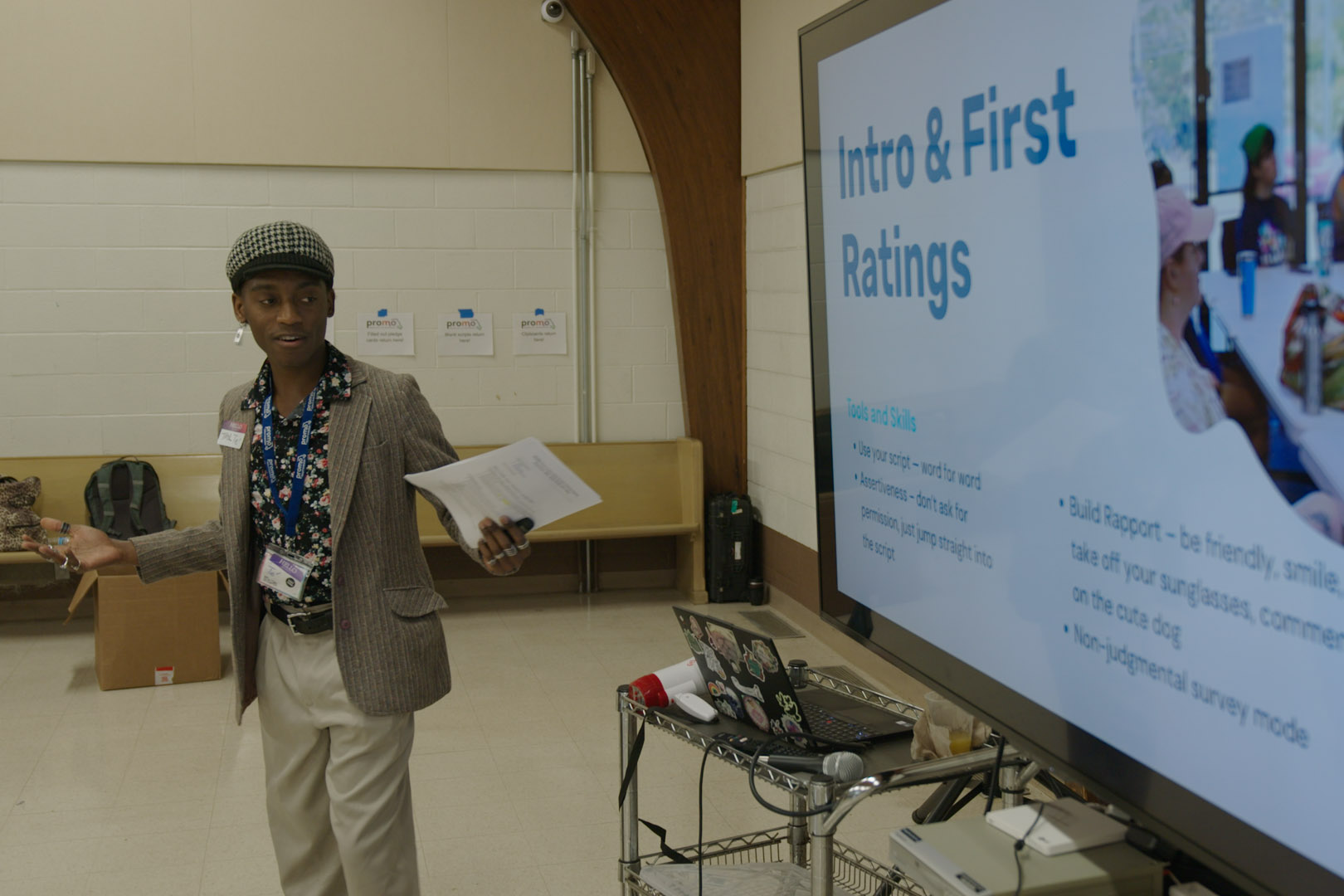
The deep canvassing training, as exemplified by Te’ Hopkins in a presentation, emphasizes a structured yet empathetic approach. Volunteers are instructed to adhere to scripts while simultaneously being attuned to building rapport, employing friendly demeanor, and actively listening. The methodology encourages a "non-judgmental survey mode," where initial ratings on a scale are followed by probing questions about the reasoning behind those ratings.
On a crisp Saturday morning in late September, the suburban soundscape of Creve Coeur—lawnmowers and leaf blowers—accompanied Luckfield’s door-to-door efforts. Her initial encounter was with a resident who rated a 10/10 in favor of banning abortion due to her Christian faith and also supported banning gender-transition procedures for minors, believing children and parents are not equipped to make such decisions. Luckfield’s response, "I hear you. That’s everything I need from you today. Thank you very much for your time," reflects the deep canvassing principle of acknowledging differing viewpoints without prolonged debate when a voter’s stance is clear and firmly opposed.
Later, Luckfield engaged with Carol Parsons, who identified as a 0/0, opposing both bans. This conversation allowed Luckfield to delve deeper, inquiring about Parsons’ specific concerns regarding transgender healthcare for minors. Parsons expressed reservations about surgery, stating, "I do feel that they need to be old enough to realize that that is life-changing." Luckfield addressed these concerns by explaining that the language used in the proposed amendment, such as "transgender procedures," is intentionally crafted to evoke fear, particularly around surgeries.
This explanation is grounded in factual data. Studies indicate that gender-affirming surgeries for minors are exceptionally rare. One analysis of 2019 insurance claims for nearly 23 million children revealed that surgeries were performed at rates of 2.1 per 100,000 for those aged 15-17, and significantly lower for younger age groups, with none reported for those 12 and under. Similarly, prescription treatments like puberty blockers and hormone therapy are administered to fewer than 1 in 1,000 adolescents with commercial insurance.
Luckfield further elaborated that Missouri’s proposed amendment would also ban puberty blockers, which are reversible treatments. She emphasized their role, when prescribed alongside counseling and social transition support, in allowing young individuals time to mature and make informed decisions. This nuanced explanation resonated with Parsons, who responded, "Well, I definitely agree with that. I think that would be a good solution." This exchange highlights the potential for education and empathy to shift perspectives.
Another conversation with Louis Meyer, who had previously expressed ambivalence, resulted in him now opposing both bans, rating himself a 0/0. When asked about the change in his stance, Meyer articulated a key distinction: "The original question was about where my morals sit and what I would do, which is a different statement than what I want the government to dictate." This insight points to a potential disconnect between personal moral frameworks and the desire for government intervention in private healthcare decisions.
Over an hour and a half, Luckfield engaged with 12 doors, holding substantive conversations with five individuals. Four of these conversations resulted in voters opposing both proposed bans. While Luckfield acknowledged that St. Louis County tends to be more liberal than the state as a whole, she believes these results also reflect a broader societal trend. She cited research from the Transgender Law Center, suggesting that individuals often underestimate the level of acceptance for transgender issues among their peers. "People are more accepting than they think the people around them are," Luckfield concluded, underscoring the potential for grassroots engagement to reveal a more progressive underlying sentiment than perceived political discourse might suggest.
