
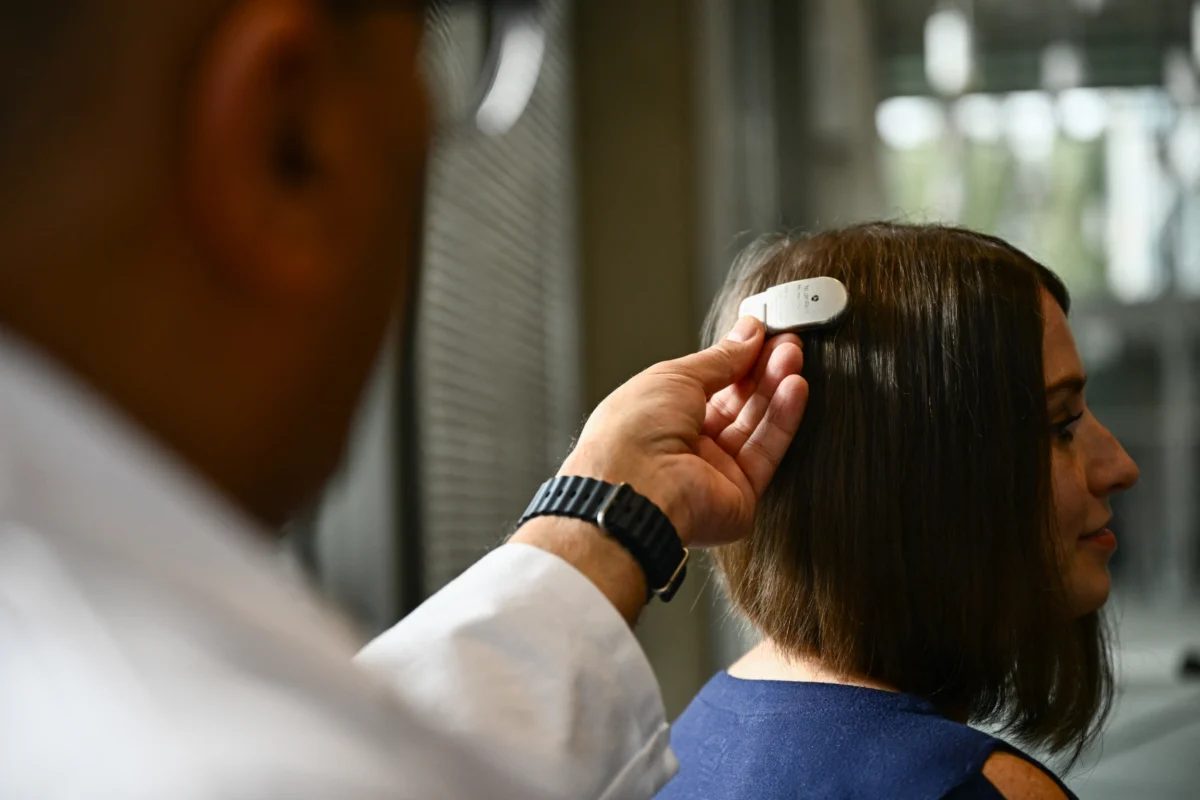
"An FDA partial clinical hold on opakalim trials, stemming from unresolved questions about a drug metabolite identified in rodent studies, temporarily halts new patient enrollment while allowing existing participants to continue treatment, underscoring the critical balance between accelerating new therapies and ensuring patient safety."
The U.S. Food and Drug Administration (FDA) has implemented a partial clinical hold on investigational trials for opakalim (BHV-7000), an experimental drug developed by Biohaven Pharmaceuticals for epilepsy. This regulatory action, disclosed in a filing with the U.S. Securities and Exchange Commission on September 4, 2026, specifically pauses the enrollment of new patients into ongoing studies. The hold is directly linked to questions arising from rodent studies concerning a specific metabolite produced during the body’s breakdown of opakalim, with the FDA requiring further data to adequately assess its potential risks to human health. Crucially, this pause does not affect the more than 600 patients already participating in the trials; their treatment and dosing will continue uninterrupted as the company undertakes additional animal studies to address the FDA’s concerns.
The implications of this development are significant for individuals living with refractory epilepsy – a form of the condition that does not respond adequately to existing medications – and for their families considering participation in clinical trials as a potential pathway to new therapeutic options. Epilepsy affects a substantial portion of the U.S. adult population, with approximately 2.9 million individuals reporting active epilepsy in 2021 and 2022, and a considerable number, around 1.5 million, experiencing uncontrolled seizures over the past year, according to data from the Centers for Disease Control and Prevention (CDC). For this patient demographic, clinical trials often represent a vital opportunity to access cutting-edge treatments that may offer relief where conventional therapies have fallen short.
Biohaven Pharmaceuticals is currently conducting two pivotal, late-stage studies evaluating opakalim in patients with refractory focal epilepsy. Focal epilepsy is characterized by seizures that originate in a single area of the brain and can be particularly challenging to manage. One of these studies, designated BHV7000-303, had already completed its patient enrollment in June, prior to the FDA’s decision. Consequently, the partial clinical hold is not anticipated to alter the projected timeline for this particular study, with top-line results, representing the initial summary of key findings, still expected in the latter half of 2026.
The second pivotal study, identified as BHV7000-302, and a related open-label extension study, are directly impacted by the enrollment pause. While current participants in these trials will continue to receive opakalim, no new patients can be enrolled. Biohaven has proactively extended this voluntary pause to its study sites located outside the United States, ensuring a consistent approach to trial conduct globally. The estimated completion date for BHV7000-302, as listed on ClinicalTrials.gov, was December 2026, a projection made before the current regulatory hold. Across its entire development program, Biohaven reports that over 1,200 individuals have received opakalim, with the drug generally demonstrating a favorable safety profile and being well-tolerated. The company emphasizes that the clinical relevance of the findings in rodent studies to human safety remains uncertain, suggesting that these effects might be specific to rodents and not indicative of risks in humans. Additional animal data is anticipated within the coming weeks, which will then be subject to review by the FDA to determine whether the clinical hold can be lifted.
The core of the FDA’s action lies in an "evidence gap" concerning the identified metabolite. Biohaven has not publicly disclosed specific details about this metabolite, including its precise chemical identity, the observed effects in the rodent studies, or the dosage levels at which these effects manifested. Importantly, there have been no reported adverse events or harm to human participants in any of the opakalim trials to date. The necessity for further investigation into metabolites is a common aspect of drug development. Differences in metabolic pathways between species are well-documented; animals and humans can process the same drug in distinct ways, leading to the formation of different byproducts. Regulatory agencies like the FDA frequently require additional studies to ascertain whether substances observed in preclinical animal models are also produced in humans and, if so, at what concentrations. A partial clinical hold, therefore, is best understood as a precautionary measure, a request for more information rather than a definitive conclusion of a drug’s danger. It allows for the continued safety monitoring of existing participants while regulators gather the necessary data to make informed decisions about expanding the investigational treatment to new individuals.
Opakalim’s therapeutic mechanism involves modulating Kv7 potassium channels in the brain. These channels act as crucial "brakes" on neuronal activity, helping to regulate and dampen excessive electrical signaling that underlies seizure generation. Biohaven characterizes opakalim as a selective, next-generation therapeutic agent specifically designed for focal epilepsy, although its efficacy has yet to be definitively established through a completed pivotal clinical trial.
The regulatory hold comes shortly after Biohaven entered into a significant licensing agreement on August 26, 2026, with SK Biopharmaceuticals, a South Korean pharmaceutical company. This deal grants SK Biopharmaceuticals the rights to Biohaven’s Kv7 drug platform, which includes opakalim. The potential value of this agreement is substantial, reaching up to $795 million, with an upfront payment of $350 million. Following the disclosure of the FDA’s partial clinical hold, Biohaven’s stock experienced a decline of over 10%, reflecting investor concerns about potential delays in the drug’s development timeline. Biohaven has stated that all available clinical and animal data pertaining to the metabolite in question were shared with SK Biopharmaceuticals prior to the finalization of the licensing agreement. The transaction is still pending closure and requires a customary U.S. antitrust filing. For patients and their families, the business implications of this deal are primarily tied to the speed at which opakalim might become a commercially available treatment option. Analysts have suggested that delays in completing enrollment for the BHV7000-302 study, which may be critical for regulatory approval, could push back Biohaven’s potential submission to the FDA.
Individuals currently participating in opakalim clinical trials are strongly advised to adhere to the instructions provided by their study teams and to communicate any concerns or questions directly to their trial site. Those who were in the screening process for a paused study should expect guidance from the site regarding the next steps, which may include reassessment for eligibility once the hold is lifted or exploration of alternative trial options. It is critically important for patients to understand that stopping or altering any prescribed anti-seizure medication without explicit consultation with a neurologist can lead to dangerous increases in seizure frequency and severity. For families actively seeking alternative research opportunities, resources such as ClinicalTrials.gov can be invaluable for identifying relevant studies, and consultation with an epilepsy specialist is recommended to determine the most appropriate options based on individual medical circumstances.
The CDC provides essential first-aid guidance for seizures, recommending immediate emergency medical attention (calling 911) in situations where a seizure lasts longer than five minutes, if seizures occur in rapid succession, or if the individual experiences breathing difficulties, loss of consciousness, or sustains an injury. Maintaining a detailed seizure log and an up-to-date medication list is crucial for individuals managing uncontrolled seizures, facilitating effective communication with healthcare providers during appointments. Financial barriers remain a significant challenge in epilepsy care. CDC data indicate that adults with epilepsy are more likely than the general adult population to ration their medication to save money or face difficulties accessing specialized medical care, highlighting the substantial value that access to clinical trials can represent for many households. The unfolding situation with opakalim will be closely monitored, with key developments to watch including Biohaven’s release of new animal data, the FDA’s subsequent review and decision, and the forthcoming top-line results from its pivotal study.
