

"Louisiana sheriffs are directing a significant portion of opioid settlement funds toward law enforcement tools, sparking debate over whether this aligns with the crisis’s intended remedy."
In a groundbreaking collaborative investigation, KFF Health News joined forces with three Louisiana news organizations—The Current, Gulf States Newsroom, and Verite News—to meticulously examine how all 64 of the state’s sheriffs are utilizing funds generated from nationwide opioid settlements. These settlements, stemming from accusations that pharmaceutical companies flooded the nation with addictive painkillers and contributed to widespread overdose deaths, are providing substantial financial resources across the country. However, Louisiana stands out by allocating an unprecedented 20% of these payouts directly to its sheriffs, the largest such carve-out for law enforcement nationwide. This unique distribution model, coupled with the independent budgetary and reporting structures of Louisiana’s elected sheriffs, has created a complex landscape for public accountability and raised critical questions about the most effective use of funds intended to combat the devastating opioid crisis.
The opioid epidemic, a public health catastrophe that has claimed over a million lives in the United States since 2000, has prompted extensive legal action against the manufacturers and distributors of prescription opioids. The resulting settlements, including Purdue Pharma’s $7.4 billion bankruptcy resolution, are designed to provide long-term funding for abatement efforts. Yet, the allocation of these substantial funds has become a focal point of contention, with many viewing the money as "blood money" that must be exclusively dedicated to addressing addiction and its consequences. This sentiment is particularly strong among families who have lost loved ones to overdose, emphasizing the moral imperative to ensure these funds directly contribute to saving lives and preventing future tragedies.
In Louisiana, the independent nature of its sheriffs’ offices presents a unique challenge to transparency. As elected officials with independent budgets, they are not beholden to other local authorities and are not mandated to proactively disclose how they spend these billions in opioid settlement cash. This lack of inherent public reporting makes it difficult for ordinary citizens to track the flow of funds without resorting to public records requests or awaiting official audits. The ambiguity surrounding spending decisions fuels a debate between those who advocate for robust law enforcement measures to disrupt drug trafficking and those who believe the funds should be exclusively channeled into treatment, prevention, and recovery programs.
The investigative collaboration, spanning five months and involving extensive public records requests, has produced the first comprehensive accounting of millions spent by Louisiana sheriffs. This in-depth analysis reveals a diverse range of expenditures, highlighting differing interpretations of how best to address the multifaceted opioid crisis. While the state’s agreements with parishes and sheriffs allow for broad categories of spending, including "law enforcement expenditures relating to the opioid epidemic," the appropriateness and effectiveness of these uses are being questioned by addiction and public health experts.

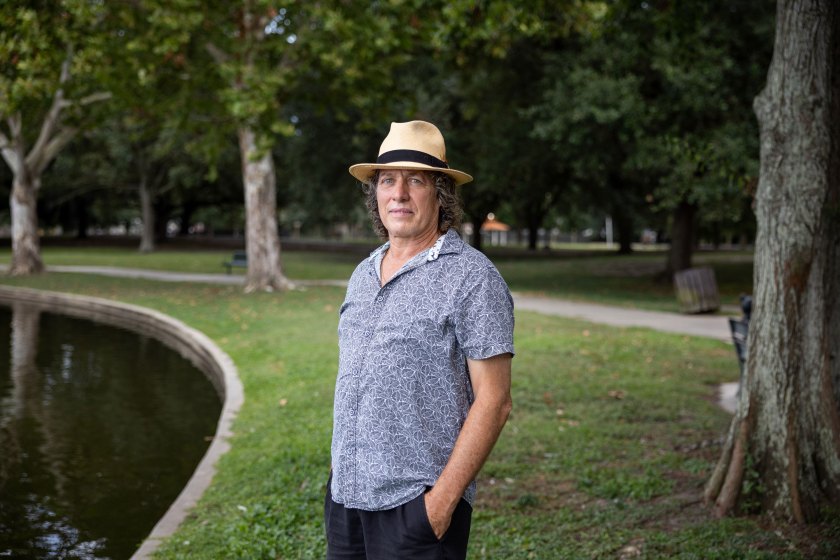
"What’s happening here is they have a lot of money and they want to distribute it to all the wrong places," stated Danny Bolner Jr., a Jefferson Parish resident with over two decades of recovery and a father who lost his 28-year-old son to a fentanyl overdose in 2016. Bolner, representing families impacted by the crisis on a review panel, expressed concern over sheriffs purchasing items like drones and vehicles, arguing that these funds are finite and should be prioritized for initiatives such as youth education on emotional processing, job training for individuals in recovery, and the distribution of overdose reversal medications. He passionately believes that these dollars represent a critical opportunity to save lives and that any diversion from this purpose diminishes the potential impact.
Tricia Christensen, a public health policy analyst and national expert on opioid settlements, who served as a reviewer, emphasized that the core intent of these funds is to invest in innovative solutions to prevent future tragedies. She posed the critical question: "How could we use this to reinvest in the community, not just build up our office?" Christensen argued that many equipment purchases by sheriffs did not meet this standard. For instance, the East Baton Rouge Sheriff’s Office acquired a safe for evidence related to opioid investigations and a scanner for its traffic division to detect hidden narcotics. Terrebonne Parish Sheriff’s Office invested a substantial $465,000 in Flock cameras, automated license plate readers that share data nationwide. Bossier Parish Sheriff’s Office, meanwhile, purchased 130 body cameras and 50 dash cameras. Christensen and other reviewers noted that law enforcement agencies already have access to taxpayer dollars and federal grants for such equipment, making the use of finite, purpose-specific opioid settlement funds for these items questionable. Some states, she pointed out, explicitly prohibit such expenditures.
Kevin Cobb, executive director of the Louisiana Sheriffs’ Association, defended the necessity of these expenditures, stating that sheriffs’ budgets are often overextended. He argued that complex investigations into drug trafficking syndicates require advanced equipment, and that while treatment and recovery services are vital, they address the consequences of addiction after drugs have already entered the community. Casey Rayborn Hicks, a spokesperson for the East Baton Rouge Sheriff’s Office, echoed this sentiment, asserting that law enforcement’s role in preventing deadly drugs from reaching potential victims is equally essential. First Lt. Blake Tabor, a spokesperson for the Terrebonne Parish Sheriff’s Office, similarly stated that their focus is on disrupting the criminal activity that fuels addiction, complementing prevention, treatment, and recovery efforts.
However, not all sheriffs have directed funds towards enforcement. Acadia Parish Sheriff K.P. Gibson has dedicated all his settlement funds to providing treatment within the jail, aiming to break cycles of addiction and crime and facilitate the reintegration of individuals into society as productive citizens. Research supports the efficacy of providing medications for opioid use disorder in correctional facilities, demonstrating reduced recidivism and overdose deaths. In St. Martin Parish, settlement funds supported a specialized team of officers tasked with connecting individuals with substance use disorders and related mental illnesses to treatment and coordinating support services for families. Chester Cedars, chief legal counsel for the St. Martin Parish Sheriff’s Office, described their role as a "broker" between those in need and service providers.
Dr. Stephen Loyd, an addiction medicine doctor and West Virginia’s drug czar, who also served on the review panel, lauded the comprehensive nature of programs like the one in St. Martin Parish, recognizing addiction as a complex family issue. He highlighted the significance of these initiatives in addressing potential family crises triggered by substance use disorders.
The parishes of Acadia and St. Martin received high marks from the reviewers, a fact not lost on the fact that Sheriff Gibson is the current chair and Cedars is the former chair of the Louisiana Opioid Abatement Task Force, the body intended to guide the use of settlement funds. Cedars firmly stated that the St. Martin sheriff’s office was not allocating any funds to enforcement activities, believing such use was contrary to the settlement’s intent. Sheriff Gibson, while acknowledging the broad legal guidelines and expressing hesitation to criticize others, has advised numerous sheriffs on spending, though his guidance is not binding.
A 2025 report from the Louisiana Legislative Auditor revealed that the Opioid Abatement Task Force lacks enforcement power for its recommendations. Sheriff Gibson stressed that any desire for stricter guardrails on opioid fund spending would require legislative action. In response, the Louisiana legislature passed a resolution in May calling for the legislative auditor to review all parish and sheriff expenditures of opioid settlement funds before the 2027 legislative session. State Sen. Brach Myers, a co-author of the resolution, stated the goal is to illuminate fund distribution, identify jurisdictions that may not be spending the money, and pinpoint effective programs, which could lead to new legislation to tighten spending controls.
The Louisiana Opioid Abatement Task Force is actively working to enhance its oversight mechanisms. Curtis Nelson, executive counsel for the Louisiana Opioid Abatement Administration Corporation, indicated the task force is seeking accounting firms to conduct ongoing forensic audits of parishes and sheriffs, aiming to audit 10 to 15 entities annually, prioritizing those receiving the largest sums. The task force also has the potential to withhold future payments from entities found to be misusing funds and is exploring the creation of an "unallowable list" of expenditures, similar to those in other states. While Governor Jeff Landry and Attorney General Liz Murrill did not respond to inquiries regarding their support for such measures, advocates like Danny Bolner Jr. remain hopeful that such a list would curb spending they deem inappropriate.
Bolner continues his personal mission of distributing overdose reversal medications, participating in grief support groups, and raising awareness about addiction. He remains committed to engaging with sheriffs and parishes about what he considers the most effective use of settlement money, driven by the conviction that even saving one life makes his efforts worthwhile.
Methodology:
Reporters from KFF Health News, The Current, Gulf States Newsroom, and Verite News collaborated to contact all 64 sheriff’s offices in Louisiana between March and July to inquire about their opioid settlement fund expenditures. Offices that did not respond or provide specific financial details were marked as "Did not provide expenditures." All other responses were compiled into a data table. The projected settlement amounts for each sheriff’s office through 2025 were sourced from the Louisiana Opioid Abatement Task Force’s public spreadsheet, summing allocations from years 1 through 5 (2021-2025). In instances where a sheriff’s office reported spending exceeding its allocated amount, this was often attributed to the combination of settlement funds with parish government funds or other sources, or the inclusion of funds from the 2026 allocation.
The collected data was analyzed using two primary methods. First, reporters created an anonymized list of expenditures, removing office names, and shared it with three reviewers: Tricia Christensen, a public health policy expert; Dr. Stephen Loyd, an addiction medicine physician and former chair of Tennessee’s Opioid Abatement Council; and Danny Bolner Jr., an individual in recovery who lost his son to overdose. Each reviewer voted on the appropriateness of each expenditure, with a majority vote determining the final classification. The percentage of expenditures deemed inappropriate by the panel was calculated for each sheriff’s office. The second analytical approach involved comparing Louisiana’s spending to "unallowable lists" established by six other states (California, Indiana, Kansas, Michigan, South Carolina, and Virginia). KFF Health News calculated the percentage of funds spent by each Louisiana sheriff’s office on items appearing on these lists, indicating expenditures that would be deemed unallowable or not recommended in those jurisdictions.
